

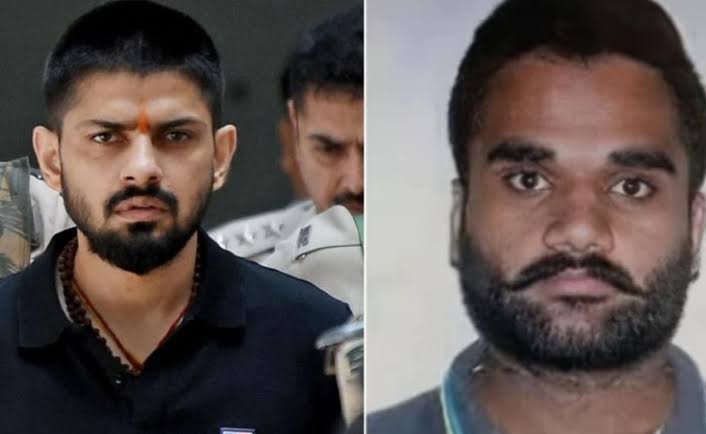
A federal grand jury indictment unsealed in the Central District of California has formally charged imprisoned Indian gang leader Lawrence Bishnoi and his prominent North American lieutenant, Satinderjeet Singh alias Goldy Brar, with orchestrating the June 2023 assassination of Khalistani activist Hardeep Singh Nijjar. The development marks the culmination of “Operation Hardball,” a years-long covert investigation spearheaded by the Federal Bureau of Investigation, the Royal Canadian Mounted Police, and European intelligence desks. The indictments peel back the layers of three interconnected, India-based transnational organized crime groups that have systematically weaponized contraband communications, encrypted application platforms, and cross-border drug logistics to run extortion and assassination campaigns targeting the global Indian diaspora.
Registration Begins for FutureCrime Summit 2026, India’s Largest Cybercrime Conference
The Jailhouse Directive and the Surrey Execution Pipeline
The unsealed federal documents outline a highly calculated extraction plot wherein core directives originated from isolated domestic prison repositories inside India. Despite being in state custody since 2015, the 33-year-old Bishnoi allegedly preserved continuous command integrity over his global network by deploying smuggled mobile electronics and advanced voice-over-IP software from within his cell. To execute the high-profile targeted hit on Nijjar outside a Sikh temple in Surrey, British Columbia, Bishnoi reportedly channeled precision target profiles, including local surveillance photographs and multiple residential addresses, straight to operational cells on the ground in Canada.
The underlying organization functioned like a corporate multi-national enterprise, segmenting control into distinct geographic theaters to maximize its operational footprint. While Bishnoi engineered the group’s “patriotic and nationalist” brand profile to draw in low-tier street recruits, daily execution matrices across North America were handed over to his childhood associate, Goldy Brar. This command tier leveraged secure applications like WhatsApp to target affluent diaspora business owners, issuing immediate threats of physical violence against their regional families to enforce high-volume protection levies, which subsequently funded the enterprise’s wider international infrastructure.
The Operation Hardball Dragnet and Multi-State Takedowns
The sweeping federal clampdown triggered a series of highly synchronized tactical raids across multiple continents, resulting in the absolute neutralization of 24 syndicate operatives. A total of 37 defendants were named across three separate criminal indictments, exposing not only the Bishnoi network but also parallel criminal operations managed by rival networks, including the Jaggu Bhagwanpuria and Ravinder Dhanda syndicates. In the United States, tactical squads arrested 13 individuals—including 11 tactical apprehensions in California, one in Indiana, and one in Georgia—while Canadian authorities secured three suspects and Spanish national police contained one high-level operative.
Concurrently, the federal prosecution team exposed the deep financial engine driving the violence, revealing that the Bishnoi network funded its global operations by plugging directly into high-volume international narcotics networks. During the multi-city sweep, investigators executed 34 targeted search warrants across Sacramento and Los Angeles, seizing approximately 1,000 kilograms of cocaine, a kilogram of heroin, and a dozen firearms. Court files state that between 2024 and 2025, the gang routinely hijacked bulk cocaine shipments from rival South American trafficking networks in the Los Angeles area, attempting to smuggle hundreds of kilograms of contraband across the Canadian border by manipulating compromised border security personnel.
Extradition Pressures and Global Bounty Announcements
The public escalation of the indictment has prompted the FBI to issue an immediate global bounty, offering a reward of up to $50,000 for verified information leading directly to the location and arrest of Goldy Brar. The federal fugitive remains at large and is believed to be moving between safe houses across California, Mexico, and Canada, utilizing local shadow assets to evade active surveillance lines. While ten primary syndicate fugitives remain actively hunted by international tactical squads, federal attorneys emphasized that the unsealing of the Los Angeles docket permanently eliminates any geopolitical safe havens for transnational actors operating across sovereign borders.
The legal action introduces a highly complex layer into the ongoing geopolitical friction between Ottawa and New Delhi, which initially collapsed after Canadian leadership publicly alleged a link between Indian state intelligence and Nijjar’s death. Notably, the current US federal indictment focuses strictly on the criminal enterprise mechanics of independent syndicates, avoiding any claims of state-backed direction or intelligence agency involvement. As the arrested suspects prepare for their initial appearances in federal courts, Western law enforcement commands maintain that all linked cross-border drug corridors remain under permanent technical review, warning that global enforcement alliances will continue to aggressively dismantle prison-directed command loops to preserve public safety.
