
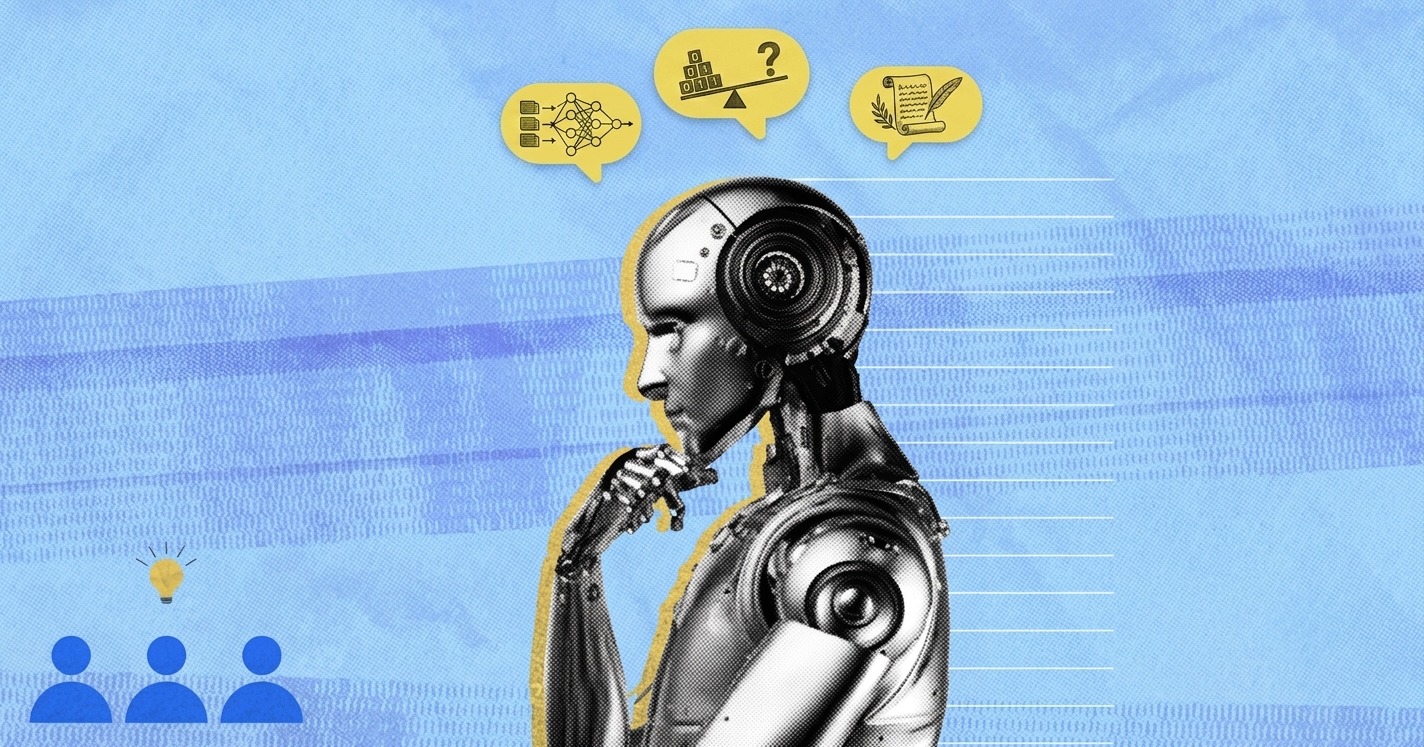

The global conversation around artificial intelligence has long centred on capability: how fast systems can process data, how accurately they can predict outcomes, how efficiently they can automate tasks previously requiring human labour. Far less attention has been paid to a quieter but more consequential gap, the distance between what AI systems can do and what they can actually understand.
While large language models can often mirror expert outputs, they lack the human capacity for judgment, shaped by values, ambiguity, and ethical nuance. Researchers have termed this divergence “epistemia,” the illusion of understanding produced when probabilistic output mimics deeper forms of reflection, when persuasive semantics poses as knowledge.
This is the distinction between intelligence and wisdom. Despite advances in large language models and multimodal AI systems, we have yet to develop anything approaching artificial wisdom. These systems lack core attributes essential to wisdom: they have no lived experience through which to develop judgment, they cannot truly understand the consequences of failure, and they possess no intrinsic values or ethical frameworks beyond what has been statistically modelled.
The practical consequences of ignoring this gap are already visible across sectors where AI is being deployed to make decisions that directly affect people’s lives.
A Research published in 2025 has begun quantifying a pattern that was previously only intuited: AI systems are systematically overconfident, and that overconfidence can cause serious harm. AI systems, when designed without adequate mechanisms to account for risk, may exhibit overconfidence in uncertain environments. Studies show that compared to humans, AI systems tend to make decisions associated with higher expected returns but also with higher risks, and these risky decisions sometimes result in catastrophic errors.
Researchers at Carnegie Mellon University found that AI chatbots remain overconfident even when they are wrong. When an AI asserts an answer with confidence, users may not be as skeptical as they should be, even when that confidence is entirely unwarranted.
This dynamic becomes particularly dangerous when AI is embedded in systems that affect ordinary citizens at scale. The 2008 financial crisis, for example, was exacerbated by reliance on risk models that underestimated uncertainty. AI-driven decision-making in critical sectors like law enforcement and healthcare raises similar ethical concerns when probabilistic judgements are mistaken for absolute truths.
The problem extends well beyond philosophy. As governments and corporations accelerate AI adoption, the question of who is accountable when an AI system causes harm remains largely unresolved. Moral decisions cannot be resolved solely by abstract rules. They often hinge on subtle, real-time assessments of context. Humans intuitively weigh intangible factors such as empathy, emotional intelligence, and long-term consequences, while AI typically operates on predefined features and numeric optimisation metrics. This contextual gap becomes especially stark in fluid or high-stakes environments.
A significant gap still exists between current machine intelligence and human wisdom: machine intelligence is constrained to post hoc inference based on existing data, lacking the ability for genuine exploratory innovation and possessing no prospective reasoning inherent to human wisdom.
Regulators have begun to notice. The European Union’s AI Act has introduced risk-based classifications for AI systems deployed in consequential domains. Contemporary thinkers have identified three major areas of ethical concern regarding AI: privacy and surveillance, bias and discrimination, and the downgrading of human judgment in crucial decisions. The question remains open as to whether elements of human deliberation, such as doubt, empathy, and practical wisdom, can ever be replaced by an algorithm.
The emerging consensus among researchers is not that AI should be abandoned, but that its role must be carefully defined. AI is most effective when used in partnership with human oversight, allowing its strengths in speed, data processing, and pattern recognition to complement human judgment through empathy, ethics, and nuanced understanding.
A smart system without wisdom will produce results that fail to fulfil its intended purpose, overlook important ethical matters, and create additional problems instead of resolving existing ones. That observation applies with particular force in criminal justice, medical diagnosis, credit assessment, and public administration, domains where AI is already making or informing decisions with lasting consequences for real people.
In contexts where tacit knowledge matters most, accepting AI judgements as human discernment risks replacing wisdom with synthesized coherence. Fluency is not understanding. Speed is not wisdom. Certainty is not truth. As AI continues to be embedded deeper into the architecture of public and private life, that distinction may well prove to be the most consequential design choice of the coming decade.
Follow for daily updates on cybercrime, corporate fraud, DFIR, hacking, investigations, and digital forensics
