

In a decision that marks the most fundamental architectural shift since its inception in 2009, Meta Platforms has announced a global rollout of username reservations for WhatsApp. Chief Executive Officer Mark Zuckerberg confirmed that the instant messaging platform, which commands a massive global user base of over three billion individuals, will introduce unique handles later this year. This long-anticipated update represents a decisive move away from the service’s historical reliance on mandatory phone number sharing to establish digital connections. For India, which constitutes WhatsApp’s largest sovereign market with upwards of 50 Crore active users, this architectural pivot carries profound structural and societal implications.
Dismantling the Analogue Identifier
Since its debut, WhatsApp has treated the mobile phone number as the ultimate, immutable anchor of user identity. While this design choice enabled rapid, frictionless growth by syncing directly with a user’s native contact list, it simultaneously introduced significant data vulnerability. Every casual interaction—whether coordinating a brief commercial delivery or participating in an expansive community group chat—required the unconditional surrender of a highly personal ten-digit identifier. By uncoupling account discovery from physical SIM cards, Meta is attempting to modernize its privacy framework to align with contemporary social media standards.
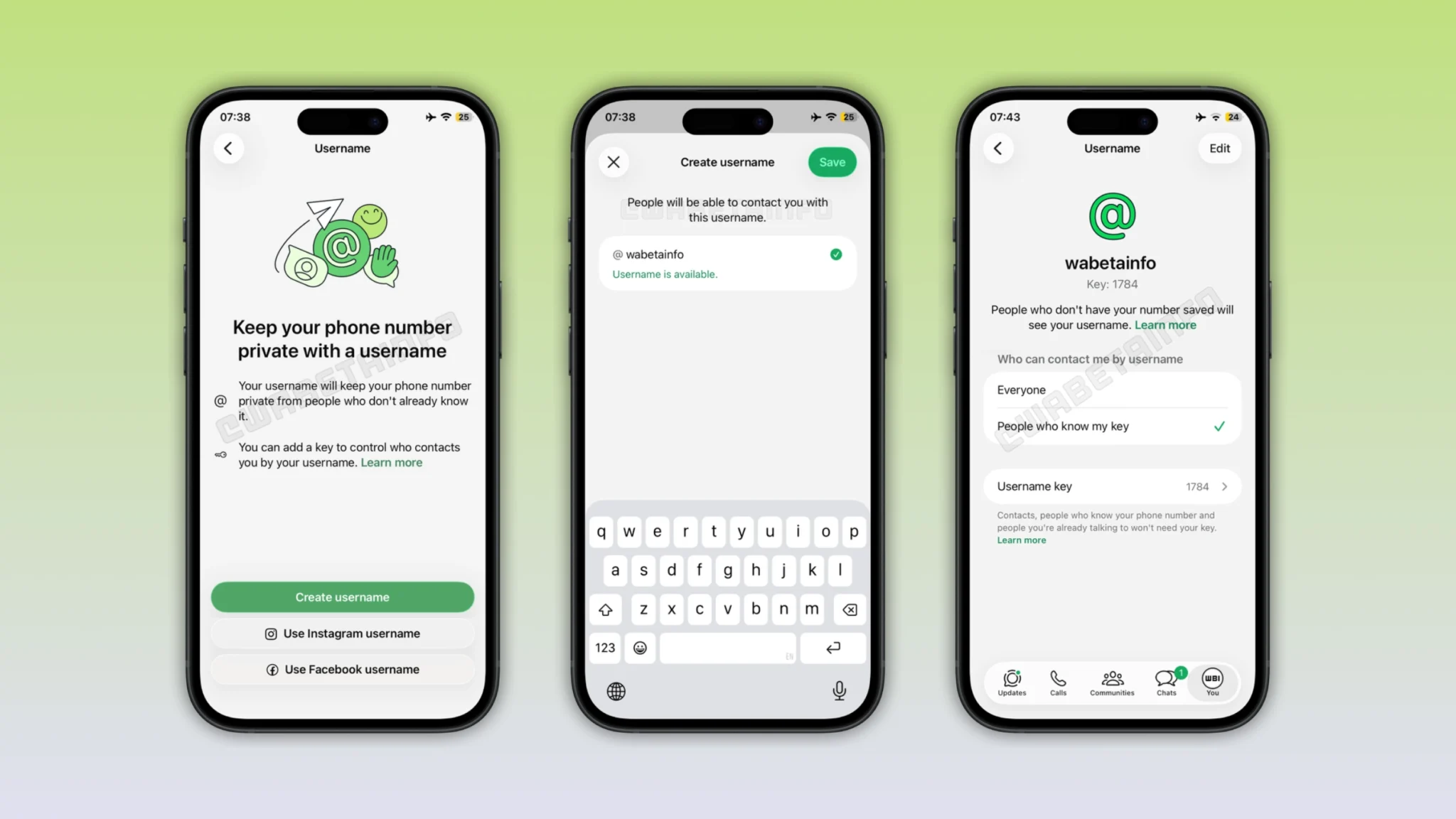
As detailed in the interface sequence above, the platform integrates availability verification directly into the profile configuration layout, confirming whether a chosen handle is taken before final reservation. This design choice highlights a commitment to minimizing friction as billions of accounts undergo migration.
The Indian Privacy Paradigm
The introduction of handles arrives at a critical juncture for digital rights and personal safety across the Indian subcontinent. For millions of domestic users, particularly women and marginalized communities, the mandatory sharing of telephone numbers has long been a source of persistent digital anxiety. The exposure of digits in public or semi-private group architectures frequently facilitates unsolicited communications, systemic stalking, and digital harassment. By enabling handle-based communication, the platform erects a robust barrier against the casual harvesting of telephone directories by malicious entities.
Furthermore, Meta’s implementation of this feature deviates sharply from competitors like Telegram by adopting an aggressively restricted discovery model. There will be no public directory, open search engine, or automated algorithmic recommendations to help strangers browse usernames across the network. A third party must possess the exact, case-sensitive handle to initiate a first-time conversation with an individual. To augment this protective layer, WhatsApp is engineering an optional username key, functioning effectively as a digital passcode that an outsider must input before their messaging request is even transmitted to the recipient.
Corporate Identity and the Scam Ecosystem
Beyond individual privacy, the structural overhaul directly targets the commercial mechanics of India’s formal and informal digital economies. Businesses operating via the WhatsApp Business application will soon transition to a specialized business-scoped user identifier framework. This structural adjustment allows small and medium enterprises, as well as multinational corporations, to interact with millions of customers without compromising their underlying operational lines. The move is expected to streamline consumer trust, as official handles can be easily cross-verified against a firm’s wider digital footprint across the internet.
This transition also addresses the escalating crisis of financial scams and phishing networks that plague the domestic messaging landscape. Cybercriminals have long exploited the anonymity of disposable SIM cards to execute elaborate impersonation frauds, frequently posing as senior corporate executives or Central Government officials. The handle reservation protocol, combined with Meta’s broader verification mechanisms, provides the State and law enforcement agencies with a clearer cryptographic trail to audit fraudulent accounts. While the system will not completely eliminate bad actors, it significantly raises the operational cost of executing automated, mass-scale social engineering campaigns.
Follow for daily updates on cybercrime, corporate fraud, DFIR, hacking, investigations, and digital forensics
