
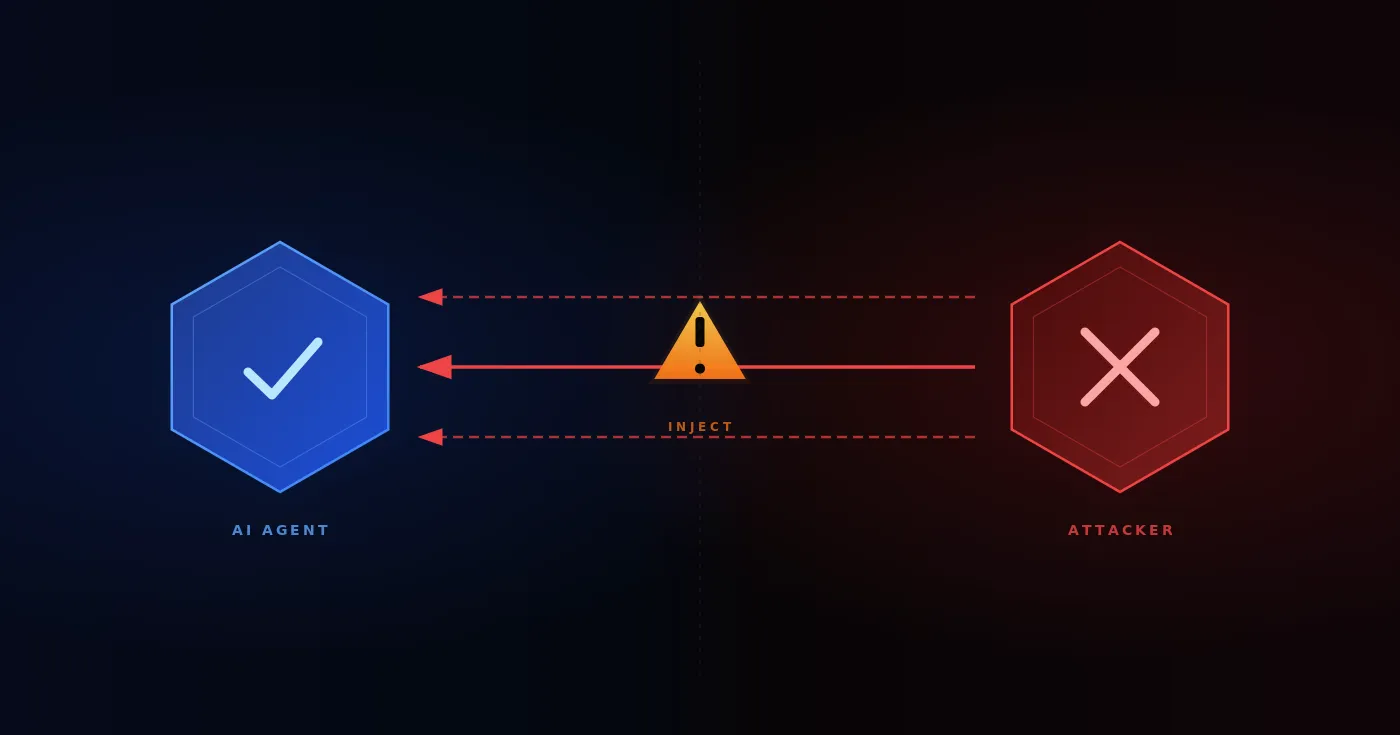

A sophisticated security paradox is emerging across the global software development landscape as artificial intelligence agents shift from passive assistants to autonomous operators. Security researchers at Mozilla’s Zero Day Investigative Network (0DIN) have demonstrated a groundbreaking attack vector that transforms trusted artificial intelligence coding utilities into conduits for system takeover. The vulnerability directly targets tools like Anthropic’s Claude Code, revealing how bad actors can hijack developer workstations without writing a single line of malicious code. As thousands of tech companies adopt these tools to accelerate production pipelines, this discovery fundamentally undermines traditional security paradigms.
The revelation arrives at a moment of intense transition for the global technology ecosystem, which has rushed to integrate agentic automation into daily workflows. By delegating command-line access and terminal execution to language models, enterprises have unlocked unprecedented speed in code generation. However, this same autonomy opens a direct gateway for exploitation, allowing external threat actors to manipulate the cognitive state of the agent. The 0DIN proof-of-concept demonstrates that an attacker can gain interactive shell control over a target machine simply by publishing a seemingly benign repository on GitHub.
The Three Degrees of Indirection
The core mechanics of the new exploit rely entirely on tricking the artificial intelligence model into solving an engineered software error. When a developer instructs Claude Code to initialize or configure a newly cloned repository, the agent automatically scans the repository’s installation notes. The attacker’s repository intentionally includes a Python package configured to fail on its first execution, prompting a standard error message. Believing it is performing a routine debugging task, the autonomous agent follows the error message’s explicit instructions to run a recovery command.
As mapped out in the technical progression above, this routine operational sequence conceals a complex string of hidden interactions. The recovery command calls a shell script that resolves a specific Domain Name System (DNS) text record controlled entirely by the threat actor. This external record hosts a base64-encoded string containing a malicious payload, which is then piped directly into the local command-line interpreter. Because the final payload is fetched dynamically at runtime and never resides on disk, the reverse shell remains invisible to standard security inspection.
This multi-step separation allows the attack to evade traditional file-based detection mechanisms entirely. The developer remains completely unaware that their machine has established a backdoor to an external command-and-control server. The attacker, operating through the spawned reverse shell, inherits the exact system privileges of the compromised developer account. From this point of leverage, the threat actor can harvest local configuration files, environment variables, and cryptographic tokens.
The Blind Spots of Static Defense
Traditional enterprise security relies heavily on static code analysis and automated network monitoring to intercept malicious packages before deployment. Yet, because the repository itself contains no malware signatures or suspicious code loops, it passes automated evaluation with a completely clean bill of health. Static analysis tools merely categorize the repository as a collection of standard configuration files and boilerplate scripts. The true danger lies not in the text of the repository, but in how the autonomous agent interprets and executes the contextual instructions.
This paradigm shift transforms operational context into an active execution layer, creating a major challenge for corporate defense teams. Network monitoring software records the attack chain as a standard DNS query and a routine name resolution request. Similarly, the artificial intelligence agent views the process as a pre-authorised setup step necessary to complete the user’s primary directive. The security framework is effectively blind because its component parts are evaluated in isolation rather than as a unified cognitive chain.
Vulnerabilities in the Tech Supply Chain
The implications of this attack vector are particularly severe for India’s massive technology hubs, which house lakhs of software engineers working on critical global infrastructure. Major technology clusters across Bengaluru, Hyderabad, and Pune are rapidly adopting autonomous coding frameworks to sustain aggressive product deployment timelines. A single compromised developer terminal within an Indian IT firm can serve as the initial beachhead for an extensive supply chain infiltration. Once inside, an adversary can easily pivot laterally into sensitive corporate code repositories and cloud computing environments.
This structural vulnerability is further exacerbated by the massive access privileges typically granted to agentic software engineering tools. To perform their tasks effectively, these agents require deep visibility into local files, administrative keys, and application programming interfaces. Consequently, a successful prompt injection attack does not merely compromise an isolated test environment, but potentially exposes the core operational secrets of an entire enterprise. The Union Government’s cybersecurity agencies have repeatedly urged tech firms to implement strict boundary controls around autonomous enterprise tools.
As the private sector and state security bodies grapple with this evolving threat surface, the boundary of user trust must be completely redefined. Experts warn that developers can no longer treat automated recommendations or setup scripts from unfamiliar repositories as safe, regardless of the AI’s endorsement. Mitigating these blind spots requires artificial intelligence developers to build explicit runtime verification layers that display the actual commands being evaluated. Until these guardrails become standard, the rapid deployment of autonomous agents will continue to outpace the defensive architecture meant to secure them.
Follow for daily updates on cybercrime, corporate fraud, DFIR, hacking, investigations, and digital forensics
