
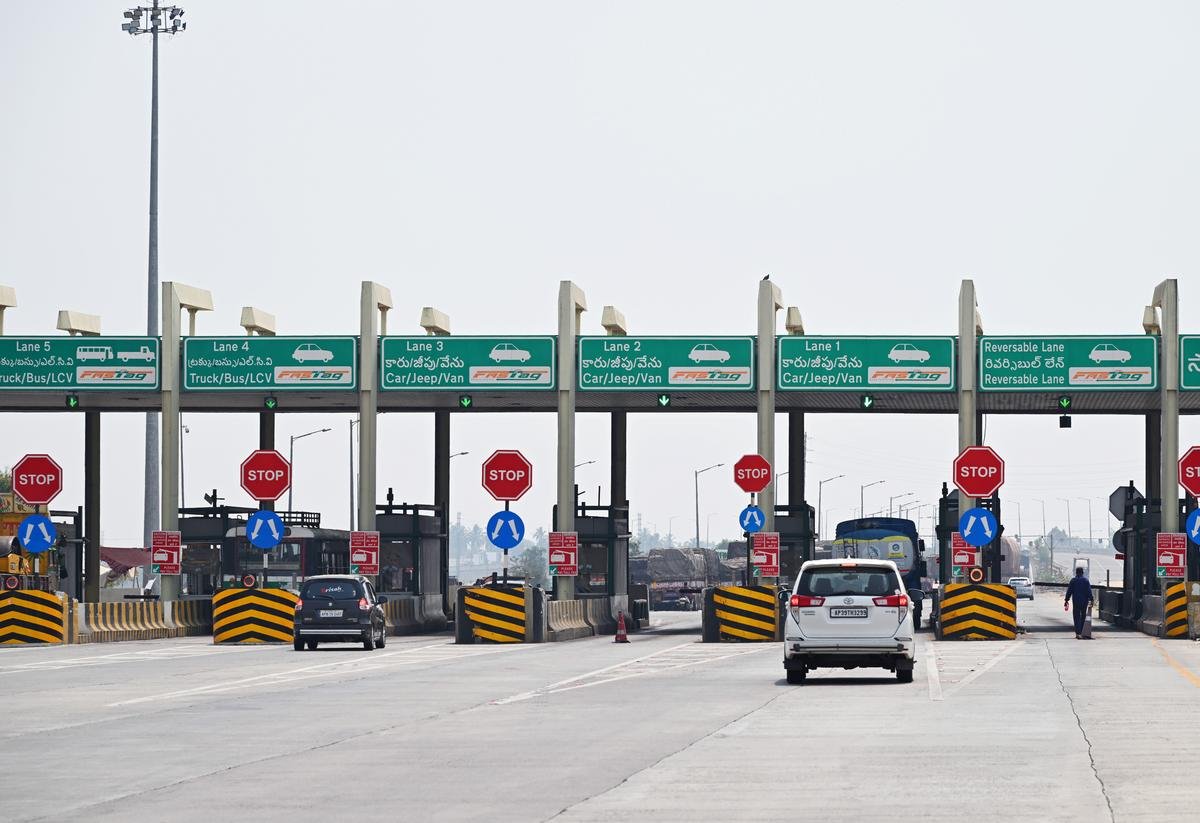
Serious questions have emerged over the transparency and reliability of vehicle monitoring systems on national highways after a car with missing registration plates was allegedly allowed to pass through the Ballipur Toll Plaza on Hardoi Road using a fictitious vehicle number. The incident has raised concerns not only about toll management practices but also about broader issues of road safety, law enforcement and vehicle traceability.
Manual Overrides and Non-Standard System Variable Injectors
According to reports, the incident took place on June 18 at around 3:30 p.m. when a car heading toward Lucknow crossed the Ballipur Toll Plaza. The vehicle reportedly had a damaged front registration plate, while the rear plate was completely missing. Despite the absence of valid identification, the vehicle was not stopped and was allowed to proceed after the driver made payment through a UPI transaction.
What has drawn particular attention is the fact that instead of recording the vehicle’s actual registration number, the toll operator allegedly entered the number “2026” into the system and issued a toll receipt. The driver was charged ₹112.50, including an additional ₹22.50 penalty for not having a FASTag. The receipt reportedly carried ticket number 530936.
Verification Infrastructure Shortfalls and Real-Time Traceability Gaps
The toll plaza is operated by a private contractor. Following the disclosure of the incident, concerns have been raised about how vehicles can be accurately traced in cases involving road accidents, criminal investigations or security-related incidents if their actual registration details are not properly recorded at toll checkpoints.
The episode has also cast doubt on repeated claims that modern toll collection systems maintain comprehensive digital records of every vehicle passing through and that the use of fake registration numbers is virtually impossible. The alleged entry of an arbitrary number such as “2026” has prompted questions about the effectiveness of existing verification mechanisms.
Sub-System Exploitations and Overloaded Multi-Axle Overrides
Allegations involving fake vehicle numbers at toll plazas are not entirely new. Over recent months, several complaints and investigations have suggested that overloaded commercial vehicles have also been allowed to pass through toll points using fabricated or incorrect registration details. Despite previous findings, concerns persist regarding the adequacy of oversight and enforcement.
Reports indicate that thousands of overloaded vehicles were permitted to cross various toll plazas between January and March. In some cases, investigators reportedly found that vehicles had been assigned fictitious registration numbers. Enforcement agencies observed discrepancies between toll records and actual vehicle registration data, strengthening suspicions that false numbers were being used to bypass monitoring systems.
Regional Corridor Violations and Transport Enforcement Mandates
Particular attention has been drawn to earlier allegations involving the Itaunja Toll Plaza, where a large number of overloaded trucks were reportedly found using fake registration details. Some of those cases resulted in formal complaints and legal action by transport enforcement authorities. However, critics argue that systemic weaknesses continue to remain unaddressed.
Road safety experts note that toll plazas serve a function far beyond revenue collection. They also provide critical vehicle movement data that can assist law enforcement agencies in tracking stolen vehicles, identifying suspects and reconstructing travel routes during investigations. If inaccurate or fabricated vehicle information is entered into the system, the reliability of that database can be severely compromised.
Structural Surveillance Standards and Institutional Accountability Stages
The incident has prompted calls for stricter verification procedures, improved surveillance and greater accountability among toll operators. Experts say that ensuring accurate vehicle identification is essential not only for toll collection but also for maintaining public safety and strengthening transportation governance.
Responding to the controversy, NHAI Project Director Nakul Prakash Verma said that the matter involving the alleged use of a fake vehicle number on a toll receipt at Ballipur Toll Plaza has come to the authority’s notice. He stated that a detailed inquiry would be conducted and appropriate action would be taken against anyone found responsible.
The findings of the investigation are now expected to determine whether the incident was an isolated case of negligence or part of a wider pattern of irregularities within the toll management system.
