

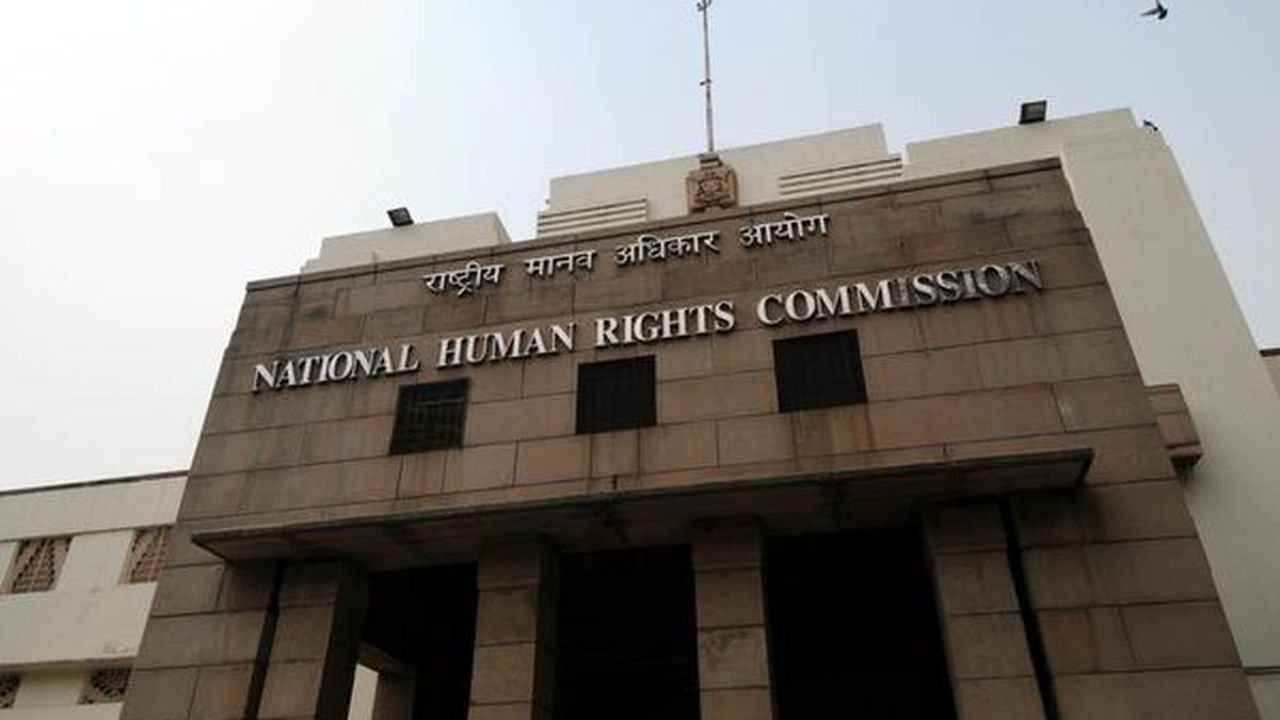

Lucknow | The National Human Rights Commission (NHRC) has taken serious cognisance of alleged violations in recruitment rules in government-aided madrasas in Uttar Pradesh, issuing a show-cause notice to the Minority Welfare Department after reports of 45 illegal appointments were made despite a ban on fresh recruitments.
According to officials, the controversy emerged after a complaint was filed alleging that between April and May 2025, more than 45 appointments were made in aided madrasas even though the state government had imposed a complete restriction on new hiring in such institutions. The matter has raised concerns over procedural violations and administrative oversight within the department.
FCRF’s Flagship Cyber Law Certification Returns With a New Four-Week Cohort
Human rights activist Talha Ansari approached the NHRC with a detailed complaint, alleging that the then registrar of the department bypassed official instructions and approved multiple appointments in violation of the recruitment ban. The complaint has prompted the commission to seek clarification from the Minority Welfare Department regarding the circumstances under which these appointments were permitted.
The complaint specifically highlights several institutions where the alleged illegal appointments took place. These include Madrasa Arabia Ashraful Uloom in Prayagraj, Aliya Misbahul Uloom in Prayagraj, Bahrul Uloom Oriental College in Ghazipur, Madrasa Al-Jamiatul Arabia Gausia in Kanpur, Madrasa Darul Uloom in Ayodhya, and Madrasa Islamia Arabia Bahrul in Barabanki. Authorities are now examining appointment records and recruitment files from these institutions to verify compliance with government directives.
Sources indicate that the issue is currently under preliminary investigation at the Directorate of Minority Welfare, where documents related to staffing, approvals, and recruitment procedures are being reviewed. Officials are also expected to verify whether proper administrative clearance was obtained before the appointments were made.
Meanwhile, NHRC has directed the department to submit a detailed explanation regarding the alleged violations, including justification for the appointments made during the enforcement of the recruitment ban. The commission has also sought details of the officials responsible for approving the appointments and whether disciplinary action has been initiated against those involved.
In a parallel development, the Uttar Pradesh Minority Welfare and Waqf Department has also initiated a major digital reform aimed at improving transparency in legal monitoring. Principal Secretary Sanyukta Samaddar launched a newly developed “Court Case Module” on the Uttar Pradesh Madrasa Education Council portal through a virtual meeting conducted via Zoom.
Officials stated that the new module is designed to provide real-time updates on court cases involving the department. It will allow district-level Minority Welfare Officers to upload and update the latest status of pending cases in the High Court and Supreme Court directly on the online system.
The initiative aims to ensure that accurate and updated information about ongoing litigation is available at all administrative levels. According to officials, this will help eliminate delays in communication and improve coordination between district offices, directorate-level authorities, and the state secretariat.
The Court Case Module is also expected to strengthen monitoring mechanisms by enabling continuous review of legal matters across all districts. Authorities believe that centralized digital tracking will significantly improve efficiency in handling litigation and reduce administrative lapses.
Officials added that the system will play a crucial role in strengthening governance by ensuring transparency in case management and providing timely updates for decision-making at higher levels. It is also expected to support better accountability among field officers responsible for reporting court-related developments.
The twin developments—alleged recruitment violations and the launch of a digital monitoring system—have brought renewed attention to administrative functioning within the Minority Welfare Department. While the NHRC probe focuses on accountability in past recruitment practices, the new digital initiative aims to modernize and streamline future legal monitoring processes.
Further action in the recruitment case is expected after the department submits its official response to the NHRC, while the court case module will be rolled out across all districts for full implementation in the coming weeks.
