

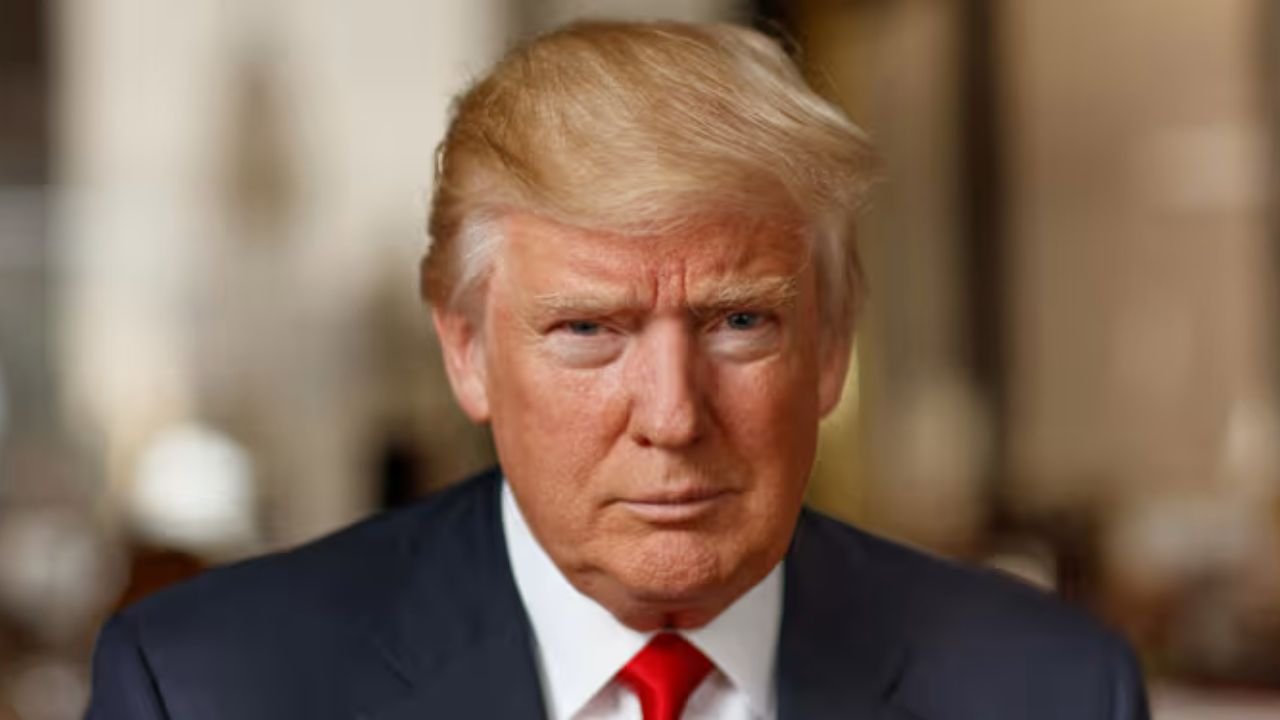

Washington: US President Donald Trump has renewed his effort to remove Federal Reserve Governor Lisa Cook from office, with the White House notifying her that the administration is considering her removal over allegations of mortgage fraud. Cook has been given 21 days to respond to the allegations and present her position.
The letter, dated August 5, states that the President is considering removing Cook from her position on the Federal Reserve Board of Governors. The administration has alleged that Cook made inaccurate representations in mortgage documents in 2021 by identifying certain properties as primary residences, potentially allowing her to obtain more favourable lending terms. Cook has denied wrongdoing and has previously challenged Trump’s attempt to remove her from the central bank.
The allegations against Cook first emerged in 2025, when the Trump administration accused her of providing misleading information in connection with mortgage applications. Trump subsequently sought to remove her from the Federal Reserve. Cook refused to step down, and the dispute eventually moved into the courts.
The US Supreme Court later intervened in the dispute, allowing Cook to remain in office while questions surrounding the administration’s removal process were considered. The legal battle has focused in part on whether Cook was given adequate opportunity to respond to the allegations before the administration attempted to remove her.
The latest White House letter appears to revive the removal effort through a formal process that gives Cook an opportunity to respond. The development is significant because Federal Reserve governors enjoy statutory protections intended to shield the central bank from direct political pressure. Under federal law, a governor can be removed by the President only “for cause.”
The dispute has therefore raised broader questions about the independence of the Federal Reserve and the limits of presidential authority over the central bank. The Fed’s independence is considered an important element of US monetary policy, allowing officials to make decisions on interest rates and inflation without direct political interference.
Cook was nominated to the Federal Reserve Board in 2022 by then-President Joe Biden. She became the first Black woman to serve as a governor of the Federal Reserve. Her appointment has also become part of the broader political conflict between Trump and officials appointed during previous Democratic administrations.
Interest-rate policy has been another major source of tension between Trump and the Federal Reserve. Trump has repeatedly called for lower interest rates, while Federal Reserve officials have maintained that monetary policy decisions must be based on inflation, employment and broader economic conditions rather than political demands.
On August 5, the same day the White House letter was dated, Cook spoke at an economic luncheon in Alaska and said inflation remained too high. She indicated that the Federal Reserve was prepared to take appropriate action if economic conditions required it. Her comments reflected the central bank’s continued focus on inflation and monetary stability.
The renewed attempt to remove Cook comes amid an intensifying debate over the institutional independence of the Federal Reserve. Critics of Trump’s approach have warned that political pressure on the central bank could undermine confidence in monetary policy and influence expectations about interest rates and inflation. The administration, however, maintains that the President has authority to act against officials when there are serious allegations of misconduct that could affect their suitability for office.
The mortgage-related allegations against Cook remain allegations, and she has denied wrongdoing. There has been no criminal conviction against her in connection with the claims. The administration’s decision to revive the process means the dispute will now move into another phase in which Cook can formally respond to the allegations.
Cook has 21 days to submit her response. Following that period, the Trump administration could decide whether to proceed with the removal effort. If the matter continues, courts could again be asked to examine the scope of presidential authority, the meaning of the statutory “for cause” requirement and the protections afforded to Federal Reserve governors.
The confrontation between Trump and Cook therefore extends beyond an individual personnel dispute. It could have wider implications for the independence of US monetary policy and the relationship between the White House and the country’s central bank. The administration’s latest move, following earlier court intervention, is likely to keep the legal and political debate over Federal Reserve independence at the centre of attention.
About the author — Suvedita Nath is a science student with a growing interest in cybercrime and digital safety. She writes on online activity, cyber threats, and technology-driven risks. Her work focuses on clarity, accuracy, and public awareness.
Follow for daily updates on cybercrime, corporate fraud, DFIR, hacking, investigations, and digital forensics
