

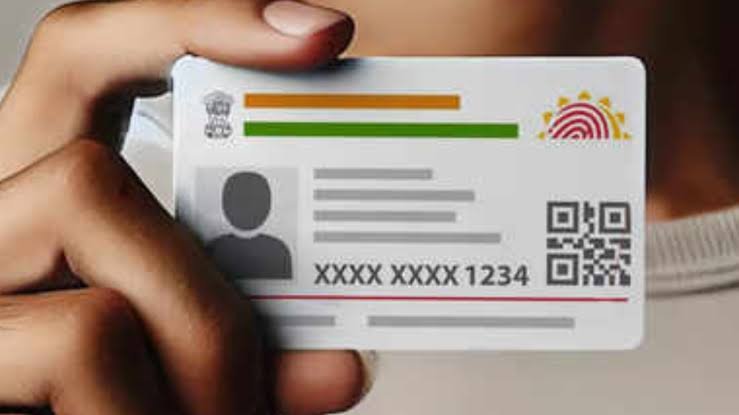

Sambhal: A major cyber fraud involving fake Aadhaar card generation has been uncovered in Uttar Pradesh’s Sambhal district, where an organized gang was running an illegal operation by hacking login credentials of authorized Aadhaar service centres. Police have arrested three accused in connection with the case, while four others remain absconding.
Hacking Credentials to Access Official Systems
According to investigators, the gang had set up a makeshift but fully functional fake Aadhaar centre in the Bahjoi area. The setup was so well-organized that it closely resembled a legitimate enrolment and update facility, making it difficult for unsuspecting citizens to detect any wrongdoing. People visiting the centre for routine updates—such as name, address, or mobile number corrections—were unknowingly becoming part of the fraud.
Police officials revealed that the gang’s modus operandi was highly technical and carefully executed. The accused allegedly hacked into the login ID of a valid Aadhaar service centre and linked it to their own system. Using this unauthorized access, they were able to generate new Aadhaar cards and modify existing records within the government database.
FCRF Launches Premier CISO Certification Amid Rising Demand for Cybersecurity Leadership
Raid, Arrests, and Evidence Seizure
The fraud came to light after police received continuous inputs about suspicious activities in Asadpur and nearby areas. Local residents had reported that Aadhaar-related services were being offered at unauthorized locations. Acting on these inputs, a police team conducted a raid at the suspected site and apprehended three individuals on the spot.
During the raid, officers recovered key equipment used in the operation, including two laptops, fingerprint scanners, printers, fake seals, and other electronic devices. These tools were being used to process Aadhaar-related requests, manipulate data, and communicate with clients.
A Wider Network Under Investigation
Interrogation of the arrested accused revealed that the racket was not limited to local operations. The gang was reportedly preparing Aadhaar cards for individuals from other states as well. They charged customers several times the official fee, promising quick processing and guaranteed results, thereby exploiting people’s urgency and lack of awareness.
One of the most serious concerns emerging from the investigation is the hacking of a legitimate Aadhaar centre’s ID. This has raised significant questions about the robustness of cyber security systems and safeguards in place for sensitive identity databases. Authorities are now working to identify the compromised centre and assess the extent of the breach.
While three accused are in custody, efforts are underway to trace and arrest the remaining four members of the gang. Police teams are conducting multiple raids and tracking leads to dismantle the entire network. Officials suspect that the racket may have links extending beyond the district, possibly across multiple states.
Cybersecurity experts point out that such operations often combine technical hacking with elements of social engineering. Fraudsters exploit both system vulnerabilities and human behavior—targeting individuals seeking quick services and leveraging trust to carry out illegal activities.
For now, the investigation remains ongoing, with agencies focusing on digital trails, financial transactions, and network linkages. More revelations are expected in the coming days, which could expose a larger organized syndicate involved in identity fraud.
Follow for daily updates on cybercrime, corporate fraud, DFIR, hacking, investigations, and digital forensics
