
Stay ahead with our breaking stories and exclusive coverage prioritized on Google.
Add The420 on Google →India’s data-centre industry has attracted nearly 11 times more disclosed funding in 2026 than last year, driven by demand for artificial intelligence, cloud computing and digital infrastructure. However, almost all the money has gone to just four established companies, leaving smaller startups with a tiny share.
According to Tracxn data analysed by ETInfra and published on November 26, the sector raised ₹16,458.52 crore across seven funding rounds in 2026, compared with ₹1,533 crore across nine rounds during 2025.
Bharti Airtel-backed Nxtra emerged as the largest recipient, securing 57.6% of the total funding. CtrlS, Yotta and Netmagic Solutions accounted for almost all the remaining investment.
Together, these four companies attracted ₹16,440.68 crore, representing 99.9% of disclosed funding.
The figures highlight an unusual trend. Investment has grown dramatically, but fewer companies are receiving the money.
FCRF Launches Certified Chief Risk Officer (CRO) Program for India’s Risk Leaders
Nxtra Leads Funding Surge With ₹9,478 Crore Investment
Nxtra, the data-centre subsidiary of Bharti Airtel, accounted for the biggest transaction recorded during the year.
The company secured a ₹9,478.22 crore funding round in March, representing more than half of the sector’s disclosed investment.
The financing involved Alpha Wave Global, Carlyle, Anchorage Capital and participation from Airtel.
Airtel had announced the approximately $1 billion investment on March 30 to support Nxtra’s expansion across India.
The investment was intended to increase capacity and strengthen infrastructure supporting businesses, cloud providers and AI applications.
Hyderabad-based CtrlS ranked second, attracting ₹4,256 crore across two funding rounds, equivalent to approximately 26% of the sector’s total.
Its largest investment involved ₹4,000 crore from Canadian institutional investor CPP Investments in June.
Mumbai-based Yotta followed with ₹1,428.23 crore raised in July, while Netmagic Solutions secured ₹1,278.24 crore through conventional debt financing in February.
These transactions show how investors are concentrating capital in companies with established infrastructure, existing customers and plans for large-scale expansion.
However, the funding figures do not necessarily represent money already spent on operational data centres.
Smaller Startups Struggle Despite Record Investment
While established operators attracted substantial funding, early-stage companies experienced a very different year.
According to Tracxn, smaller startups secured just ₹17.84 crore during 2026.
This contrasts with ₹234.25 crore raised through disclosed seed-stage deals in 2025.
The decline is significant because early-stage companies often develop specialised technologies supporting larger data-centre operations.
Hyderabad-based Refroid Technologies, which develops liquid-cooling solutions, raised ₹14.50 crore in August.
Bengaluru-based Uravu Labs attracted another ₹3.34 crore in July.
These were the only two smaller companies identified in the latest funding analysis.
The shift suggests investors are favouring established infrastructure operators over businesses developing newer technologies.
Another major change involves the type of financing being used.
Equity and private equity represented approximately 92% of funding in 2026, compared with 2025, when conventional debt accounted for 84.7%.
Equity investment gives investors ownership in a company. Debt financing, by contrast, generally requires repayment with interest.
The figures indicate a substantial shift in the composition of disclosed funding, although individual companies may continue to rely heavily on borrowing.
Why AI And Cloud Computing Need More Data Centres
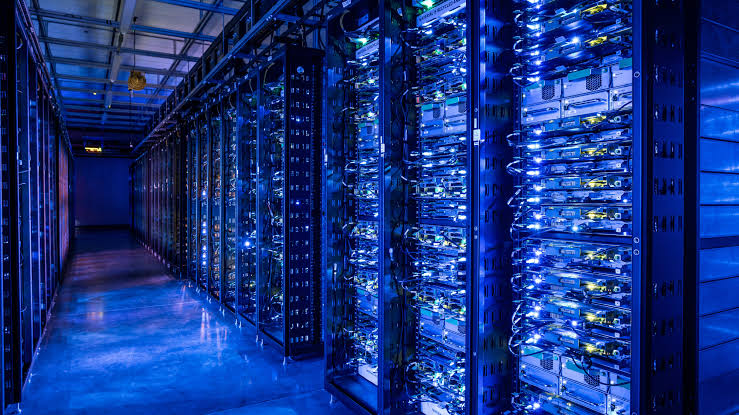
A data centre is a specialised building that houses computer servers, storage systems and networking equipment.
These facilities support everyday digital services, including banking applications, online shopping, video streaming and cloud storage.
Artificial intelligence places additional demands on this infrastructure.
Training and operating advanced AI models requires powerful processors, large amounts of electricity and systems capable of preventing equipment from overheating.
That creates demand for larger facilities, advanced cooling technology and reliable power connections.
India’s government has introduced measures intended to encourage investment in domestic data-centre infrastructure.
In October, official policy announcements highlighted incentives for eligible foreign cloud providers using Indian facilities.
However, expanding capacity also creates practical challenges.
An October assessment by NITI Aayog urged states to examine electricity availability, water consumption and environmental safeguards before approving major projects.
The findings reflect concerns that investment announcements alone do not guarantee successful infrastructure development.
Rising Borrowing Raises Questions About Long-Term Growth
The surge in funding comes alongside growing financial obligations for major operators.
A separate Mint analysis published on November 26 found that combined borrowings of six prominent Indian data-centre companies rose 43% to ₹27,062 crore during FY2025–26.
The companies included Nxtra, CtrlS, Yotta, AdaniConneX, Sify Infinit Spaces and STT Global Data Centres.
The report highlighted the financial pressure associated with building large facilities before they begin generating sufficient revenue.
Earlier this year, State Bank of India also cautioned lenders against financing speculative projects without clear customer demand.
These warnings do not establish that India’s data-centre industry is facing a financial crisis.
They demonstrate that rapid expansion requires careful planning, particularly when projects depend on future demand for AI services.
For now, the latest figures reveal a sector attracting unprecedented disclosed investment while remaining highly concentrated among a handful of operators.
Whether smaller companies can benefit from this expansion will depend on investor appetite, infrastructure requirements and demand for specialised technology.
What this means for you:
India’s growing data-centre network could improve access to cloud and AI services. Businesses planning to use these facilities should evaluate providers’ reliability, security arrangements and financial stability before signing long-term contracts.