
Stay ahead with our breaking stories and exclusive coverage prioritized on Google.
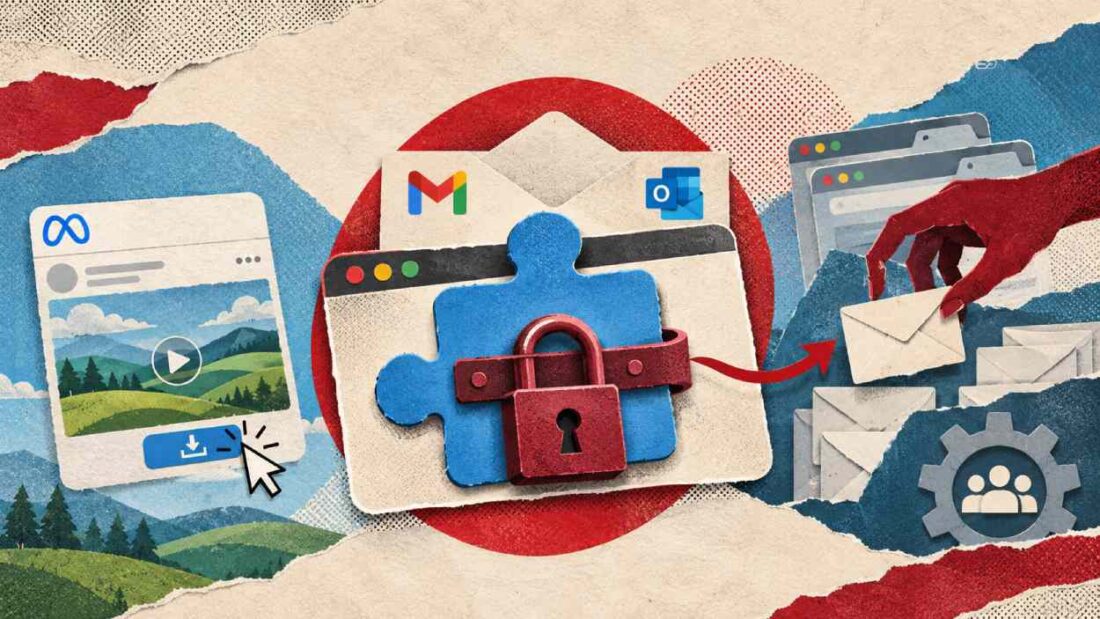
Add The420 on Google →A free animated wallpaper downloaded from a social media advertisement could give hackers access to a person’s Gmail, Outlook and Facebook business accounts. Cybersecurity researchers have uncovered a new malware campaign that secretly takes control of web browsers and can erase security warnings before victims notice anything unusual.
The malware, named SYS010, was detailed by cybersecurity company Bitdefender on November 26, 2026. Researchers found that attackers are using advertisements on Meta platforms to distribute seemingly harmless wallpaper applications to Windows users.
Once installed, the software can force Chrome, Microsoft Edge and Firefox to accept malicious browser extensions. These extensions steal account information, monitor online activity and help criminals access accounts without knowing their passwords.
The most concerning discovery involves the Chrome extension, which can read recent Gmail and Outlook messages and permanently delete selected emails.
FCRF Launches Certified Chief Risk Officer (CRO) Program for India’s Risk Leaders
How Fake Wallpaper Advertisements Lead To Account Theft
The attack begins with advertisements promoting free animated desktop wallpapers. Some imitate popular applications such as Wallpaper Engine and Lively Wallpaper.
People clicking these advertisements are directed to websites designed to resemble legitimate software download pages.
The downloaded application actually provides working wallpaper features. However, hidden components simultaneously install malware in the background.
This makes the attack difficult to recognise because users receive the product they expected.
Bitdefender first identified a malicious advertisement associated with the campaign on October 16, 2026. Researchers subsequently observed numerous advertisements and suspicious server communications across Asia, Europe, Africa and the Americas.
One advertisement reached more than 6,000 users in the European Union.
However, advertisement reach and server activity do not establish how many computers were successfully infected.
Researchers identified significant activity linked to countries including the Philippines, Thailand, Bangladesh, Poland and the United States.
The investigation has not established the identity or location of the attackers.
Hackers Exploit Browser Management Tools To Install Malware
SYS010 uses an unusual method to gain control over infected browsers.
Chrome, Edge and Firefox include management features that allow companies to install approved extensions and enforce security settings across employees’ computers.
The attackers exploit these legitimate administrative functions to make malicious extensions appear mandatory.
In Chrome, the malware attempts to enrol the browser in a Google management environment controlled by the attackers.
Firefox receives an enforced extension, while Edge can be placed under attacker-controlled device management.
These changes require administrator permission. Researchers discovered that the malware repeatedly displays permission requests, sometimes up to 99 times, hoping users will eventually approve them.
After successful installation, removing the malicious extensions becomes difficult because the browser treats them as organisation-managed software.
The extensions also target Facebook Pages, advertising accounts and Meta Business accounts.
Attackers could use stolen access to run unauthorised advertisements, change payment information or compromise business communications.
What Are Browser Cookies And Why Can Hackers Steal Accounts?
One important part of the attack involves stealing browser session cookies.
A session cookie is a small piece of information that helps a website remember that someone has already logged in.
For example, when users open Gmail without entering their passwords again, their browser may be maintaining an authenticated session.
If criminals obtain valid session information, they may be able to impersonate that user without entering the original password.
This can sometimes bypass the protection provided by two-factor authentication because the stolen session has already been authenticated.
SYS010 takes advantage of this weakness to access connected accounts.
Its Chrome extension goes further by accessing messages inside Gmail and Outlook.
According to Bitdefender, attackers can retrieve recent emails, including their subjects, senders and full contents.
They can also instruct the extension to permanently delete selected messages.
This could allow criminals to intercept account verification codes and remove notifications warning users about suspicious login attempts.
The technique is especially dangerous because victims might never receive visible evidence that someone accessed their accounts.
SYS010 Builds On Earlier Malware Targeting Facebook Businesses
Bitdefender believes SYS010 represents a substantially redesigned version of SYS01, an information-stealing malware family observed in previous campaigns.
In 2024, researchers documented SYS01 attacks using fake software downloads to compromise Facebook business accounts.
The latest version retains that objective but introduces more sophisticated browser controls and email-access capabilities.
A separate malware threat called Remus has also attracted attention for its reported ability to access Gmail through malicious browser extensions.
However, Remus uses a different installation technique and is not established as part of the SYS010 operation.
For businesses, the risks extend beyond stolen passwords. A compromised advertising account could expose customer conversations, trigger unauthorised advertising charges and damage trust in a company’s online identity.
Bitdefender advises users to download applications only from official sources and investigate unexpected browser-management notifications.
A personal browser suddenly displaying the message “Managed by your organisation” may require a security check, although that message can be legitimate on workplace devices.
What this means for you:
Avoid installing software promoted through unfamiliar social media advertisements. If your personal browser unexpectedly becomes organisation-managed, or security emails disappear, seek a trusted security professional’s help and review your account sessions from a clean device.