
Follow us on Google News

India is expanding the use of artificial intelligence in public healthcare, with AIIMS New Delhi, JIPMER and the Indian Army’s medical services demonstrating technology that allows doctors to prepare clinical records and communicate with patients in different Indian languages.
The developments were highlighted at the Global Digital Health Summit 2026, held at Bharat Mandapam in New Delhi on November 20–21.
According to a Ministry of Electronics and Information Technology announcement on November 21, the government’s BHASHINI platform is being integrated into hospital systems to support voice-based prescriptions, clinical documentation and multilingual communication.
One significant development is at AIIMS New Delhi, where an AI-powered speech-to-text facility is being expanded across the institute after a pilot in its Neurology and Neurosurgery departments.
The initiative aims to reduce documentation burdens on doctors while helping patients communicate more comfortably in their preferred languages.
FCRF Launches Certified Chief Risk Officer (CRO) Program for India’s Risk Leaders
AIIMS Expands Voice-Based Prescriptions After Successful Departmental Pilot
AIIMS New Delhi has integrated BHASHINI’s speech-to-text technology with the National Informatics Centre’s eHospital prescription module.
The integration allows doctors to dictate prescription information instead of entering every detail manually.
The system converts spoken instructions into written text, which can be incorporated into digital medical records.
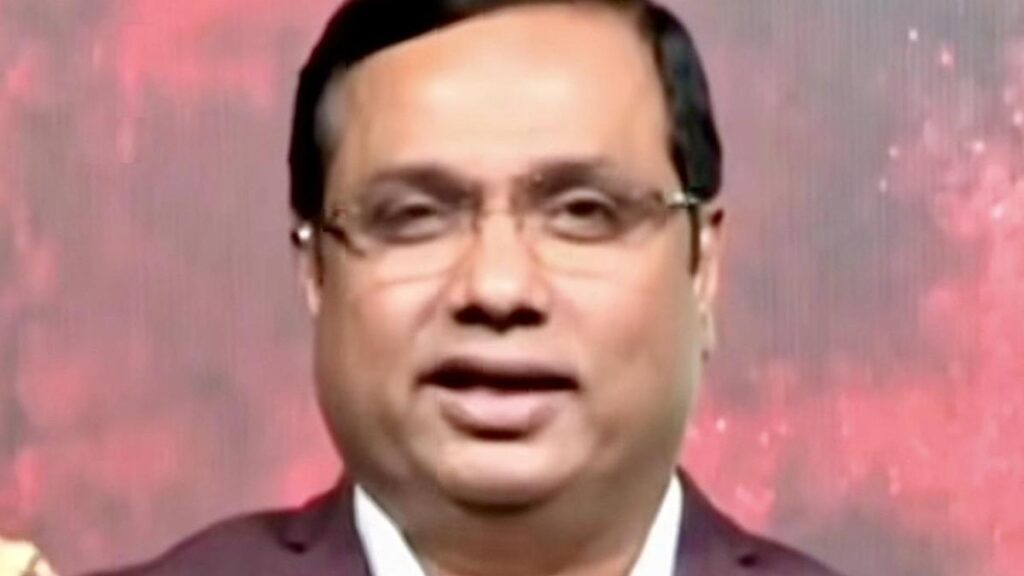
Professor Vivek Tandon, Professor In-charge of the Computer Facility at AIIMS, said the technology had received positive feedback during its pilot in Neurology and Neurosurgery.
Following that experience, the application is being rolled out across the institute.
The development is particularly relevant for busy outpatient departments, where doctors must examine patients while maintaining accurate clinical records.
Voice-based documentation could reduce the time spent typing and help healthcare professionals concentrate on patient consultations.
However, AIIMS has not disclosed specific figures showing how much time the system saves or whether it has improved prescription accuracy.
The technology also requires appropriate verification because errors in medical terminology, medicine names or dosage instructions could have serious consequences.
JIPMER And Army Hospitals Demonstrate Multilingual Medical Documentation
At JIPMER in Puducherry, BHASHINI has been integrated with e-Sushrut, the hospital’s existing Hospital Management Information System.
The system enables doctors to prepare clinical histories, inpatient notes and discharge instructions through voice-based documentation.
Doctors can dictate information in English or supported Indian languages while preparing medical records.
This could be useful in hospitals serving patients from different linguistic backgrounds.
The Indian Army’s Directorate General of Medical Services also demonstrated BHASHINI integration with its Dhanwantri healthcare platform.
Under this arrangement, spoken clinical notes are converted into typed text, supporting digital documentation.
Major General Sandeep Bhalla said the technology could benefit serving personnel, retired military personnel and their families, who come from different parts of India and speak different languages.
The applications demonstrate how government-developed language technology is moving beyond general translation into specialised healthcare workflows.
However, the ministry has not announced that these capabilities are operational across every military hospital or JIPMER department.
How BHASHINI Converts Speech Into Medical Records
BHASHINI is an AI-powered language technology initiative operating under the Union Ministry of Electronics and Information Technology.
Its tools include speech recognition, text translation and text-to-speech systems.
Speech recognition converts spoken words into written text. Machine translation converts information from one language into another.
For example, a patient describing symptoms in Hindi could potentially receive assistance communicating with a healthcare professional more comfortable with another language.
The summit also featured Shrutlekh, BHASHINI’s real-time speech transcription and translation tool.
Other demonstrations included Data Daan, which supports community contributions of language data, and Granthika, a platform for collecting and digitising written and spoken language resources.
According to the government, BHASHINI supports 36 Indian text languages, 23 Indian voice languages and 35 international languages.
Its wider ecosystem has processed more than 1,100 crore AI inferences, with approximately 2.4 crore processed daily.
An inference is an operation performed by a trained AI model, such as recognising speech or translating text.
These figures describe BHASHINI’s overall platform activity, not the number of patients using its healthcare applications.
Earlier Healthcare Partnerships Set The Stage For Wider Adoption
The latest demonstrations build on earlier efforts to introduce multilingual AI into India’s healthcare infrastructure.
In January 2026, BHASHINI signed an agreement with the National Health Authority to support multilingual services across digital health platforms, including Ayushman Bharat PM-JAY and the Ayushman Bharat Digital Mission.
In October, JIPMER hosted a workshop examining how multilingual AI could assist clinical documentation, hospital guidance and medical education.
The November summit demonstrated more practical applications within existing hospital systems.
However, the initiatives also raise questions about protecting sensitive medical information and maintaining accuracy in AI-generated records.
Clinical notes can contain personal health details, making secure access and appropriate data safeguards essential.
The government has not published comprehensive independent evaluations of the systems’ accuracy across languages or their impact on patient outcomes.
For now, the AIIMS rollout and hospital demonstrations represent steps towards making clinical documentation and communication more accessible.
Their wider impact will depend on accuracy, staff training, data protection and successful integration into everyday healthcare services.
Patients at participating hospitals may gradually benefit from easier communication and documentation in Indian languages. Always ask your doctor to verify AI-generated prescriptions and medical instructions before relying on them.