
Follow us on Google News

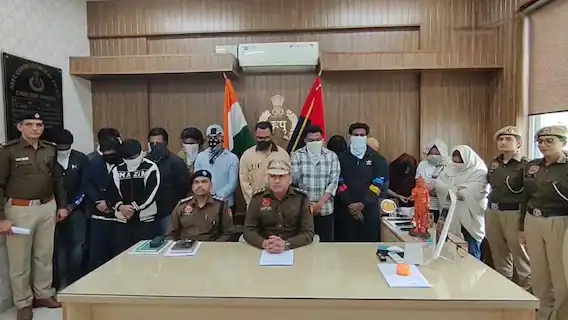
Delhi Police have apprehended a 14-year-old boy from Ballabhgarh in Haryana for allegedly gaining unauthorised access to a website associated with former Agniveers and attempting to sell personal information relating to approximately 4,000 personnel on the dark web for $500.
The investigation, conducted by the Intelligence Fusion and Strategic Operations (IFSO) unit of the Delhi Police Special Cell, has also revealed the suspected use of artificial intelligence tools in accessing the website.
Investigators have recovered digital material from the teenager’s devices and are examining whether the information advertised for sale matches official Agniveer records. Police have approached the Ministry of Home Affairs to obtain the relevant database for verification.
FCRF Launches Certified Chief Risk Officer (CRO) Program for India’s Risk Leaders
How Was the Agniveer Website Allegedly Compromised?
According to investigators, the teenager allegedly gained unauthorised access to a test website developed for former Agniveers seeking employment opportunities in other government departments.
The website was associated with the employment transition of personnel recruited under the Agnipath scheme, which was introduced by the central government in June 2022.
Under the scheme, personnel are recruited into the Army, Navy and Air Force for a four-year period of service.
Police suspect that the teenager accessed information available through the test website and subsequently advertised the purported dataset on the dark web.
The advertisement allegedly claimed that personal information belonging to approximately 4,000 Agniveers was available for purchase at a price of $500.
Investigators are examining how the website was accessed and whether the suspected intrusion resulted in the extraction of authentic personnel information.
What Role Did Artificial Intelligence Play?
The investigation has indicated that the teenager allegedly used artificial intelligence tools while attempting to access information from the website.
However, the precise technical method used to gain unauthorised access remains under examination.
The IFSO unit is analysing the recovered digital evidence to determine the nature of the suspected intrusion and the information that may have been obtained.
Investigators are also examining whether AI tools were used to identify vulnerabilities, facilitate access or assist with other aspects of the alleged activity.
The findings have raised concerns about the potential misuse of readily available digital tools to target online systems containing personal information.
The involvement of a minor in the alleged incident has also brought attention to the accessibility of technologies that can potentially be misused for unauthorised access and data-related offences.
Police Seek Official Records to Verify Alleged Data Leak
Delhi Police have recovered data from digital devices associated with the teenager and are examining its contents to establish the extent of the suspected breach.
Investigators have written to the Ministry of Home Affairs requesting access to an official Agniveer database.
The recovered information will be compared with government records to determine whether the dataset contains genuine personal information relating to approximately 4,000 personnel.
Police are also attempting to establish whether the teenager actually obtained the data claimed in the dark web advertisement and whether any information was transferred to other individuals.
The authenticity of the advertised dataset and the full extent of the suspected unauthorised access remain under investigation.
The case highlights the importance of securing government-linked employment platforms and verifying claims of sensitive data exposure before determining the scale of a suspected cyberattack.
About the author — Suvedita Nath is a science student with a growing interest in cybercrime and digital safety. She writes on online activity, cyber threats, and technology-driven risks. Her work focuses on clarity, accuracy, and public awareness.