
Follow us on Google News

More than 3,100 industrial refrigeration controllers remain exposed to potential cyberattacks worldwide despite recent efforts to secure vulnerable equipment, raising concerns over the protection of everyday businesses across Europe. Cybersecurity experts have warned that artificial intelligence is enabling attackers to exploit security weaknesses faster than companies can respond, while smaller businesses struggle with limited resources and inadequate protection.
Research by cybersecurity firm Censys found that the number of internet-exposed refrigeration controllers manufactured by Danfoss and Copeland declined by 53 per cent globally between October 9 and November 5. However, thousands of systems remained accessible, and researchers could not establish whether the reduction resulted from permanent security improvements or equipment simply being disconnected from the internet.
The findings come amid a sharp increase in cyber incidents affecting commercial infrastructure. Cybersecurity firm Sygnia reported handling 285 per cent more incidents in October compared with the same month a year earlier, with demand for emergency assistance exceeding its available response capacity.
FCRF Launches Certified Chief Risk Officer (CRO) Program for India’s Risk Leaders
Why Are Thousands of Industrial Systems Still Vulnerable?
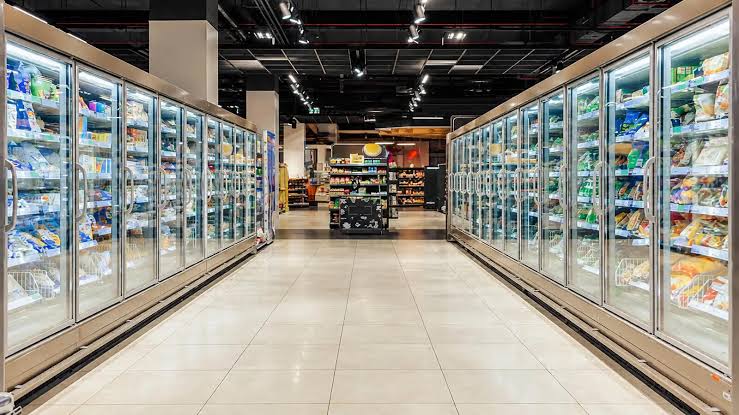
Cybersecurity researchers have identified widespread exposure of industrial control systems used by supermarkets, warehouses, restaurants and other commercial establishments.
Fredrik Blix, a cybersecurity researcher at Stockholm University, warned that thousands of such systems remain accessible through the public internet, sometimes despite manufacturers issuing warnings about the risks.
These systems perform essential operational functions, including maintaining refrigeration temperatures and monitoring equipment used to store food and other temperature-sensitive products.
Unlike major national infrastructure, which generally receives greater cybersecurity attention, everyday commercial systems often operate with weaker protections.
Guy Segal, chief executive of Sygnia, said essential services such as electricity infrastructure tend to receive stronger security investment, while commercial supply chains, supermarkets, petrol stations and public information displays remain comparatively exposed.
The vulnerability of such systems was demonstrated by recent attacks on supermarket refrigeration equipment across Europe, where attackers remotely altered temperature settings and caused food spoilage.
In early November, seven stores operated by Swedish retailer Coop were affected by attacks on refrigeration systems. The company said those stores had already been scheduled for security upgrades, but the attacks occurred just two days before the planned improvements.
Ahold Delhaize also experienced attacks affecting stores in Belgium and Luxembourg on November 2.
According to company chief executive Frans Muller, retailers that implemented recommended protections following earlier incidents in France avoided being affected, while smaller operators with fewer technical resources struggled to complete the necessary changes.
Copeland acknowledged that some of its refrigeration systems were affected by the vulnerability and said it had contacted customers with guidance on securing their equipment, including preventing direct internet exposure and maintaining software updates.
How Is AI Increasing Pressure on Cybersecurity Teams?
Cybersecurity experts have warned that artificial intelligence is substantially reducing the time needed to exploit newly disclosed security vulnerabilities.
According to Segal, inexpensive AI tools are allowing attackers to operate faster and with fewer specialised technical resources.
He described an incident in which attackers compromised clients within six hours of a vulnerability becoming publicly known. Similar exploitation attempts might previously have taken weeks.
The acceleration is placing additional pressure on cybersecurity firms responsible for investigating incidents and helping businesses recover from attacks.
Sygnia reported a 285 per cent year-on-year increase in incidents handled during October, forcing the company to decline some requests for emergency assistance.
Segal described one situation in which a company seeking help had already been rejected by ten other cybersecurity service providers before approaching Sygnia, which also lacked available response teams.
The shortage of emergency response capacity raises concerns for organisations that have not established arrangements with cybersecurity specialists before an incident occurs.
Jacob Silverman, chief executive of risk advisory firm Kroll, also reported that his company’s incident-response operations were functioning at full capacity amid a rapid increase in cyber threats.
The financial consequences can extend beyond the immediate disruption of affected equipment.
Ahold Delhaize informed investors that a separate cyberattack affecting its online operations and supply chain in October was expected to reduce fourth-quarter sales by €200 million, equivalent to approximately $219 million.
Danish shipping company Maersk, which suffered estimated losses of $250 million to $300 million during the 2017 NotPetya cyberattack, has spent nearly a decade strengthening its cybersecurity capabilities.
Its chief executive, Vincent Clerc, warned that artificial intelligence was increasing attackers’ effectiveness, creating pressure on businesses to improve their defences.
Can New Regulations Protect Europe’s Commercial Infrastructure?
European authorities are attempting to address weaknesses in connected commercial equipment, but experts warn that regulatory improvements may not immediately protect systems already in operation.
The European Union’s Cyber Resilience Act will introduce stricter security requirements for manufacturers of connected products from December 2027.
However, the legislation does not require all existing equipment to be brought into compliance with the new standards, leaving older commercial systems potentially exposed.
The distinction is particularly significant for smaller businesses that depend on ageing infrastructure and may lack the technical expertise or financial resources to implement extensive security improvements.
In the United Kingdom, cybersecurity specialists, information technology teams and the National Cyber Security Centre have been involved in a covert operation to protect tens of thousands of refrigeration systems used by supermarkets, warehouses, restaurants and other businesses.
The effort followed the discovery of a major vulnerability in late October, prompting specialists to notify affected organisations and help secure equipment before attackers could exploit it.
Experts have called for a more proactive approach in which authorities identify internet-exposed industrial systems and contact their operators before security weaknesses result in operational disruption.
Basic safeguards, including multi-factor authentication, network segmentation and restricting unnecessary internet access, have also been identified as important measures for reducing exposure.
The findings highlight a widening gap between the speed of cyber threats and the ability of everyday businesses to strengthen their defences. While new regulations and security initiatives are intended to improve protection, thousands of existing industrial systems remain potentially vulnerable, leaving commercial operators exposed to operational and financial disruption.
About the author — Suvedita Nath is a science student with a growing interest in cybercrime and digital safety. She writes on online activity, cyber threats, and technology-driven risks. Her work focuses on clarity, accuracy, and public awareness.