

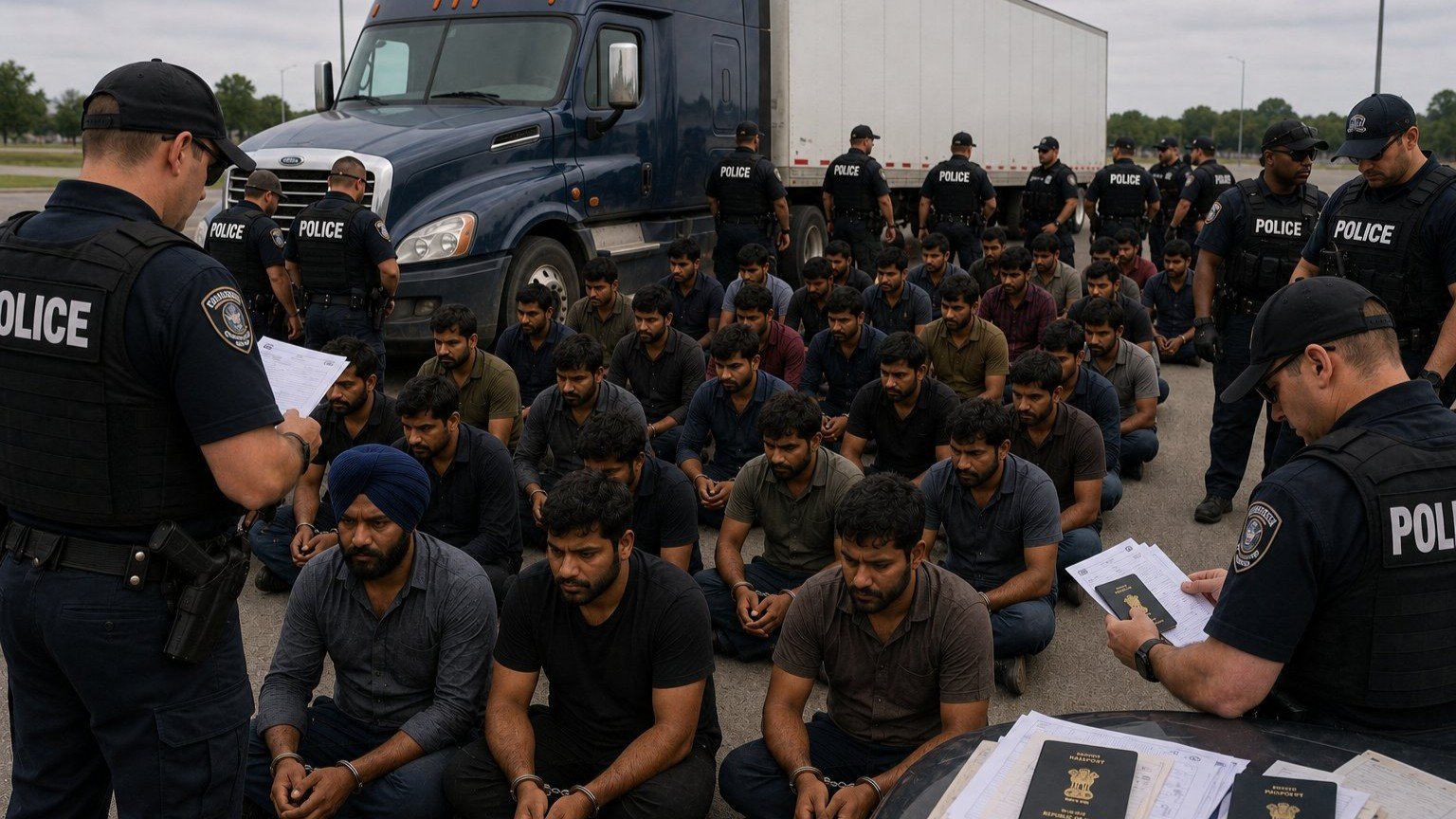
Yuma (Arizona). In a major enforcement drive amid strict immigration actions across the United States, authorities have carried out a large-scale operation under Operation Checkmate, leading to the arrest of 36 commercial truck drivers, including around 30 Indian nationals.
The operation was conducted between May 11 and May 15 in the Yuma sector of Arizona, where a total of 52 individuals were detained during coordinated federal enforcement action. Among those arrested, 36 were found operating semi-trucks without valid immigration documentation or proper legal status.
The primary objective of the operation was to identify undocumented individuals operating heavy commercial vehicles, which authorities say may pose potential risks to public safety and road security. According to enforcement agencies, the arrested drivers include citizens from India, Mexico, El Salvador, and Russia.
Licensing Anomalies and Document Discrepancies
Investigators found that several of the detained individuals possessed commercial driving licenses issued by different US states. However, a number of others did not hold any valid driving authorization at all. Officials also noted that some individuals had employment authorization documents issued in previous administrative periods, but those permits were no longer considered valid under current enforcement standards.
Border security authorities stated that the operation specifically targeted individuals driving heavy commercial vehicles without verified immigration status. Officials emphasized that such violations are not only related to immigration law but also raise concerns regarding highway safety and regulatory compliance.
All 52 individuals detained in the operation are now subject to federal immigration proceedings. Authorities have confirmed that deportation procedures have been initiated, and removal processes will continue in accordance with US federal law. Enforcement agencies further indicated that similar operations will continue across multiple regions to ensure strict compliance with immigration regulations.
Registration Begins for FutureCrime Summit 2026, India’s Largest Cybercrime Conference
Supply Chain Demands and Regulatory Gaps
The crackdown is being viewed as part of a broader tightening of immigration enforcement policies in the United States, particularly involving commercial transportation sectors. Experts note that the trucking industry has seen increased participation from foreign nationals in recent years, driven by labor shortages and high demand in logistics operations.
However, the growing reliance on foreign workers has also highlighted challenges related to document verification, work permits, and licensing inconsistencies between state and federal systems. Officials say this regulatory gap has often created confusion in enforcement, leading to repeated large-scale detentions during inspections.
According to analysts, operations like Checkmate are expected to increase as authorities intensify efforts to strengthen compliance mechanisms. The focus is not only on detaining undocumented workers but also on improving transparency and accountability in licensing and employment verification systems.
The commercial trucking sector remains a critical part of the US supply chain infrastructure, and labor shortages have long been a structural challenge. As a result, companies have increasingly depended on foreign drivers to meet logistical demands. However, officials warn that inadequate documentation and weak verification systems can create both legal and operational risks.
Stricter Oversight and Oversight Policy Shift
Following the latest enforcement action, discussions have intensified globally on migration policy and overseas employment pathways, particularly in countries with large numbers of workers engaged in international logistics and transport industries.
Authorities have reiterated that individuals undergoing deportation proceedings will be subject to detailed review of immigration records, visa status, and legal documentation. Detainees are typically held in detention facilities while their cases proceed through federal immigration channels.
Officials further stated that such operations contribute not only to immigration enforcement but also to improving road safety and curbing unauthorized employment networks. Enhanced surveillance and stricter verification mechanisms are expected to be implemented in the coming months.
The operation is being described as one of the most extensive immigration enforcement actions in recent times, reflecting a broader policy shift toward stricter regulatory oversight and compliance enforcement.
Government representatives have emphasized that no leniency will be shown toward violations of immigration or transportation laws. Continuous monitoring and expanded field inspections are expected as part of ongoing enforcement strategy adjustments.
With the trucking industry forming a vital backbone of national logistics, authorities maintain that balancing labor demand with strict legal compliance remains a key policy challenge going forward.
Follow for daily updates on cybercrime, corporate fraud, DFIR, hacking, investigations, and digital forensics
