

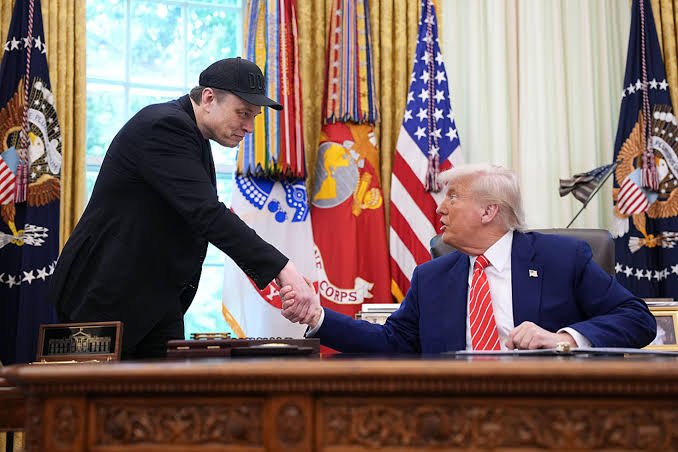

The United States and the European Union have entered a sharp regulatory dispute after the US Justice Department formally backed a legal petition filed by Elon Musk’s social media platform X to cancel a €120 million fine, equivalent to approximately ₹1,140 crore, imposed by the European Commission. The petition, currently before the General Court of the European Union, seeks to overturn the financial penalty levied under the bloc’s Digital Services Act following an extensive inquiry spanning nearly two years. Washington’s direct intervention has turned a corporate penalty into a high-stakes conflict over the reach of regional digital rules on foreign technology enterprises.
Commission Flags Compliance Issues and Blue Checks
The punitive sanction follows a protracted investigation by European Union regulators into the platform’s adherence to standard regulatory requirements. Officials concluded that X failed to satisfy multiple provisions under the Digital Services Act, identifying particular deficiencies in the company’s transparency practices and the distribution of operational data. Regulators raised pointed concerns regarding the platform’s restructured blue-checkmark verification system, arguing that the paid verification model creates widespread confusion among users regarding profile authenticity and increases public vulnerability to digital deception, manipulation, and financial scams.
Designed as an overarching regulatory framework, the Digital Services Act mandates that major digital networks mitigate exposure to illegal and harmful material, provide operational transparency, and establish verifiable consumer safeguards. The penal action against X represents one of the primary cross-border test cases under the statute, setting baseline standards for international digital operations serving citizens across the European continent.
Washington Questions European Regulatory Jurisdiction
Challenging the European Commission’s jurisdiction, the United States Justice Department intervened to support X’s request for judicial relief. US Assistant Attorney General Brett Shumate argued that the European Commission was overextending its reach by attempting to enforce administrative authority over American companies that maintain no direct physical presence within the European Union’s legal territory. The Justice Department maintained that applying European digital legislation across international borders places improper and extensive operational burdens on American commercial entities beyond their domestic borders.
Washington warned that the precedent set by the penalty against X could directly expose other American digital service providers and online networks to similar liabilities. The dispute underscores broader American concerns that European regulatory mechanisms will increasingly disrupt foreign businesses serving European users without local incorporation.
Brussels Defends Sovereign Authority Over Digital Rules
The European Commission maintained its legal ground, rejecting Washington’s criticisms and defending the legitimacy of its regulatory oversight. Commission spokesperson Thomas Regnier declared that the European Union possesses an undeniable sovereign prerogative to enact and execute legislation intended to protect its citizens. Regnier stated that the Commission applied the provisions of the Digital Services Act objectively and transparently, confirming that European authorities would vigorously defend the financial sanction before the General Court.
The legal face-off unfolds alongside broader geopolitical interactions involving the platform’s leadership. Musk attended a White House state dinner hosted by US President Donald Trump for Chinese President Xi Jinping on September 24. While the court battle signals escalating friction regarding cross-border corporate governance, the European Commission indicated that the judicial confrontation will not disrupt wider transatlantic ties, noting that joint negotiations in other sectors, including tariff discussions, will proceed uninterrupted while the General Court reviews the case.
Follow for daily updates on cybercrime, corporate fraud, DFIR, hacking, investigations, and digital forensics
