

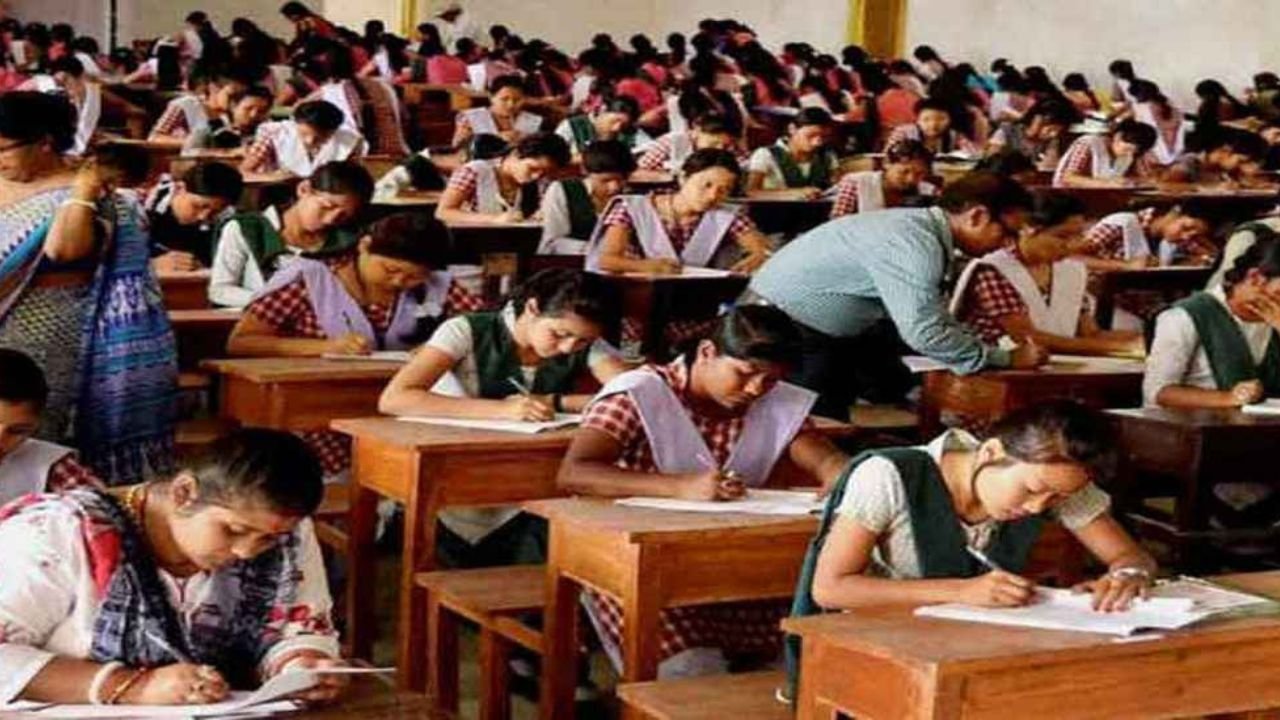

Lucknow | A major crackdown has been reported in the Trained Graduate Teacher (TGT) recruitment examination conducted by the Uttar Pradesh Education Service Selection Commission, where strict action was taken against fake candidates. According to the commission, a total of 11 impersonators (solvers) appearing in place of genuine candidates were caught at various examination centres across the state, out of which 9 were immediately arrested by the police, while two managed to flee from the centres.
These cases were reported from examination centres located in Lucknow, Bareilly, Chitrakoot, Jaunpur, Mirzapur, and Hathras. The commission has initiated legal proceedings against all accused individuals. Despite stringent security arrangements during the examination, instances of impersonation were still detected at multiple locations.
FCRF’s Flagship Cyber Law Certification Returns With a New Four-Week Cohort
As per official information, the TGT examination was conducted across 36 districts at a total of 514 and 508 examination centres. The entire exam process was monitored from an AI-integrated control command room established at the commission headquarters, where AI-enabled cameras continuously tracked the activities of candidates. This advanced surveillance system played a key role in identifying suspicious behaviour, leading to on-the-spot action.
In the first shift, two impersonators each were caught in Lucknow, Bareilly, and Chitrakoot, while one case each was reported from Jaunpur and Mirzapur. In the second shift, two cases were detected in Lucknow and one in Hathras. According to the commission, such strict monitoring helped ensure that the examination was conducted in a largely fair, transparent, and incident-free manner at a broader level.
A total of 2,21,489 candidates appeared in the examination. The participation included 45.41% female candidates and 52.42% male candidates. The commission stated that senior officials closely supervised the entire process, ensuring timely and orderly conduct of the examination across centres.
Conducted under Advertisement No. 01/2022, the examination covered 15 subjects. On Wednesday, written tests for eight subjects were held in two shifts. The first shift included Social Science, Physical Education, Science, and Urdu, while the second shift covered Hindi, Mathematics, Agriculture, and Music (Vocal).
After the examination, mixed reactions were reported among candidates regarding the question papers. The Social Science paper, in particular, drew dissatisfaction. Candidates stated that Geography questions were relatively difficult and analytical, while History questions were more fact-based and comparatively easier. Questions from Political Science and Economics were considered to be of moderate difficulty.
The paper included questions from philosophers and thinkers such as Aristotle, Kautilya, and Rousseau, along with topics like models of democracy, Parliament and Constitution, Gandhi’s movements, the United Nations, Lokpal, Sarkaria Commission, presidential pardoning powers, and the electoral system. Several candidates felt that some questions were of a higher conceptual level, making time management challenging during the exam.
Meanwhile, candidates have raised strong demands for the implementation of scaling and normalization systems. They argued that differences in difficulty levels across subjects could impact the fairness of the selection process. According to them, candidates attempting tougher papers may receive comparatively lower marks, while those with easier papers could gain an unfair advantage in the merit list, potentially affecting deserving candidates.
The commission has, however, maintained that the examination was conducted in a fully transparent manner and assured that strict action against impersonators will continue.
