

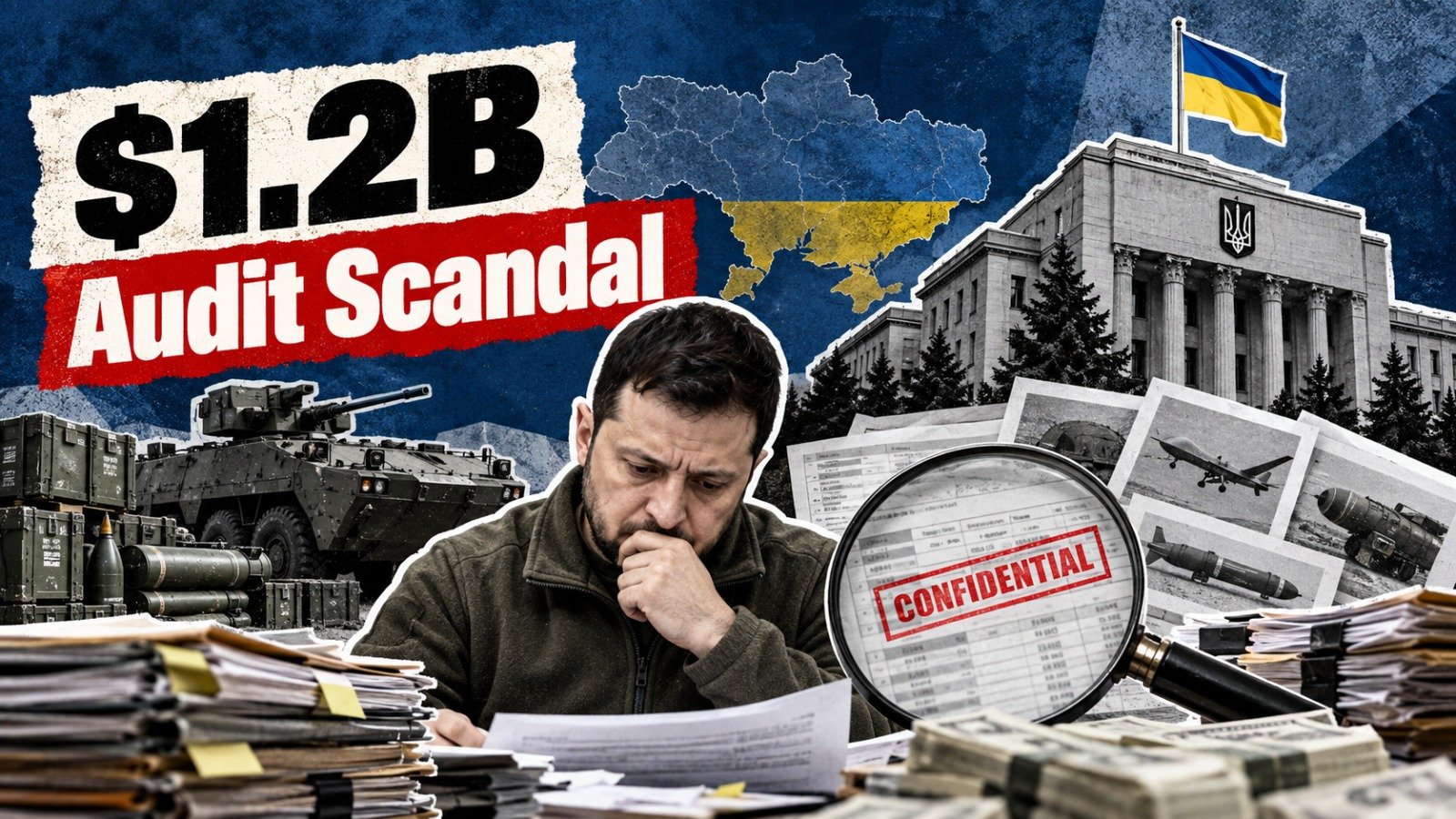

Ukraine lost an estimated $1.2 billion, approximately ₹11,339 crore, to fraud, waste and mismanagement in defence procurement during 2024, according to confidential government audits obtained by The New York Times.
The findings reveal a procurement system in which suppliers accused of fraud, companies that failed to deliver weapons and contractors with executives facing criminal proceedings continued receiving new business.
Seven of Ukraine’s 10 largest military contractors reportedly secured additional contracts despite such warning signs. Auditors also identified 18 companies that received new deals after defaulting on earlier agreements, including six that had not successfully completed a single contract.
The revelations are particularly serious because the losses occurred while Ukraine was fighting Russia’s invasion and relying on vast quantities of ammunition, weapons and international financial support.
Proposal for Conducting Cyber Crisis Drill, Tabletop Exercise (TTEx) & CCMP Readiness Exercise
Defective Mortar Rounds Expose Cost of Procurement Failures
One of the most troubling cases involved the state-owned Pavlohrad Chemical Plant.
The company supplied mortar ammunition that soldiers later found to be defective. According to the investigation, some rounds failed to fire properly, while others had problems involving fuses or propellant.
Court records cited by The New York Times indicate that approximately 233,000 mortar rounds were unusable. The estimated cost of inspecting and replacing the ammunition was around $68 million.
The plant’s director, Leonid Shyman, was arrested in 2025 in connection with allegations involving the defective ammunition.
Auditors found that the company had initially indicated it lacked the capacity to fulfil a large order, before later revising its stated production capability. They found no evidence that officials adequately verified whether the factory could meet the commitment.
Despite the warning signs, the procurement agency continued awarding it contracts. One reported contract, worth about $280 million, was awarded while Shyman was on bail in a separate corruption case.
Shyman was sentenced last month to five years in prison in that separate case involving the sale of explosives at inflated prices. His lawyer said he intends to appeal and maintains his innocence in the mortar case.
The distinction matters: the conviction does not establish guilt in the separate defective-ammunition proceedings.
Ukraine Allegedly Paid $130 Million More for the Same Rockets
A second case involved the purchase of rocket artillery ammunition from a Turkish manufacturer.
Three companies offered rockets produced at the same factory. Their quoted prices were approximately $4,200, $4,600 and $5,100 per rocket.
The lowest offer came directly from Turkish manufacturer Arca Defence. Instead, Ukraine awarded the contract to a subsidiary of Czech defence group Czechoslovak Group, which acted as an intermediary.
Auditors reportedly found no legal justification for bypassing the lower bid. An analysis of the competing offers estimated that the decision increased Ukraine’s bill by around $130 million, approximately ₹1,228 crore.
Czechoslovak Group said the procurement decision was Ukraine’s responsibility and that it did not have access to the competing offers or the government’s evaluation process.
The audit did not accuse the Czech group of wrongdoing. The concern was whether Ukraine’s purchasing authorities had properly justified paying more for identical ammunition.
Why Wartime Procurement Is Vulnerable to Abuse
Military procurement during war often involves urgent orders, classified contracts and limited supplier choices.
Governments may need ammunition immediately, while manufacturers require advance payments to expand production. Security concerns can also prevent the public disclosure of prices, delivery routes and supplier identities.
These conditions create genuine operational challenges, but they can also weaken ordinary safeguards.
A company may receive money before demonstrating that it has the capacity to deliver. Intermediaries can add costs, while officials may have limited time to compare offers or verify a supplier’s background.
An advance payment is money paid before goods are delivered. It is not inherently suspicious, but it becomes a risk when the supplier fails to perform and the government cannot recover the funds.
The audits suggest that Ukraine repeatedly struggled to enforce these basic checks.
Failed Serbian Rocket Deal Leaves Millions in Dispute
Another case concerned Spetstechnoexport, a Ukrainian state-owned arms broker with a history of unfulfilled contracts.
The company was awarded a deal involving Soviet-designed rockets from Serbia, despite lacking the Serbian export licence required for the purchase. Auditors said it submitted a guarantee letter from Ukraine’s military intelligence agency instead.
Spetstechnoexport then subcontracted the arrangement to US-based Regulus Global.
Ukraine’s then defence minister, Rustem Umierov, sought to remove intermediaries and asked Regulus to negotiate directly with the Defence Procurement Agency. The agreement subsequently collapsed.
The government later sued Spetstechnoexport to recover penalties and interest, while the broker pursued claims against Regulus.
The wider contractual relationship was reportedly worth hundreds of millions of dollars, but that figure should not be confused with the amount conclusively lost. The financial disputes remain subject to legal proceedings.
Ukraine’s Anti-Corruption Reforms Face a Major Test
The findings come against a wider effort to strengthen oversight of military purchasing.
Ukraine’s National Agency on Corruption Prevention said in January that it had identified 19 corruption risks in drone and electronic warfare procurement and issued 50 recommendations to reduce them.
In February, the agency also announced work on implementing NATO recommendations intended to improve accountability and transparency in defence procurement.
Those reforms show that Ukrainian authorities recognise the problem. The confidential audits, however, raise questions about whether warnings were acted upon quickly enough and whether suppliers faced meaningful consequences for repeated failures.
The most important next step is not merely identifying suspicious contracts. It is establishing who authorised them, whether losses can be recovered and whether criminal allegations are supported by evidence.
The420 Insight: The central failure exposed by the audits is the apparent gap between detecting procurement risks and acting on them. A supplier’s previous default should trigger stronger scrutiny, not automatically lead to another contract. Wartime urgency can justify faster purchasing, but it cannot replace basic checks on capacity, pricing and delivery. Ukraine’s challenge is to strengthen accountability without slowing essential military supplies. The real measure of reform will be whether audit findings result in recovered funds, enforceable supplier restrictions and transparent consequences for officials who ignored documented warnings.
https://www.linkedin.com/company/policetechnology/
Follow for daily updates on cybercrime, corporate fraud, DFIR, hacking, investigations, and digital forensics
