

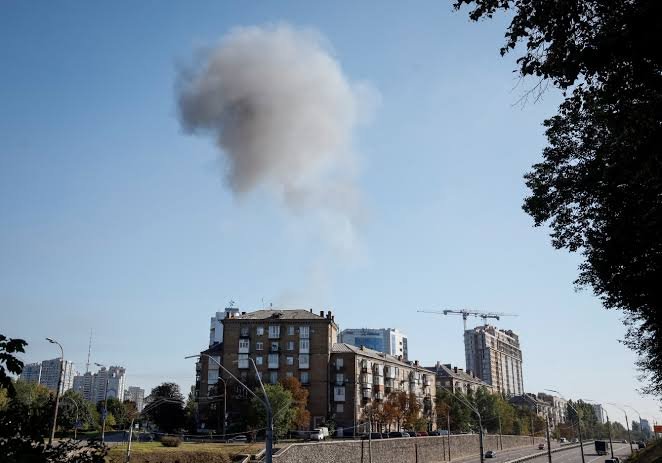

Russia has struck the headquarters of Kyivstar, Ukraine’s largest mobile operator, as a wider wave of attacks targets data centres and communications infrastructure across the country.
Kyivstar told Interfax Ukraine that its headquarters in Kyiv was hit on September 27 but said there were no casualties. Reuters photographs showed smoke rising from the building after the strike.
Russia’s defence ministry separately said it had struck a data centre belonging to Vodafone Ukraine, the country’s second-largest mobile network operator. Vodafone Ukraine did not immediately respond to Reuters’ request for comment.
Proposal for Conducting Cyber Crisis Drill, Tabletop Exercise (TTEx) & CCMP Readiness Exercise
Kyivstar headquarters hit in Kyiv
The strike on Kyivstar marks a notable escalation because the company operates critical communications infrastructure used by millions of Ukrainians.
The company said its head office was damaged, but no employees were reported killed or injured.
Kyivstar has previously been targeted during the war, though by different methods.
In December 2023, the operator suffered a major cyberattack that disrupted mobile and internet services across Ukraine. The420.in reported that incident at the time.
The September 27 incident is different because it involves a physical strike on the company’s headquarters rather than a cyber intrusion.
Vodafone Ukraine data centre also named in Russian claim
Russia’s defence ministry said its forces hit a data centre belonging to Vodafone Ukraine on the same day.
The ministry also claimed strikes against logistics hubs, communications centres, ports and vessels that it said were linked to Ukraine’s military. Reuters said it could not independently verify those claims.
That distinction matters.
Kyivstar confirmed that its headquarters was hit, while the Vodafone data-centre strike was announced by Russia and had not been independently confirmed by Vodafone at the time of reporting.
Data-centre strikes have already caused outages
Ukraine says the attacks are part of a broader campaign against communications infrastructure.
Ukrainian President Volodymyr Zelenskiy said a Kyiv data centre was hit twice on Sunday morning, injuring two children and an adult.
Ukraine’s digital ministry says Russian strikes on data centres belonging to internet providers over the past week have disrupted services to around 100,000 households in Kyiv and surrounding areas.
That turns the issue from a corporate infrastructure problem into a wider civilian-connectivity risk.
Data centres support internet traffic, cloud services, websites, communications platforms and other systems that people rely on every day.
When those facilities are damaged, the effects can extend far beyond the physical building that was struck.
Ukraine says communications infrastructure is being deliberately targeted
Ukraine’s Foreign Minister Andrii Sybiha said Russia was targeting major data centres in an attempt to disrupt the flow of information. He said rapid missile and drone alerts depend on functioning communications networks and can save lives.
That is the Ukrainian government’s interpretation of the strikes.
Russia has described its broader targets as military-linked infrastructure, communications centres and logistics facilities.
The two sides therefore differ sharply on how the targets should be characterised.
Reuters has not independently established the military role, if any, of each data centre or communications site that was struck.
Why telecom and data centres matter during war
Telecommunications networks are critical infrastructure in any conflict.
They carry ordinary civilian calls and internet traffic, but they can also support emergency alerts, government communications, logistics and other services.
Data centres add another layer.
They host computing and storage infrastructure that can support websites, cloud applications and communications platforms.
That makes them strategically important, but it also means damage can affect large numbers of civilians who have no direct connection to military operations.
Ukraine’s report of around 100,000 affected households shows how quickly the consequences can spread when core digital infrastructure is damaged.
Physical attacks add to Ukraine’s long-running cyber pressure
Ukraine’s telecommunications sector has faced both cyber and physical attacks since Russia’s full-scale invasion began.
The 2023 Kyivstar cyberattack was one of the most disruptive digital incidents of the war, temporarily knocking out mobile and internet services for a large part of the country.
The latest strikes create a different problem.
Cyberattacks can sometimes be contained through software recovery, restored backups or rebuilt systems.
Physical destruction of a headquarters, fibre route or data centre may require replacement hardware, repair crews and secure access to damaged sites.
That can make recovery slower and more difficult, especially during continuing air attacks.
Wider infrastructure campaign continues
Russia said it had also struck logistics centres, port infrastructure, communications sites and vessels that it claimed were connected to Ukraine’s military.
The September 27 attacks come after a week of intensified strikes on Ukrainian infrastructure.
Russia has increasingly used drones and missiles against economic and infrastructure targets, while Ukraine has also carried out long-range attacks inside Russia.
For telecom companies, the immediate challenge will be keeping networks running while repairing damaged facilities and protecting backup systems.
For Ukrainian authorities, communications resilience is especially important because emergency alerts and public information depend on reliable mobile and internet networks.
What this means for you: The significance of these strikes goes beyond one telecom company. Attacks on mobile networks and data centres can interrupt internet access, emergency alerts and other digital services used by civilians, making redundancy and backup connectivity critical during conflict.
Follow for daily updates on cybercrime, corporate fraud, DFIR, hacking, investigations, and digital forensics
