
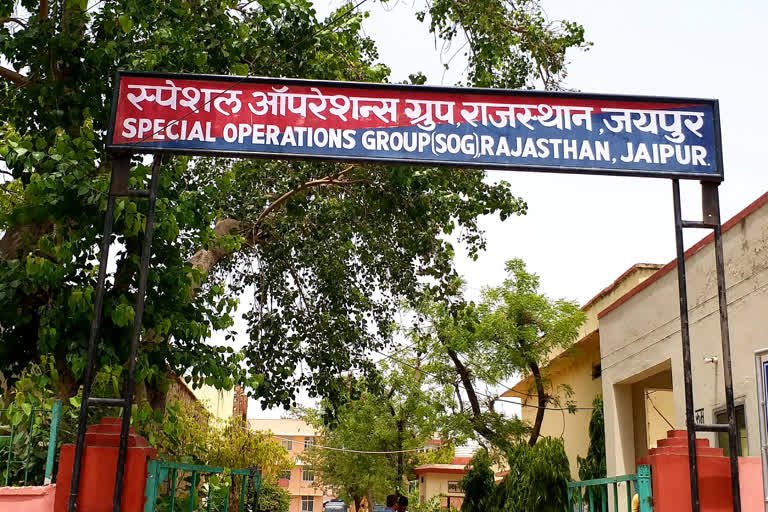
In a major enforcement success against white-collar employment fraud, the Special Operations Group (SOG) of the Rajasthan Police has arrested two principal masterminds accused of running a fake sports-certificate syndicate. The network specialized in manufacturing counterfeit sports credentials and falsified verification records, enabling ineligible candidates to secure public-sector appointments under the state’s protected sports reservation quota.
The successful operation marks a major step forward in cleansing institutional corruption from the state’s massive educational recruitment drives.
Registration Begins for FutureCrime Summit 2026, India’s Largest Cybercrime Conference
The Grade-III Teacher Recruitment Fraud
The criminal operation unraveled during a deep-dive investigation into the Grade-III Teacher Recruitment Examination conducted during the 2021–22 session. Investigators found that multiple job aspirants had successfully secured government teaching positions by submitting entirely fabricated sporting credentials.
The arrested masterminds have been identified as 22-year-old Kaptaan Singh (alias Gurjar Kaptaan Singh), a resident of Karauli, and 25-year-old Vishnu Bhakhariwal, based in Jaipur. SOG records reveal that Kaptaan Singh had been actively evading law enforcement for nearly two years and carried a ₹10,000 bounty on his head before specialized tracking teams located his hideout. Following their production before a local court, both suspects were remanded to police custody to isolate their downstream distribution channels.
The Fake Domain and Compromised Verification Loop
The tactical sophistication of the syndicate relied on creating a parallel digital verification illusion. The SOG’s cyber forensics team discovered that the gang did not merely print paper certificates; they systematically engineered a fake email architecture designed to mimic the official communication nodes of the Taekwondo Federation of India based in Dhanbad.
When the appointment branch of the Directorate of Elementary Education in Bikaner initiated its mandatory cross-checking protocols to validate candidate records, the verification requests were intercepted by the gang’s dummy electronic setup. The syndicate then deployed the fake federation email ID to transmit completely fabricated validation reports directly to the education directorate, effectively blinding the state’s internal authentication systems and forcing the clearance of the fraudulent files.
Financing the Fraud: Thick Profit Margins
The underlying economic structure of the scam reveals extensive commercial exploitation:
- The Sourcing Pipeline: The two accused initially became friends in 2020 while preparing for armed forces recruitment exams, subsequently pivoting to document forgery. Vishnu handled the primary sourcing of the bogus certificates, while Kaptaan operated as the primary broker.
- The Profit Scaling: The syndicate purchased the baseline forged certificates from an internal supply chain for approximately ₹60,000 each.
- The Candidate Exploitation: Kaptaan Singh subsequently sold these highly valued files to desperate job seekers for amounts ranging from ₹40,000 to as high as ₹1.20 lakh, generating massive illicit cash reserves.
The certificates falsely claimed that the candidates had achieved merit placements or active participation status in the Third Bhagwan Mahavir Open National Taekwondo Championship held in 2017. This paper-only tournament presence allowed three previously arrested beneficiaries—Manoj Kumar Gurjar, Hemlata Gurjar, and Siyaram Gurjar—to bypass hundreds of genuine, hard-working applicants and illegally secure positions as third-grade government teachers.
The Digital Evolution of Document Forgery
The systemic danger of the scam has drawn sharp concerns from national digital safety observers. Renowned cyber crime expert and former IPS officer Prof. Triveni Singh emphasized that contemporary document fraud networks have evolved far beyond basic physical forgery. Syndicates are increasingly weaponizing digital infrastructure, domain-spoofing techniques, and synthetic email routing architectures to construct highly deceptive validation pathways. Prof. Singh noted that public service commissions must immediately transition away from simple email correspondence, adopting secure cryptographic registries and direct blockchain-verified credential ledgers to protect merit-based selection systems.
The SOG, under the strict oversight of the Anti-Gang Task Force, has indicated that the current arrests represent only a single block of a wider, multi-layered interstate network. Enforcement teams are executing forensic data mirrors on all seized digital devices to pull transaction records, track connected banking endpoints, and identify other sports association officials who may have accepted bribes to authorize these bogus entries.
