
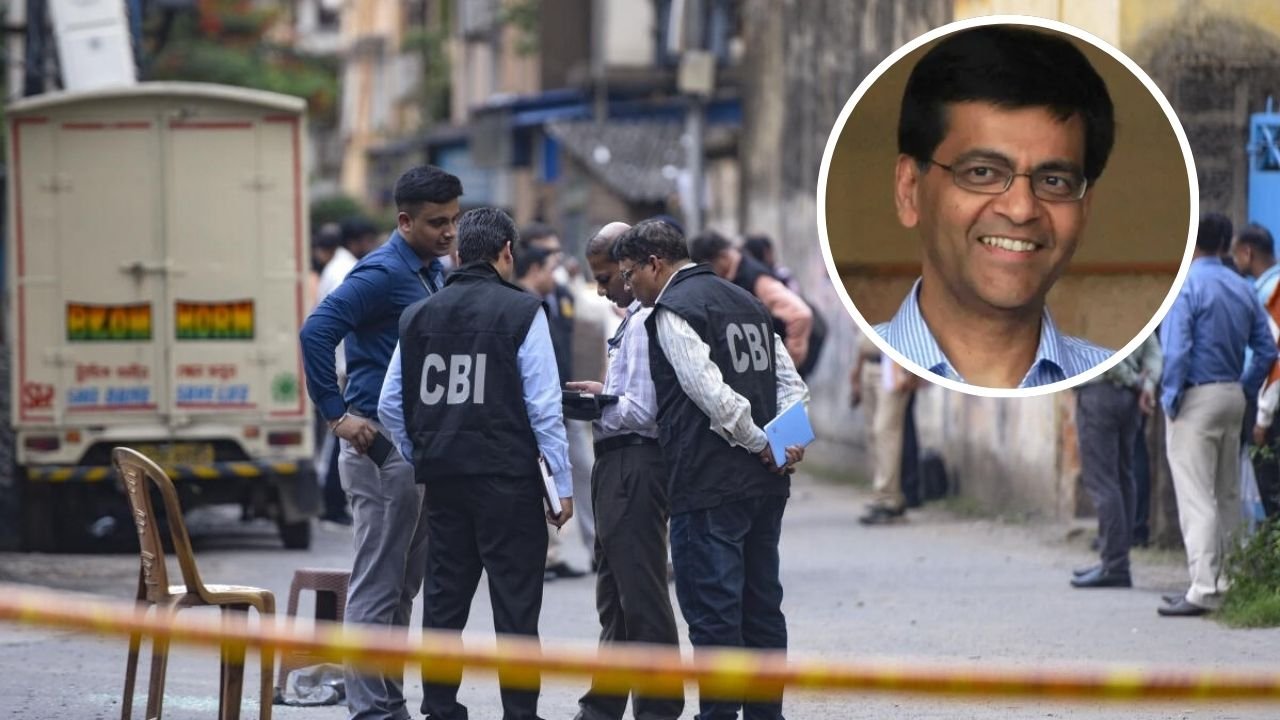
In a significant escalation of a high-profile corporate financial investigation, a special court in Mumbai has remanded Amitabh Jhunjhunwala, the former Group Managing Director of the Anil Ambani-led Reliance ADAG, to the custody of the Central Bureau of Investigation (CBI). The federal probe focuses on an alleged ₹4,097-crore bank loan fraud linked directly to Reliance Commercial Finance Limited (RCFL).
The enforcement operation targeted Jhunjhunwala at Arthur Road Jail, where he was already being held under separate judicial custody orders. The investigation is currently being monitored directly by the Supreme Court of India.
Registration Begins for FutureCrime Summit 2026, India’s Largest Cybercrime Conference
The ₹9,280-Crore NPA Capital Collapse
The underlying corporate offense centers on extensive credit structures authorized for Reliance Commercial Finance Limited. Between 2014 and 2018, the non-banking financial company (NBFC) availed massive credit lines and commercial loan injections exceeding ₹9,280 crore from a consortium comprising 31 banking institutions, state financial bodies, and private corporate groups.
The extensive loan portfolio deteriorated rapidly into toxic debt, leading lenders to officially classify the collective accounts as Non-Performing Assets (NPAs) on March 25, 2020. Subsequent recovery audits and criminal complaints filed by 13 premier public sector banks established a net, unrecovered capital loss to the state exchequer aggregating to approximately ₹4,097 crore.
The Layered Shell Network and General Loans
Special Public Prosecutor Jitendra Kumar Sharma presented court submissions demonstrating that Jhunjhunwala was not a passive administrative participant. Instead, investigators labeled him a central authority figure who personally managed the group’s corporate finance allocation frameworks:
“Investigation has disclosed that Jhunjhunwala explicitly used his authoritative position to command senior executives across Reliance ADA Group companies to clear general-purpose corporate loans. These funds were directed to non-operational shell or paper companies that lacked genuine physical assets, commercial business activity, or fundamental repayment capacities. The borrowed public capitals were subsequently routed back into select primary group entities.”
The CBI’s forensic data teams recovered a dense trail of encrypted digital communications and corporate electronic messages sent by the accused. The agency claims these logs provide proof of explicit, multi-layered round-tripping instructions that violated the loan sanction terms specified by the lending institutions.
Forensic Interrogations and Cross-Examinations
The Special CBI Court authorized the agency’s custodial interrogation request, allowing investigators to extract hidden ledger endpoints. Forensic cells plan to confront Jhunjhunwala with recovered electronic files, communication metadata, and statements provided by other co-accused executives—including former Reliance Capital CFO Amit Bapna, who was also arrested in parallel sweeps.
A primary focus of the upcoming interrogation rounds will involve mapping the ultimate beneficiaries of the siphoned capital reserves. The CBI asserts this information remains hidden within Jhunjhunwala’s exclusive corporate knowledge.
The Rising Sophistication of White-Collar Layering
The multi-billion-crore collapse has drawn analysis from senior law enforcement experts regarding the evolution of corporate asset diversion. Renowned cyber crime expert and former IPS officer Prof. Triveni Singh emphasized that contemporary white-collar networks have engineered highly complex multi-tier structures specifically designed to bypass standard risk analytics inside public sector banks. Prof. Singh noted that establishing ultimate accountability requires central agencies to match algorithmic transaction tracing with deep physical forensic audits, ensuring that proxy shell managers cannot mask intentional defaults as routine market failures.
The ongoing enforcement sweep is part of a broader federal push targeting credit irregularities across alternate ADAG-linked companies, including Reliance Communications (RCom) and Reliance Home Finance Limited (RHFL). While defense counsels argued that Jhunjhunwala had formally left the corporate group in September 2019 and was initially cooperating with investigations, the court ruled that his temporary isolation inside CBI cells was essential to preserve the integrity of the cross-border fund-tracing process.
