

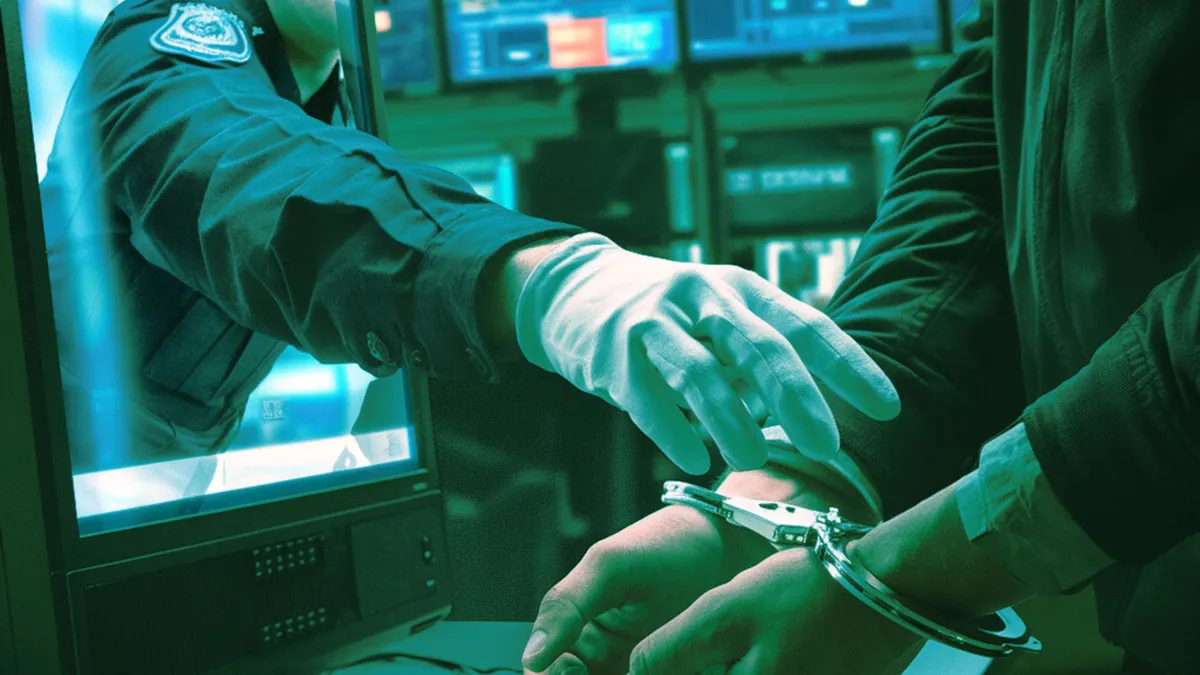

In one of Maharashtra’s most sophisticated cyber heist investigations, the Pune Cyber Police have arrested a 26-year-old social media influencer for his alleged role in an elaborate “digital arrest” syndicate that defrauded an 82-year-old retired businessman of ₹10.74 crore.
The accused, identified as Rohan Rajeshwar Jadhav, was apprehended in Pimple Gurav, Pimpri-Chinchwad, following an extensive technical analysis of financial trails and digital footprints. The case highlights a troubling evolution in cybercrime, where online popularity and theatrical deception are combined to target wealthy elderly citizens.
Between 23 January and 31 January, the octogenarian victim was subjected to a relentless psychological siege. Fraudsters impersonating high-ranking officials from federal investigative agencies kept him under continuous virtual surveillance, coercing him into transferring his life savings across multiple bank accounts to avoid immediate imprisonment.
Anatomy of the Deception: Simulated Courts and High-Profile Case Exploitation
The syndicate initiated contact by falsely claiming that the senior citizen’s identity had been compromised and linked to money laundering allegations tied to the high-profile Jet Airways Naresh Goyal case. To substantiate their claims, the fraudsters illegally used the victim’s Aadhaar card to open a fraudulent account at Canara Bank, creating a paper trail that appeared damning to the confused victim.
To cement the illusion of official legal proceedings, the fraudsters orchestrated a simulated court trial via video conference. An accomplice posed as a presiding judge on camera, while another acted as a prosecutor, staging a complete court session that warned the victim of a prison sentence exceeding seven years.
Paralysed by fear and strictly instructed not to disconnect the video feed or consult family members, the elderly businessman complied with instructions to transfer funds for supposed “verification and clearance.” Through successive transactions, a total of ₹10,74,65,000 was moved out of his accounts before the victim realised he had fallen prey to an intricate extortion ring.
Inside the Network: Digital Reels, International Links, and Mule Accounts
The arrest of Jadhav reveals the complex dual lives led by key operators in modern cybercrime networks. Holding a Bachelor of Science degree, Jadhav had cultivated a prominent online persona as an Instagram ‘reelstar’ since 2022. However, investigators uncovered that behind his public social media presence lay direct operational links to international hacking syndicates and money-laundering operatives.
Financial intelligence revealed that the defrauded sum was fractured and routed through an extraordinary network of 5,436 mule bank accounts across India to evade detection. Initial transfers of ₹75 lakh flowed into a Yes Bank account before being broken down into smaller amounts, including ₹6.5 lakh sent to three separate accounts at Bank of Maharashtra. Prior to Jadhav’s arrest, cyber police had already apprehended co-accused Shubham Dhanatole, Samarth Deshmukh, and Amar Attargi.
A deep dive into Jadhav’s financial transactions linked his accounts to at least 29 distinct cyber fraud complaints nationwide. Having remained absconding under a non-bailable warrant, his capture marks a significant breakthrough for law enforcement, who have so far managed to freeze ₹1.34 crore across various tainted accounts.
Psychological Warfare and Institutional Responses
According to former IPS officer and renowned cybercrime expert Prof. Triveni Singh, digital arrest scams succeed primarily by exploiting authority bias and enforcing total isolation. Criminals engineer an artificial sense of extreme urgency, using forged official seals, legal terminology, and staged video proceedings to systematically dismantle a victim’s critical thinking before they can seek independent advice.
The Union Ministry of Home Affairs and the Indian Cyber Crime Coordination Centre have repeatedly issued advisories clarifying that no government body, including the Central Bureau of Investigation or Enforcement Directorate, conducts arrests or judicial hearings via video calls. Authorities urge citizens to immediately report suspicious calls to the national cybercrime helpline 1930 or the official reporting portal, emphasizing that awareness remains the primary defence against increasingly dramatic cyber extortions.
Follow for daily updates on cybercrime, corporate fraud, DFIR, hacking, investigations, and digital forensics
