

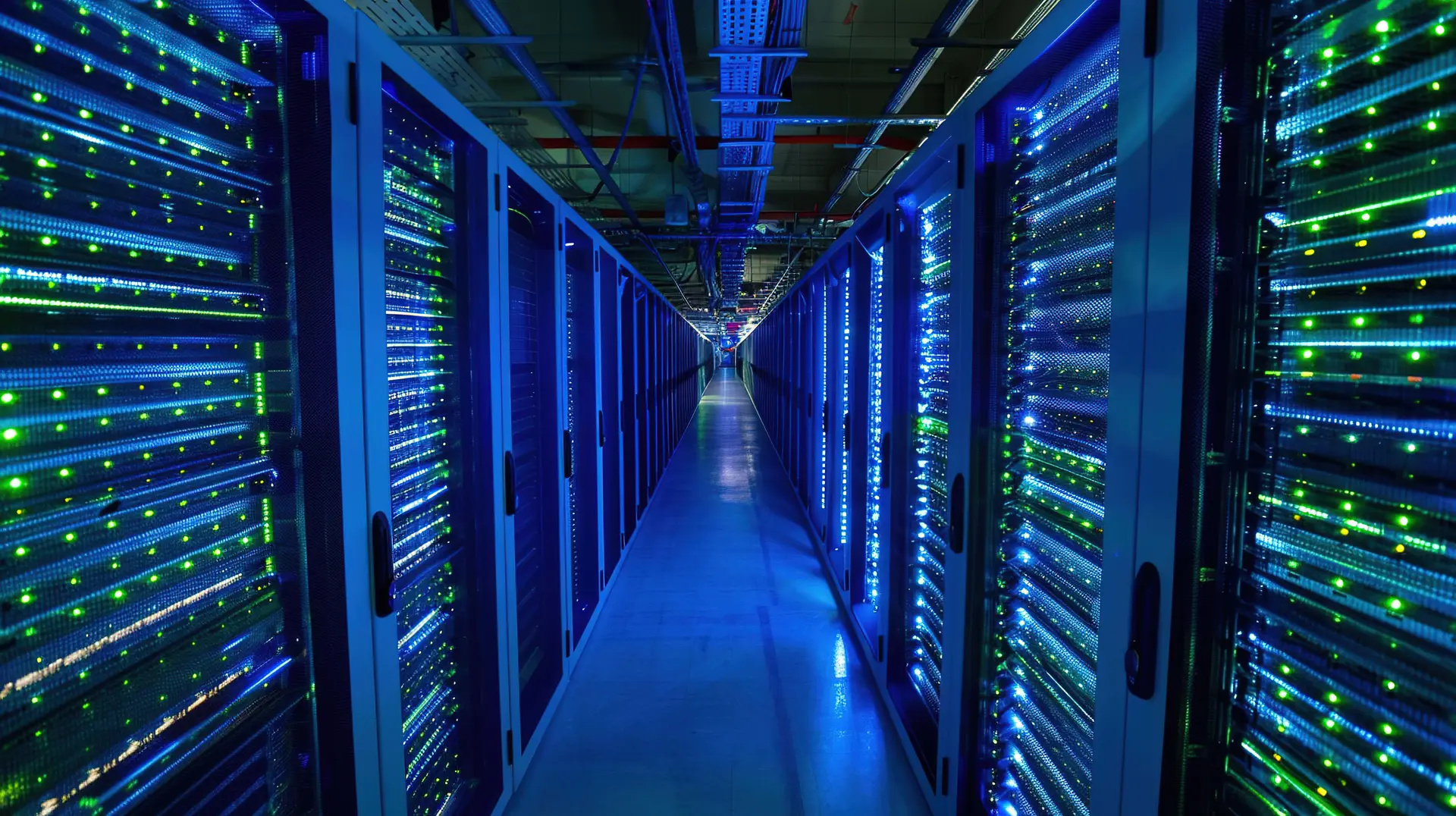

Trentar Private Ltd has signed a memorandum of understanding with the Maharashtra government for a proposed ₹30,000 crore investment in a 500 MW hyperscale data-centre campus designed to support artificial intelligence, high-performance computing and cloud workloads.
The company, which is the technology and infrastructure arm of Mumbai-based Dorf Ketal Group, plans to build what it describes as a green integrated data-centre project in Maharashtra.
The MoU was exchanged under the state’s Invest Maharashtra initiative and formally handed over by Chief Minister Devendra Fadnavis.
The project is still at the planning and site-selection stage.
FCRF Launches CP-FRM to Build India’s Next Generation of Fraud Risk Professionals
500 MW Campus Planned for AI and Cloud Workloads
Trentar says the proposed facility will have an overall capacity of 500 MW.
That would place it among the larger planned data-centre developments in India.
The campus is being designed for workloads such as artificial intelligence, machine learning, large-scale data processing, high-performance computing and cloud infrastructure.
These workloads require substantially more electricity and cooling than traditional enterprise computing.
AI systems in particular depend on large clusters of GPUs and other high-performance processors that consume significant amounts of power.
At Least 51% Renewable Power Targeted
Trentar says at least 51% of the facility’s energy requirement is planned to come from renewable sources.
The company is also considering energy-storage systems to improve the reliability of renewable power supply.
That distinction is important.
The project is being marketed as a green data-centre development, but it is not currently proposed as a 100% renewable-powered facility.
Its final energy mix will depend on detailed engineering, grid availability and the renewable-power arrangements eventually secured.
Water-Efficient Cooling Also Under Evaluation
Cooling is becoming one of the biggest infrastructure questions surrounding large AI data centres.
Powerful computing equipment generates substantial heat, which must be removed continuously.
Some cooling systems can also consume large quantities of water.
Trentar says it is evaluating treated-water reuse and water-efficient cooling technologies for the Maharashtra campus.
The final cooling architecture has not yet been selected and will depend on detailed design and feasibility studies.
Site Has Not Yet Been Finalised
Earlier reporting said Trentar was evaluating multiple land parcels across Maharashtra and expected to complete that exercise within about a month.
The company has not yet publicly announced the final location of the project.
This means the ₹30,000 crore announcement should be understood as an investment commitment under an MoU rather than evidence that construction has already begun.
The state government is expected to facilitate coordination on approvals, registrations, clearances and incentives available under existing policies.
Maharashtra Issues Letter of Intent
The project has also received a Letter of Intent from the Maharashtra government outlining applicable support and incentives, according to Trentar.
Such support can include assistance with approvals, infrastructure coordination and incentives available under state policy.
However, an MoU or Letter of Intent does not by itself guarantee that the entire proposed investment will eventually be deployed.
Large infrastructure projects typically depend on land acquisition, financing, power availability, environmental approvals, customer demand and construction schedules.
Dorf Ketal Enters Large-Scale Digital Infrastructure
The project marks a significant diversification for Dorf Ketal Group.
The company is primarily known for specialty engineered chemicals used in refining, petrochemicals and other industrial processes.
Through Trentar, it is now entering large-scale digital infrastructure.
Dorf Ketal founder and vice-chairman Subodh Menon said the group plans to use its experience in process engineering, thermal management, utilities and water treatment while developing the campus.
Those capabilities are increasingly relevant to modern data centres, where electricity and cooling infrastructure can be as important as the computing equipment itself.
AI Boom Is Driving Data Centre Investment Across India
The Trentar project comes during a major expansion of India’s data-centre industry.
CBRE expects India’s total operational capacity to reach around 2 GW by the end of 2026, with more than 200 MW of new capacity expected to be added during the second half of the year alone.
Mumbai remains India’s largest data-centre market and accounted for about 94% of new capacity added in the first half of 2026, according to CBRE.
AI-linked workloads are also becoming a larger part of planned investments.
The expansion is being driven by cloud adoption, data-localisation requirements, streaming services, financial technology and increasingly by generative AI.
Data Centres Are Becoming Power Infrastructure Projects
The scale of new AI-oriented data centres is changing how these projects are viewed.
A 500 MW facility is not merely a collection of computer servers.
It requires power generation or procurement arrangements, substations, transmission infrastructure, cooling systems, water management, backup power and often on-site energy storage.
That means data-centre development increasingly overlaps with energy policy and critical infrastructure planning.
The Trentar proposal reflects that shift by combining digital infrastructure with renewable power, storage and water-management systems.
Maharashtra Is Competing Aggressively for Data Centre Projects
Maharashtra has emerged as one of India’s most active states in attracting digital-infrastructure investment.
The state recently announced 67 MoUs worth approximately ₹8.57 lakh crore under the Invest Maharashtra initiative, covering sectors including data centres, semiconductors, renewable energy, aerospace and defence.
Several states are now competing for data-centre investments by offering easier land access, electricity incentives and faster regulatory approvals.
Maharashtra, Telangana, Uttar Pradesh and Gujarat are among the strongest performers in recent assessments of state-level data-centre policy support.
Green Claims Will Depend on Execution
The sustainability claims attached to the Trentar project will ultimately depend on implementation.
Sourcing 51% renewable power would reduce reliance on conventional electricity, but the remaining power requirement could still be substantial.
Water consumption will also depend heavily on the cooling technology eventually selected.
Energy storage can help integrate renewable power but adds further capital cost and infrastructure requirements.
For a 500 MW campus, these choices could materially affect both the project’s environmental impact and operating costs.
MoU Is Only the First Step
The ₹30,000 crore figure represents the proposed investment associated with the project.
It should not be treated as money already spent.
The company must still finalise land, complete engineering studies, determine cooling and energy systems, secure approvals and move toward construction.
Execution will therefore determine whether the full 500 MW capacity and ₹30,000 crore investment are eventually realised.
What this means for you
India’s AI expansion is increasingly becoming an energy and infrastructure story, not just a software story. Large AI data centres can bring major investment, but their electricity demand, water use and renewable-energy claims will need the same scrutiny as their computing capacity.
Follow for daily updates on cybercrime, corporate fraud, DFIR, hacking, investigations, and digital forensics
