

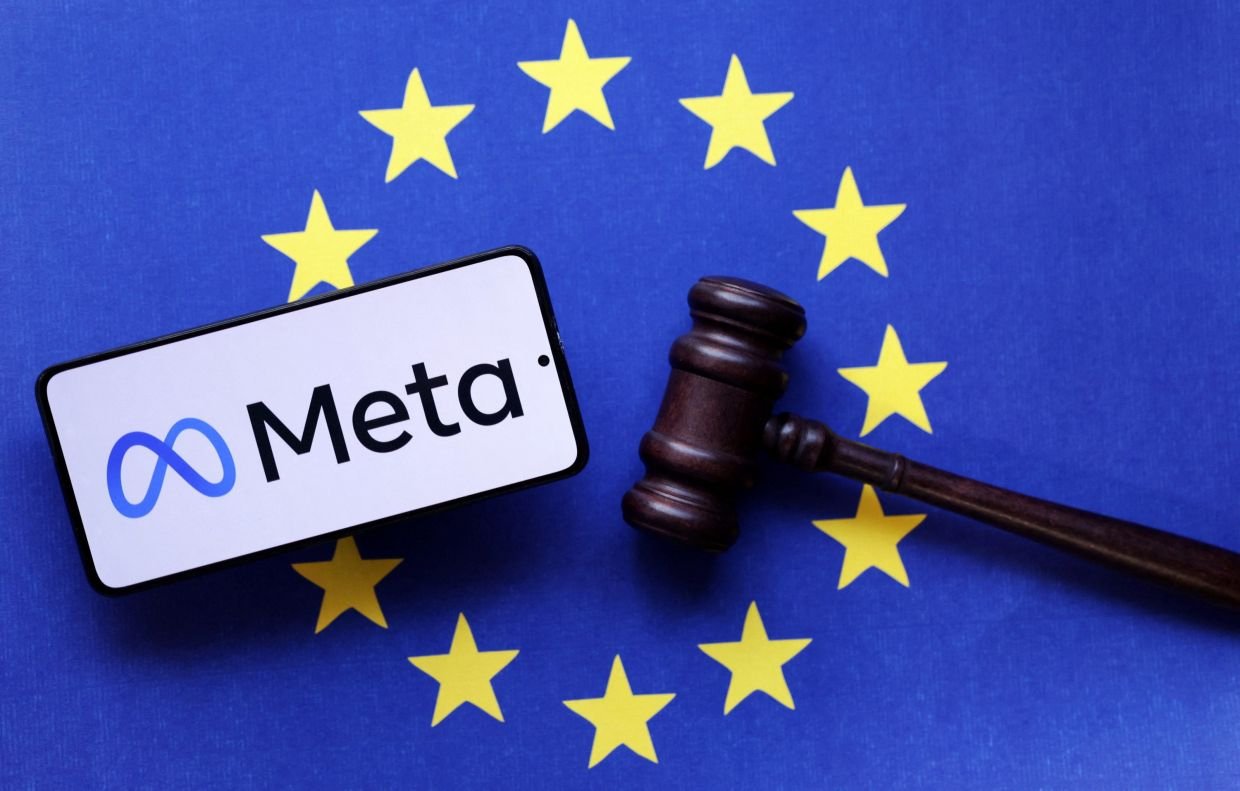

Poland has taken an aggressive stand against social media giant Meta. The Polish government has formally asked the European Commission to slap a staggering €250 million fine on the tech giant. That translates to more than ₹2,500 crore in financial penalties.
The bold move follows exhaustive investigations revealing a systematic failure by Meta to take down verified cyber fraud advertisements. Officials in Warsaw warned that deceptive investment schemes, fake job offers, and rogue applications are flooding Facebook and Instagram, placing millions of internet users at severe financial risk.
CERT Polska Exposes Systemic Negligence
The formal complaint relies on hard evidence gathered by CERT Polska, the national cybersecurity incident response team. The agency conducted controlled forensic tests to evaluate how Meta handles explicit user reports regarding malicious digital content.
During the audit, cybersecurity researchers identified 122 advertisements that were blatantly fraudulent. These ads actively promoted dangerous investment traps, cloned banking services, and malicious mobile applications designed to drain victim bank accounts.
When CERT Polska flagged the 122 scams directly to Meta, the platform’s moderation mechanisms failed miserably. Meta explicitly refused to remove 106 of those fraudulent advertisements. That means in nearly 87 per cent of verified reports, Meta chose to keep active financial scams live on its feeds.
Only 10 advertisements were taken down, while six reported cases received no response whatsoever. Polish Digital Affairs Minister Krzysztof Gawkowski publicly slammed the platform, stating that the digital Wild West on Meta must come to an immediate end.
Algoritha Security Launches ‘Make in India’ Cyber Lab for Educational Institutions
Courts Challenge Intermediary Immunity Shields
Poland’s legal pressure builds on a landmark domestic court ruling delivered in April 2026. The Warsaw Court of Appeal rejected Meta’s long-standing argument that it functions merely as a passive host shielded from liability.
The legal battle was spearheaded by Polish logistics billionaire Rafał Brzoska and his wife. Cybercriminals had spent years running unauthorized Facebook ads using their likenesses and fake news reports of their deaths to lure victims into investment scams.
The appellate court held that because Meta provides algorithmic targeting tools and earns direct financial commission from ad placements, it operates as an active publisher rather than a neutral third-party platform.
Renowned cybercrime expert and former IPS officer Prof. Triveni Singh highlighted how criminal syndicates exploit this structural loophole. Modern cybercriminals routinely craft polished company profiles, purchase stolen credentials, and deploy sophisticated landing pages that look completely authentic.
Prof. Singh emphasized that visual professionalism can no longer be trusted. Digital platforms must be legally mandated to verify advertiser identities, audit payment credentials, and freeze suspicious ad accounts before scam campaigns go live.
EU Digital Rules Face Historic Regulatory Test
Poland’s petition now forces the European Commission into a pivotal legal position. Under the European Union’s Digital Services Act, primary regulatory enforcement for tech monoliths resides exclusively with Brussels.
While the requested fine of ₹2,500 crore sounds astronomical, legal analysts point out it is a carefully calculated figure. Under the DSA framework, regulators hold the power to penalise non-compliant platforms up to six per cent of their global annual revenue.
European consumer advocacy groups have backed Poland’s stance, arguing that ad-driven revenue models prioritize profit over consumer safety. Internal platform estimates leaked in past proceedings showed that fraudulent ads generate billions in revenue across global markets.
Meta responded by asserting that it continues to invest heavily in machine learning tools and law enforcement partnerships to eliminate fraud. However, Polish authorities insisted that self-regulation has failed.
The outcome of these European proceedings will set a global precedent for digital ad safety. Regulators across India, Australia, and the Americas are watching closely as Europe decides whether platforms must bear full financial liability for hosting deceptive ad campaigns.
What this means for you: Never assume a sponsored ad on social media is legitimate simply because it appears on a major platform. Always independently verify investment offers and company URLs directly through official portals before sharing financial details or downloading files.
Follow for daily updates on cybercrime, corporate fraud, DFIR, hacking, investigations, and digital forensics
