
Follow us on Google News

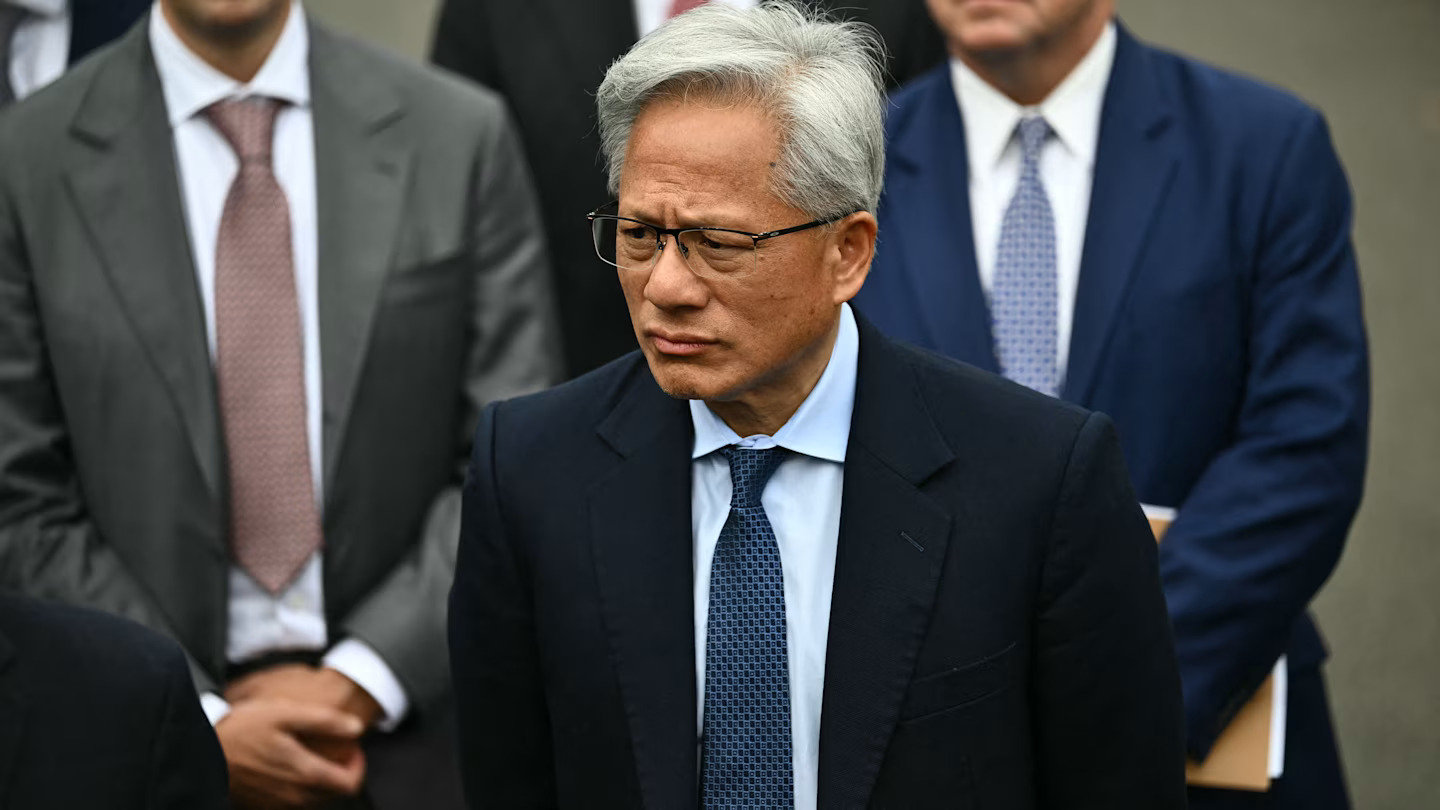
Three US lawmakers have asked Nvidia CEO Jensen Huang to brief Congress over reported Chinese espionage concerns involving Megaspeed.
The request follows reports that Huang had interacted with an executive of Megaspeed International who was reportedly under US government surveillance over allegations of supplying information to China. The lawmakers have sought a closed-door congressional briefing on November 18 to examine Nvidia’s dealings with the executive and its safeguards for sensitive technology.
Why Are US Lawmakers Questioning Nvidia?
The scrutiny follows a report by The New York Times concerning Huang Le, an executive at Megaspeed International, who was reportedly under surveillance by US authorities over suspected links to Chinese intelligence activities. The allegations have raised concerns about whether individuals associated with Beijing could obtain sensitive American technology or information through commercial relationships.
Representatives Brian Mast, John Moolenaar and Rick Crawford signed the letter requesting Huang’s appearance. The three Republican lawmakers lead congressional panels responsible for foreign affairs, China-related issues and intelligence matters. They want Nvidia to explain the nature of its interactions with the Megaspeed executive and the security measures governing such relationships.
The lawmakers wrote, “Recent reports raise significant national security concerns regarding the PRC’s access to sensitive US technology and information.” They said Congress needed to determine whether American national security had been compromised.
https://the420.in/fcrf-certified-chief-ai-officer-second-cohort-november-2026/
How Has Nvidia Responded to the Allegations?
Nvidia has rejected suggestions that its interactions with customers necessarily indicate security concerns. A company spokesperson said Huang engages with thousands of customers annually and expressed confidence that US authorities would notify Nvidia if they considered any individual a threat to American industry.
The lawmakers, however, have requested further clarification about the company’s dealings with Megaspeed International. Their proposed joint briefing would take place behind closed doors and focus on Nvidia’s internal security procedures and measures intended to prevent unauthorised access to sensitive technology.
What Is Behind the Dispute Over AI Chip Exports?
The congressional request comes amid continuing disagreements over American semiconductor exports to China. Nvidia has faced scrutiny from lawmakers concerned that advanced artificial intelligence processors could strengthen China’s military and technological capabilities.
Mast has previously criticised Nvidia’s position on export restrictions. In January, he accused the company and its chief executive of seeking to sell millions of advanced chips to Chinese businesses and challenged Huang to a televised debate.
Earlier this year, Mast also helped develop the proposed AI Overwatch Act, which sought to give Congress greater authority over exports of advanced AI processors. The proposal included an approval mechanism resembling congressional oversight of certain arms sales.
What Restrictions Could Nvidia Face?
Under the original proposal, sales of Nvidia’s H200 processors could face congressional intervention, while its Blackwell generation and subsequent advanced chips would be subject to restrictions. Lawmakers would have been able to block specific transactions through a joint resolution. A revised version has progressed in the Senate without the provision allowing Congress to block individual sales through joint resolutions. The measure is being considered for possible inclusion in an annual defence spending package.
The controversy also comes as Democrats prepare to assume control of congressional committees following the midterm elections. The incoming leadership has indicated plans for closer scrutiny of major technology companies.
Nvidia, meanwhile, continues to oppose overly restrictive export policies as Washington debates the national security implications of supplying advanced computing technology to China.