
Stay ahead with our breaking stories and exclusive coverage prioritized on Google.
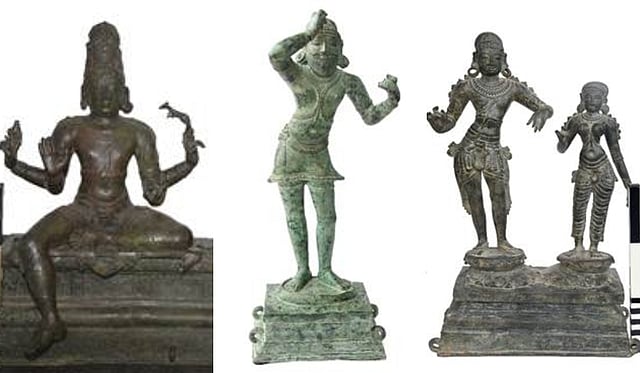
Add The420 on Google →Three ancient bronze sculptures belonging to the Chola and Vijayanagara periods, retrieved from the United States and the Netherlands, were handed over by the Archaeological Survey of India (ASI) to the Idol Wing of the Tamil Nadu Police’s Crime Investigation Department on Thursday. The artefacts include a 16th-century Vijayanagara-era sculpture of Saint Sundarar and Paravai Nachiyar, an 11th-century Chola-period idol of Kannappa Nayanar, and a 12th-century Somaskanda sculpture.
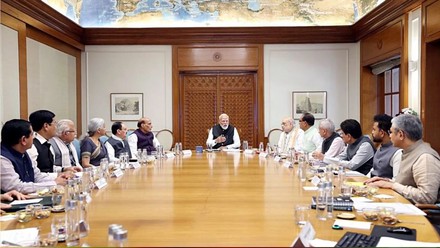
The handover took place during an event held at the ASI headquarters in New Delhi in the presence of the ASI Director General and other senior departmental officials. Of the three sculptures, two were repatriated from the Smithsonian Institution in the United States, while one was brought back from The Hague in the Netherlands.
16th-Century Sundarar and Paravai Nachiyar Sculpture
The bronze sculpture depicting Saint Sundarar and his consort Paravai Nachiyar belongs to the 16th-century Vijayanagara period and was repatriated from the United States. The idol originates from a Shiva temple located in Veerasolapuram village in Tamil Nadu’s Villupuram district.
According to records from the Smithsonian Institution, the sculpture was identified in 2018. An archival photograph of the idol inside the temple was taken in 1956, and the original image is preserved in the joint photo archives of the French Institute of Pondicherry and the Ecole Francaise d’Extreme-Orient.
While it remains unclear when and under what circumstances the idol was removed from the temple and taken to the United States, the museum announced its return to India in January this year. The sculpture has now been handed over to the Tamil Nadu Police Idol Wing to facilitate further investigation into its provenance and theft.
11th-Century Kannappa Nayanar Idol from the Netherlands
The second artefact is an 11th-century Chola-period bronze idol depicting Shaivite saint Kannappa Nayanar, associated with the Arulmigu Agneeswaraswamy Temple in Tamil Nadu’s Nagapattinam district. This sculpture was repatriated to India from The Hague in the Netherlands.
In the sculpture, Saint Kannappa Nayanar is shown standing in the tribhanga posture with his right hand raised toward his eye. Kannappa Nayanar is counted among the 63 prominent saints of the Shaivite tradition. The idol was among several religious sculptures stolen from temples and smuggled abroad, and it later surfaced at the European Fine Art Fair, setting the identification and repatriation process in motion.
12th-Century Somaskanda Sculpture Also Repatriated
The third artefact is a 12th-century Chola-period bronze sculpture of Somaskanda, depicting Lord Shiva seated alongside his consort Uma, or Parvati, and their son Skanda, also known as Kartikeya or Murugan. This iconography represents a distinct religious style within South Indian Hindu sculpture.
The idol was photographed inside a Shiva temple in Tamil Nadu’s Thanjavur district in 1959 before eventually reaching the Smithsonian Institution in the United States. Following its return to India, the ASI has transferred the sculpture to the Tamil Nadu Police.
According to ASI officials, the return of these three sculptures marks a key milestone in ongoing efforts to restore India’s cultural heritage to its places of origin. The department continues to work alongside national and international agencies to identify, recover, and repatriate Indian antiquities located overseas. With the idols now in the custody of the Tamil Nadu Police Idol Wing, investigators can advance probes into their parent temples, the circumstances of their smuggling, and related theft cases.