
Stay ahead with our breaking stories and exclusive coverage prioritized on Google.
Add The420 on Google →NEW DELHI: Amid the expansion of barrier-free toll collection on national highways, the government has moved to tighten enforcement against motorists evading toll payments. Drivers who intentionally hide or tamper with their number plates, or cross toll plazas without a FASTag, will now face heavy financial penalties. The Ministry of Road Transport and Highways announced on Friday a provision to impose a fine equal to five times the applicable toll fee in such cases. This penalty will be levied in addition to the original toll amount, meaning a motorist attempting to evade a Rs 100 toll will have to pay a Rs 500 fine along with the Rs 100 base fee, bringing the total to Rs 600.
This strict action will apply only in cases where an inquiry confirms that the driver deliberately attempted to avoid paying the toll. A mere technical glitch or insufficient balance in a FASTag account will not automatically be treated as toll evasion. The primary objective of the rule is to deter motorists who conceal their vehicle’s identity or bypass electronic toll collection systems to travel without paying.
Action Against Hidden Number Plates and Missing FASTags
The proposed provision covers vehicles whose front or rear number plates are covered, altered, or obscured in a manner that prevents cameras from reading them. If a vehicle’s FASTag also fails to register under such circumstances, the incident may be treated as deliberate toll evasion. The five-fold penalty will equally apply to motorists who drive through toll plazas without affixing a FASTag in an attempt to evade payment.
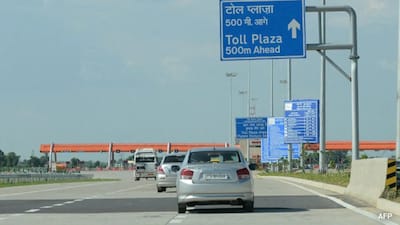
This enforcement mechanism will not be restricted to upcoming toll plazas. It is planned for implementation across existing Multi-Lane Free Flow (MLFF) toll plazas as well as all future facilities of this kind. Under the MLFF system, vehicles do not need to stop to pay tolls. Overhead equipment installed along the highway identifies moving vehicles and automatically deducts the applicable fee through their FASTag accounts.
AI Technology to Aid Vehicle Identification
In barrier-free tolling setups, FASTag readers and Automatic Number Plate Recognition (ANPR) cameras mounted on overhead gantries handle vehicle identification and fee collection. However, identifying a vehicle becomes difficult if a driver conceals the number plate and the FASTag is either missing or unreadable. To address this challenge, the National Highways Authority of India is deploying artificial intelligence-based vehicle fingerprinting technology.
This technology identifies vehicles based on their distinct physical characteristics and links them to the government’s Vahan vehicle registration database, enabling authorities to trace the registered owner. The process will help flag vehicles whose number plates are deliberately hidden or cannot be captured by standard camera systems.
The country’s first barrier-free toll plaza began operations at Choryasi in Gujarat on May 1. Since then, the system has been expanded to eight additional locations, including the Mundka toll plaza in Delhi. As the government aims to make highway toll collection seamless and technology-driven, the new penalty framework is expected to curb attempts to cross plazas without payment.
Separate Rules for Low FASTag Balance
Insufficient funds in a FASTag account or a payment failure caused by technical reasons will not be considered proof of intentional toll evasion. Under existing regulations for such cases, the vehicle owner is issued an electronic notice, or e-notice. If the pending toll is cleared within 72 hours of the notice being issued, only the base fee is charged. Failing to pay within the stipulated window, however, results in the outstanding amount being doubled.
The new framework specifically targets motorists who actively conceal their identity to dodge highway fees. By combining AI-based identification, vehicle registration records, and steep fines, the government aims to improve transparency in toll collection and strengthen digital payment compliance across national highways.