
Stay ahead with our breaking stories and exclusive coverage prioritized on Google.
Add The420 on Google →Taiwan is heading towards its fastest economic growth in nearly half a century, driven by soaring global demand for artificial intelligence chips and computing equipment. The technology boom has pushed the government to sharply raise its economic forecast, even as concerns grow over American export restrictions and the sustainability of AI investment.
On Friday, November 27, Taiwan’s Directorate General of Budget, Accounting and Statistics (DGBAS) raised its 2026 economic growth forecast to 13.28%, compared with its earlier estimate of 11.05% in August.
If achieved, this would mark Taiwan’s strongest annual expansion since 1978, when the economy grew 13.56%.
The revised figures highlight how artificial intelligence has transformed Taiwan’s position in the global economy. Its semiconductor manufacturers and electronics suppliers have become essential to companies building advanced AI systems.
FCRF Launches Certified Chief Risk Officer (CRO) Program for India’s Risk Leaders
AI Chip Demand Pushes Taiwan Towards Historic Economic Growth
Taiwan plays a central role in producing the advanced semiconductors that power modern artificial intelligence systems.
The island is home to Taiwan Semiconductor Manufacturing Company (TSMC), the world’s largest contract chip manufacturer.
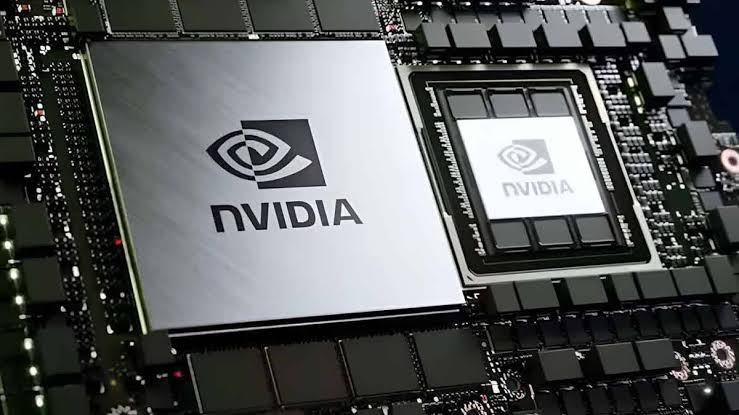
Companies such as Nvidia and Apple depend on Taiwan’s semiconductor industry to manufacture chips used in data centres, smartphones and other electronic devices.
As technology companies invest heavily in AI infrastructure, demand for Taiwan’s products has increased sharply.
The government now expects merchandise exports to grow 46.67% in 2026, compared with its earlier forecast of 41.07%.
The expansion has also encouraged semiconductor manufacturers and electronics companies to invest in new equipment and production facilities.
According to official figures, Taiwan’s economy grew 14.39% during the third quarter compared with the same period last year.
Manufacturing activity increased 21.39%, supported by higher production of semiconductors, computers and electronic components.
These figures suggest that the AI boom is generating economic activity beyond a handful of technology companies.
Suppliers of electronic components, industrial equipment and related services are also benefiting from increased demand.
Why Taiwan Has Become Essential To Global AI Development
Artificial intelligence systems depend on powerful computer chips to process enormous amounts of information.
Training an advanced AI model requires thousands of processors working together, often inside specialised data centres.
Taiwan’s semiconductor industry manufactures many of the chips and components needed to build this infrastructure.
Consider an AI chatbot responding to millions of users. Behind that service are servers containing processors capable of performing complex calculations at tremendous speed.
Many of those processors depend on manufacturing technology developed or operated by Taiwanese companies.
This makes Taiwan an important part of the global AI supply chain.
The country’s role has grown as American technology companies increase spending on AI services, cloud computing and data centres.
Taiwanese suppliers have responded by expanding factories, upgrading manufacturing processes and investing in research.
The statistics agency expects private fixed investment to increase 14.90% during 2026.
However, this dependence also creates risks. If major technology companies reduce their spending on AI infrastructure, Taiwanese manufacturers could experience weaker orders.
US Chip Restrictions Threaten Future Growth
Despite the strong economic outlook, Taiwan’s government has warned that several risks could affect growth in 2027.
One concern involves American export restrictions on advanced AI technology.
Washington has progressively tightened controls on sensitive semiconductors and related computing infrastructure, particularly regarding access by Chinese companies.
The restrictions are intended to address national security concerns but can also complicate business for technology suppliers operating across international markets.
Taiwan’s semiconductor industry is closely connected to both American technology companies and Asian manufacturing networks.
Additional restrictions could therefore affect production decisions, investment plans and demand for certain products.
The government also identified rising financing costs and uncertainty surrounding American trade policies as potential concerns.
Another challenge comes from opposition to data-centre construction in some markets.
Large AI facilities require substantial electricity, cooling infrastructure and land. Local restrictions could delay projects and affect demand for the equipment Taiwan supplies.
These concerns follow earlier periods of semiconductor uncertainty, including the global chip shortages and subsequent market adjustments seen during the pandemic years.
The latest AI expansion has produced exceptional demand, but policymakers remain cautious about assuming the same pace will continue indefinitely.
Taiwan Expects Growth To Slow In 2027
Taiwan’s government expects economic growth to moderate to 6.51% in 2027, although this is higher than its previous projection of 6.04%.
The slowdown would follow an unusually strong year rather than necessarily indicate an economic contraction.
Export growth is expected to ease to 18.63% next year.
Economists have warned that changing purchasing patterns among major American customers could influence demand during the first half of 2027.
Meanwhile, Taiwan’s statistics agency expects consumer prices to rise 2.07% in 2026, slightly above the central bank’s 2% inflation target.
Its latest figures also revise economic growth in 2025 upwards to 8.94%.
The November forecast underscores Taiwan’s growing importance to the global AI industry.
However, the country’s economic outlook remains closely tied to decisions made by international technology companies, semiconductor customers and policymakers.
What this means for you:
Taiwan’s growth highlights how closely global AI services depend on semiconductor supply chains. Businesses using AI and cloud platforms should monitor chip availability, export restrictions and infrastructure costs, as these can influence future technology prices and service expansion.