

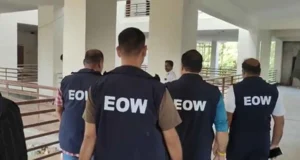
The Economic Offences Wing (EOW) of Chhattisgarh has filed a 6,000-page chargesheet before a Special Court nearly 18 years after the alleged ₹1.69 crore financial irregularities in the procurement of materials under the Mahatma Gandhi National Rural Employment Guarantee Scheme (NREGS) during 2006-07 and 2007-08. The chargesheet names the then Chief Executive Officer (CEO) of Kanker Zila Panchayat along with the former CEOs of seven Janpad Panchayats. According to the investigating agency, the accused allegedly violated prescribed tender procedures and government procurement rules, resulting in the misuse of public funds.
According to the EOW, the chargesheet has been filed before the Special Judge (Prevention of Corruption Act) in Kanker under Sections 120-B (criminal conspiracy), 409 (criminal breach of trust by a public servant) and 420 (cheating) of the Indian Penal Code (IPC), along with relevant provisions of the Prevention of Corruption Act, 1988. The agency stated that the investigation has prima facie revealed evidence of criminal conspiracy, corruption, cheating and misappropriation of government funds.
The investigation found that materials required for implementing the NREGS scheme, including flex boards, muster roll verification sheets, employment guarantee guidelines, employment availability registers and worker information sheets, were allegedly procured without following the prescribed tendering process and procurement regulations. Investigators claim that mandatory transparency norms governing public procurement were ignored, raising serious concerns over the utilisation of public money.
The EOW alleged that K.P. Dewangan, the then Chief Executive Officer of Kanker Zila Panchayat, introduced a centralised procurement system at the district level despite government rules authorising individual Janpad Panchayats and Gram Panchayats to carry out procurement independently. Investigators claim that this arrangement bypassed the statutory procurement framework and facilitated financial irregularities at multiple administrative levels.
According to the chargesheet, the procurement process also violated the Chhattisgarh Panchayat (Procurement of Materials and Goods) Rules, the Chhattisgarh Stores Purchase Rules and procurement procedures prescribed through Chhattisgarh Samvad. The EOW alleges that these violations compromised transparency and competition in the procurement process, leading to the alleged misuse of public funds.
The agency further alleged that Dewangan conspired with the then Chief Executive Officers of the Janpad Panchayats of Kanker, Narharpur, Charama, Antagarh, Koylibeda, Bhanupratappur and Durgkondal, resulting in the alleged misappropriation of ₹1,69,14,247. According to investigators, the alleged financial irregularities include approximately ₹39.90 lakh relating to Kanker Zila Panchayat and around ₹1.29 crore across the seven Janpad Panchayats.
The eight individuals named in the chargesheet include dismissed former Kanker Zila Panchayat CEO K.P. Dewangan, along with former Janpad Panchayat CEOs Radhakant Kar (Kanker), Govardhan Gajballa (Narharpur), Pardeshi Ram Markam (Charama), Bharat Ram Netam (Antagarh), Ramkishun Dhruv (Koylibeda), G.R. Thakur (Bhanupratappur) and Sanwaldas Baghel (Durgkondal). The allegations remain subject to judicial scrutiny, and the guilt or innocence of the accused will be determined during the trial based on the evidence presented before the court.
The EOW also stated that K.P. Dewangan had previously faced two other corruption cases registered in 2009 and 2010. Those cases relate to allegations of granting undue benefits to ineligible candidates using forged documents, abuse of official position, violation of procurement rules and the alleged misappropriation of approximately ₹8.44 crore in public funds. According to the agency, a final report and chargesheet have already been filed before the court in both matters.
Renowned cybercrime expert and former IPS officer Prof. Triveni Singh said that investigations involving public procurement increasingly rely on scientific analysis of digital records, e-tender documents, financial transactions, approval files and electronic communications. According to him, robust procurement systems, regular audits, digital monitoring and stronger accountability mechanisms are essential to prevent the misuse of public funds. He added that timely investigations and effective prosecution play a crucial role in strengthening transparency and public confidence in governance.
