

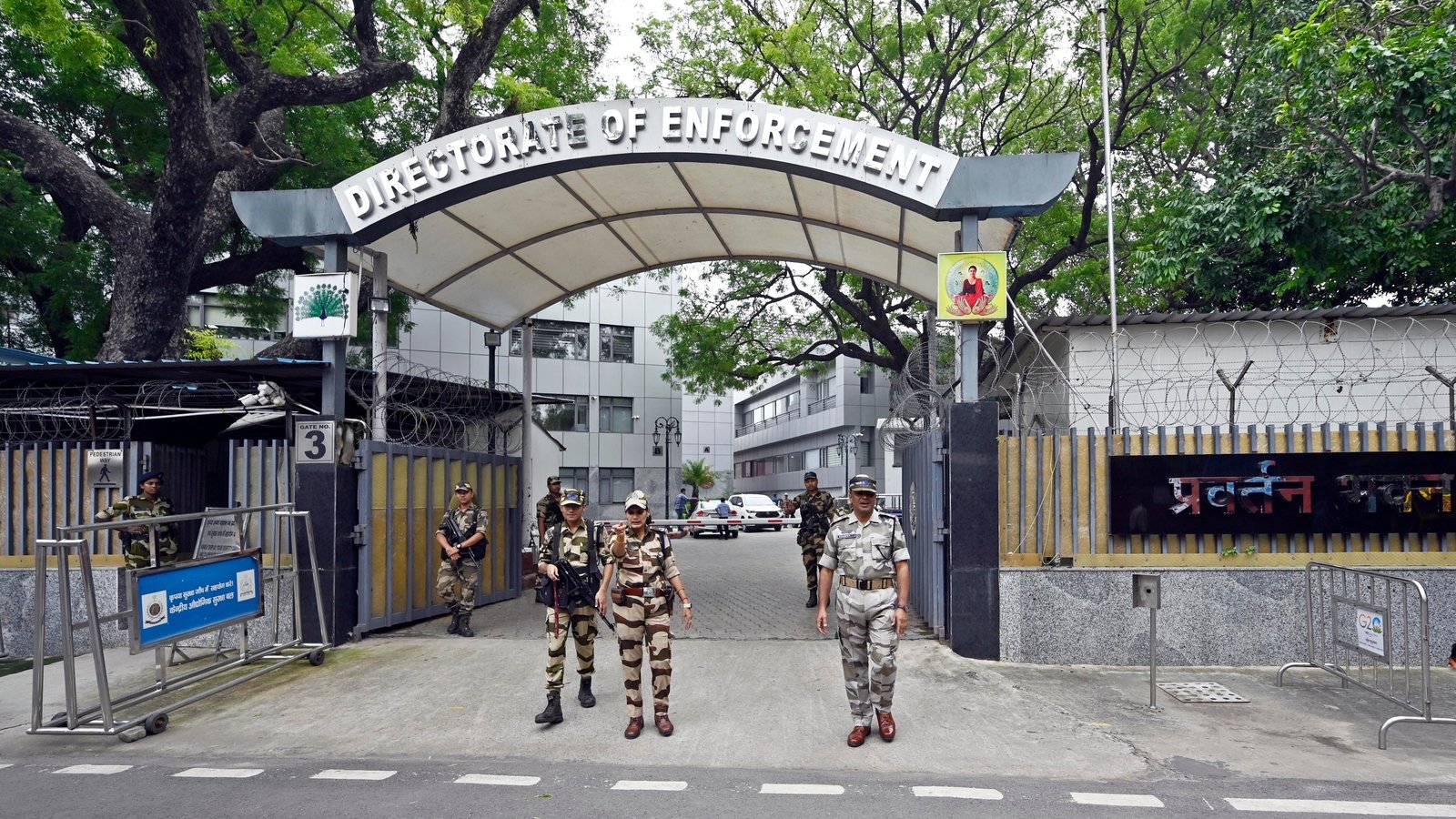
The Directorate of Enforcement (ED) has filed a 20,000-page prosecution complaint (chargesheet) before the Special Court under the Prevention of Money Laundering Act (PMLA), 2002, against 32 accused in the alleged ₹103.42 crore Indore Municipal Corporation (IMC) fake bill scam. The accused include contractor beneficiaries, officials of the Indore Municipal Corporation, officials from the Local Fund Audit/Resident Audit Office and several private individuals who allegedly helped conceal, transfer and use the proceeds of crime.
The money laundering investigation was initiated on the basis of multiple FIRs registered at MG Road Police Station, Indore, concerning the alleged fraudulent withdrawal of public funds from the IMC treasury. According to the ED, the accused allegedly used forged bills, fabricated work orders, fake measurement books, false completion certificates, manipulated note sheets and other forged records to fraudulently obtain payments from the municipal corporation. Investigators alleged that in many cases the projects were either never executed or had already been completed under genuine work orders, yet fresh payments were fraudulently processed.
The ED’s investigation found that several contractor firms, allegedly acting in collusion with municipal officials and audit department personnel, created forged work-order files and processed fake bills to siphon off approximately ₹103.42 crore from the civic body’s treasury. The agency alleged that the fraud was carried out through a well-planned network involving government officials and private beneficiaries who facilitated the preparation, approval and payment of fabricated claims.
According to the investigation, the fraudulently obtained funds were subsequently withdrawn in cash and distributed among contractors, public servants and other beneficiaries. The agency further alleged that a substantial portion of the money was layered through related companies and associated entities by disguising the transactions as legitimate business activities. The funds were then allegedly used for purchasing movable and immovable properties as well as meeting personal expenses in an attempt to conceal their illicit origin.
As part of the probe, the ED conducted searches at 20 locations on August 5 and 6, 2024. During these operations, officials seized or froze assets worth approximately ₹22.04 crore, including cash, bank balances, fixed deposits, demat holdings and mutual fund investments. Investigators also recovered several documents and digital devices that are believed to contain evidence related to the alleged money laundering operation.
The agency subsequently issued two provisional attachment orders under the PMLA and attached 52 immovable properties valued at around ₹37.14 crore. These assets include commercial establishments, residential houses, plots and agricultural land located in Madhya Pradesh and Uttar Pradesh. Overall, assets worth nearly ₹59.18 crore have so far been provisionally attached, seized or frozen during the investigation.
During the course of the investigation, the ED also arrested Abhay Singh Rathore, alleged to be the kingpin of the scam, along with Mohd Zakir and Rahul Badera under Section 19 of the PMLA. The agency alleged that the three played central roles in planning the fraudulent scheme and laundering the proceeds generated from the alleged scam.
The prosecution complaint was filed before the Special PMLA Court in Indore on July 24, seeking confiscation of the attached, seized and frozen assets allegedly involved in money laundering. The Special Court has taken cognisance of the complaint, issued notices and summons to the accused persons and scheduled the matter for further proceedings.
Renowned cyber crime expert and former IPS officer Prof. Triveni Singh said large-scale financial frauds involving forged government records often rely on a combination of document manipulation, financial layering and coordinated participation by multiple actors. He noted that forensic examination of financial records, digital evidence and property transactions is essential for tracing the movement of illicit funds and identifying all beneficiaries. According to him, stronger internal audits, digital verification of government payments and continuous monitoring of public expenditure are critical to preventing similar economic offences in the future.
The ED said further investigation into the case is continuing to identify additional beneficiaries, trace the remaining proceeds of crime and determine whether any other individuals or entities were involved in the alleged money laundering network.
