
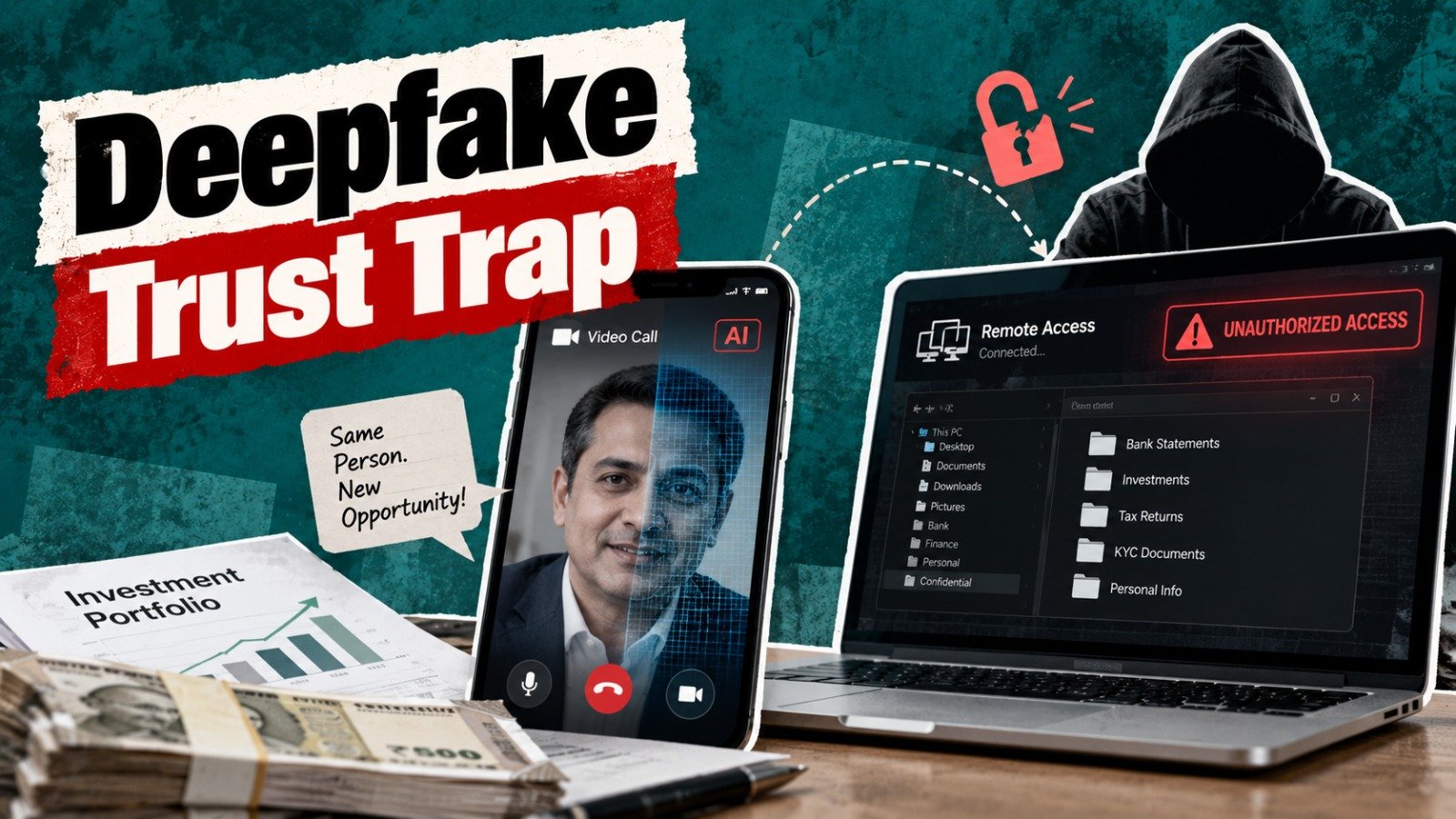

A person in Ards and North Down has lost £250,000, approximately ₹3.19 crore, after an AI-generated investment advertisement led to WhatsApp contact, remote computer access and repeated demands for money.
The Police Service of Northern Ireland (PSNI) issued a warning on September 7 after receiving a report of the substantial fraud. The victim initially responded to a video that appeared to feature a well-known personality from the financial sector promoting an investment opportunity with significant returns.
What began as a relatively small investment gradually escalated. The criminals allegedly gained the victim’s confidence, encouraged larger payments and eventually persuaded the person to borrow money to continue investing.
Proposal for Conducting Cyber Crisis Drill, Tabletop Exercise (TTEx) & CCMP Readiness Exercise
A Convincing Video Opened the Door to the Scam
The victim first encountered the investment advertisement online. It appeared to show a recognisable financial personality endorsing the opportunity.
Police have not named the person whose image or voice was used. They described the advertisement as appearing to contain an AI-generated video.
The apparent endorsement gave the offer credibility. A person who might otherwise question an unknown investment company could be more willing to trust a familiar face associated with financial expertise.
After the victim made an initial small payment, the fraudsters moved the conversation to WhatsApp. They encouraged further investments and presented themselves as people who could help manage the process.
The gradual approach was central to the deception. Instead of immediately demanding a large sum, the operators allegedly built confidence before increasing the amount of money requested.
Remote Access Turned Investment Help Into a Security Risk
The fraudsters subsequently persuaded the victim to create multiple online accounts and allowed remote access to a computer under the pretext of helping with the investment.
Remote-access software allows one person to view or control another computer over the internet when permission is granted. It is commonly used by legitimate IT support teams, but criminals can exploit it to view sensitive information, manipulate websites or guide victims through financial transactions.
Police have not specified which software was used or established publicly that the criminals stole passwords directly from the computer. The confirmed concern is that they obtained access while presenting themselves as investment assistants.
That access can make a fraud more difficult for a victim to recognise. The person on the other end may appear to be providing technical support while actually directing the victim towards accounts or transactions controlled by the scam network.
Borrowing Money Became Part of the Pressure
As the alleged fraud progressed, the victim was encouraged to invest increasingly large sums.
When the person no longer had sufficient money available, the criminals allegedly encouraged borrowing to continue the investment. The borrowed funds were then transferred to accounts controlled by the fraudsters.
Police also said the victim was told that further payments were required before money supposedly held in the investment could be released.
This is a particularly damaging stage of investment fraud. A victim who believes a large balance is waiting for withdrawal may feel that one more payment is the only way to recover everything already invested.
The supposed release fee can therefore turn an existing loss into a larger one.
By the time the case was reported, the total loss had reached £250,000. Police have not disclosed the number of transactions, the amount borrowed or whether the victim recovered any funds.
How Deepfake Investment Fraud Creates False Trust
A deepfake is artificially generated or manipulated audio or video that makes a person appear to say or do something they did not actually say or do.
In investment fraud, the technology can be used to fabricate an endorsement from a financial expert, celebrity or business leader. The video may appear alongside a convincing website, fake testimonials and a professional-looking investment dashboard.
The goal is not necessarily to make the victim believe in AI technology itself. It is to make the investment appear legitimate by borrowing the reputation of someone the public already recognises.
Once contact is established, the fraud can become highly personal. Messaging, repeated reassurance, small initial payments and apparent account balances may all be used to encourage larger transfers.
The PSNI warned that an apparent celebrity endorsement should never be treated as proof that an investment is genuine.
A Similar Northern Ireland Case Shows the Wider Risk
The latest case follows another serious investment fraud reported by the PSNI in June 2026.
In that earlier incident, a woman in her 70s from Newry lost more than £250,000 after investing in what she believed was a cryptocurrency scheme advertised online.
Police said she initially sent a small amount before being persuaded to make larger payments. After she downloaded malware at the criminals’ instruction, they allegedly gained control of her electronic devices and transferred further money.
The two cases have not been linked by police. They nevertheless demonstrate how investment fraud can move beyond misleading advertisements into direct control of a victim’s digital environment.
Police Urge Independent Checks Before Investing
The PSNI has advised people to verify investment opportunities independently rather than relying on advertisements, apparent endorsements or messages from people claiming to be financial advisers.
In the United Kingdom, consumers can check whether a firm or individual is authorised by the Financial Conduct Authority. Authorisation does not guarantee investment profits, but it is an important first step in checking whether a financial services provider is operating legitimately.
Superintendent Joanne Gibson, chair of the Scamwise Partnership, also urged families to speak with relatives about financial fraud. Police said timely conversations and independent checks can help prevent further losses.
No arrests or recoveries have been announced in connection with this particular £250,000 case.
What this means for you: Never allow an unknown investment contact to control your computer, and do not borrow money to unlock supposed investment profits. Verify firms through official regulatory websites, not links sent by the person promoting the scheme. If remote access has already been granted, disconnect the device, contact your bank using an independently verified number and seek trusted technical assistance.
The420 Insight: The deepfake was only the first stage of this alleged fraud. The larger loss developed through personal contact, remote access and pressure to keep paying even after the victim’s own funds were exhausted. This shows why detecting fake videos alone is not enough. Financial institutions, technology platforms and law-enforcement agencies need stronger ways to identify high-pressure investment scams before victims reach the borrowing stage. The most effective warning sign remains the demand for more money to release profits that cannot be independently verified.
https://www.linkedin.com/company/policetechnology/
Follow for daily updates on cybercrime, corporate fraud, DFIR, hacking, investigations, and digital forensics
