
Follow us on Google News

The Union Ministry of Home Affairs (MHA) has launched a free online cybersecurity awareness course to help citizens recognise online fraud, protect personal information and use digital financial services safely. Developed by the Indian Cyber Crime Coordination Centre (I4C), the programme focuses on common scams affecting everyday internet users.
Who Can Enrol?
The course is open to students, working professionals, government employees and senior citizens without any enrolment fee. Participants who successfully complete the programme will receive a digital certificate.
The initiative aims to make practical cybersecurity knowledge accessible beyond police agencies, banking institutions and technology specialists. It is designed for people who routinely use smartphones, social media, online shopping platforms and digital payment services.
What Will People Learn?
The curriculum explains how criminals use fraudulent banking calls, fake know-your-customer (KYC) update messages, phishing links, bogus job offers and credit card upgrade offers to deceive people.
Participants will learn to identify suspicious messages, protect personal information and recognise attempts at identity theft. Lessons also address safer use of social media, online payments and banking services.
https://the420.in/fcrf-certified-chief-ai-officer-second-cohort-november-2026/
Another focus is how fraudsters persuade victims to reveal one-time passwords, account credentials and debit or credit card details by pretending to represent banks, government departments, police agencies or familiar companies.
Why Has the Course Been Launched?
The programme comes amid mounting financial losses from cybercrime across India. Government figures show that more than 53.87 lakh cyber fraud complaints were registered on the National Cyber Crime Reporting Portal between 2023-24 and 2025-26.
These complaints involved reported losses exceeding ₹56,087 crore, illustrating the scale of online financial crime. The initiative seeks to reduce the risks faced by citizens who may be unfamiliar with evolving fraud methods, particularly those built around fear, urgency and promises of financial rewards.
How Can Citizens Join?
The course is available through the I4C online learning portal at https://learning.cte-i4c.live/
The promotional announcement describes it as a two-and-a-half-hour programme, while the learning portal indicates an estimated completion time of four to five hours. The course is free, and successful participants can obtain a digital certificate. The training concentrates on practical habits that people can apply when receiving unfamiliar calls, links or requests for banking information.
How Can Victims Report Fraud?
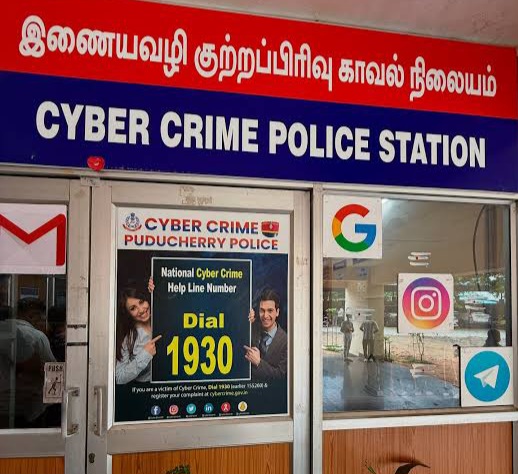
The ministry has also urged people to report suspected financial cyber fraud immediately through the national helpline 1930 or the official portal cybercrime.gov.in. Prompt reporting can help authorities and banks intervene before stolen funds are transferred further.
As of June 30, 2026, the Citizen Financial Cyber Fraud Reporting and Management System had helped save more than ₹11,158 crore across over 32.80 lakh complaints through timely intervention, according to government figures.
What Is the Main Objective?
The course seeks to strengthen public awareness alongside law enforcement and technical safeguards. As online banking, payments and mobile services become increasingly common, citizens face more opportunities to encounter deceptive messages and fraudulent requests. By teaching people to question suspicious claims, verify identities and safeguard confidential details, the programme aims to make informed internet users an important part of India’s response to cybercrime.
About the author — Ayesha Aayat writes on cybercrime, digital safety, and emerging online threats. Her work focuses on public awareness, legal clarity, and technology-driven risks.