
Follow us on Google News

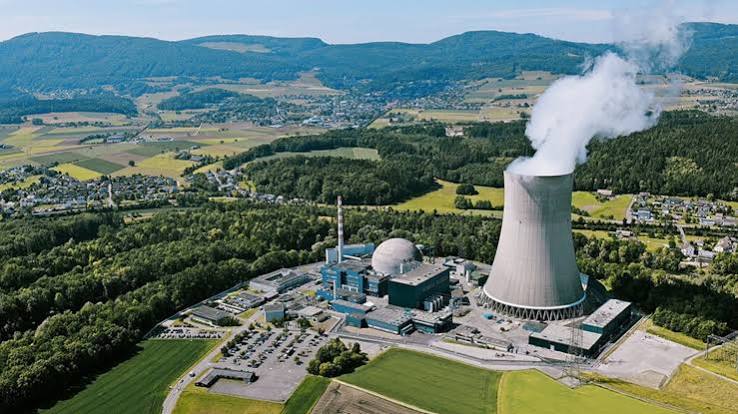
German energy company E.ON is examining whether former nuclear power plant sites could be repurposed for data centres, as Europe’s expanding artificial intelligence industry drives demand for locations with access to large amounts of electricity.
The possibility was discussed by E.ON Chief Financial Officer Nadia Jakobi during the company’s earnings presentation on November 11, 2026. She said former power stations could provide attractive industrial locations because some already have the infrastructure needed to support major computing facilities.
The assessment remains at an early stage, with no final investment decision or construction timetable announced. However, the initiative illustrates how growing demand for AI computing is encouraging energy companies to reconsider the future of large industrial sites.
Former Nuclear Sites Offer Existing Grid Infrastructure
Modern data centres require reliable electricity to operate thousands of servers, networking systems and cooling equipment.
Facilities designed for advanced AI applications can consume particularly large amounts of power because the specialised processors used for training and operating AI models require continuous energy supplies.
Securing sufficient electricity has consequently become one of the major challenges facing data-centre developers.
Companies must often negotiate complex grid connections and invest in additional infrastructure before new facilities can become operational.
Former nuclear power stations may offer an alternative.
These locations were originally developed to accommodate major electricity generation facilities, meaning some already possess substantial grid infrastructure and industrial land.
Although their nuclear reactors are no longer operating, the associated sites may retain valuable connections to the electricity network.
E.ON believes this infrastructure could potentially support new uses, including data-centre development.
Jakobi said the suitability of individual locations would depend on their existing facilities and the condition of their grid connections.
Such assessments would need to establish whether the sites could meet the technical requirements of modern computing infrastructure.
Importantly, repurposing a former nuclear power station does not mean restarting nuclear electricity generation.
The proposal concerns using former industrial locations and their infrastructure to accommodate data centres.
Germany Looks For New Uses For Retired Power Plants
Germany completed the shutdown of its remaining operating nuclear power reactors in 2023, ending a major chapter in the country’s energy policy.
The former facilities are undergoing different stages of decommissioning, dismantling and redevelopment.
These processes can take years because nuclear sites require extensive safety procedures and regulatory oversight before land or infrastructure can be used for other purposes.
However, the locations may eventually become suitable for new industrial activities.
Their existing electricity connections could provide an advantage over undeveloped locations where grid infrastructure must be constructed from the beginning.
For data-centre operators, access to electricity infrastructure can influence both development costs and the time required to establish a new facility.
Nevertheless, former nuclear sites would still require careful examination.
Developers would need to assess land availability, environmental restrictions, cooling requirements and the costs of adapting infrastructure.
The availability of a large grid connection also does not automatically guarantee that enough electricity can be supplied at all times.
Any project would need to satisfy technical, commercial and regulatory requirements before proceeding.
AI Expansion Creates Growing Pressure On Europe’s Power Networks
The potential conversion reflects a wider change in the relationship between the energy and technology industries.
Cloud computing and artificial intelligence are increasing demand for electricity-intensive infrastructure across Europe.
Major technology companies are investing in additional data centres to support AI model development, business applications and digital services.
However, electricity availability has become a constraint in several markets.
New facilities may require substantial grid upgrades, additional power generation capacity or alternative locations where the necessary infrastructure is already available.
Energy companies are therefore becoming increasingly important partners in the expansion of digital infrastructure.
E.ON, one of Europe’s largest energy network operators, is already investing heavily in electricity grids to accommodate rising demand and the transition towards cleaner energy systems.
Data-centre development could create additional demand for grid services while offering new uses for some former industrial locations.
The company has not disclosed how many retired nuclear sites are being evaluated or how much investment potential projects might require.
What This Means For You
E.ON’s assessment highlights how the rapid growth of artificial intelligence is reshaping infrastructure planning.
Data-centre expansion now depends not only on access to advanced computing equipment but also on electricity networks, industrial land and reliable energy supplies.
For India, where investment in AI and cloud infrastructure is accelerating, the development offers a relevant example of how existing industrial sites might be assessed for future digital infrastructure projects.
However, adapting older facilities requires careful evaluation of technical suitability, environmental conditions and long-term electricity availability.
E.ON’s review remains preliminary, but it illustrates how energy infrastructure originally built for one industry may find new uses as demand for advanced computing continues to expand.