
Follow us on Google News

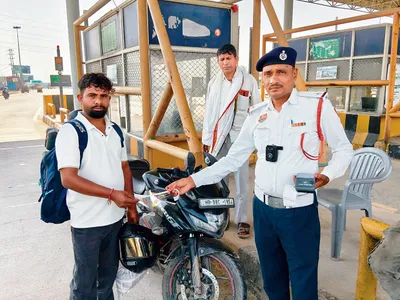
Gurugram police have introduced sweeping changes to their traffic management system to curb allegations of extortion and misconduct by personnel on the roads. Under the newly implemented guidelines, no traffic officer is permitted to stop vehicles without an active, operational body-worn camera. The entire procedure, from the initial vehicle inspection to the issuance of traffic challans, must now be conducted under direct camera surveillance. In an effort to enhance administrative transparency and break localized nexus, personnel postings will be systematically reshuffled every 60 days using a computerized rotation system. The overhaul also introduces direct accountability for senior supervisory officers. If a subordinate faces accusations of soliciting bribes or running extortion schemes, departmental proceedings can now be launched against the responsible zonal officers and traffic inspectors. Police Commissioner Sibash Kabiraj issued these directives on Tuesday, characterizing the transition as part of an institutional zero-tolerance policy targeting corruption and indiscipline across the city.
Extortion Arrest After Viral Video Prompts Reforms
The structural reforms follow the recent arrest of a home guard personnel involved in a roadside extortion incident. On November 8, authorities arrested Omkar, a home guard, mere hours after a video circulated widely on social media platforms. The footage allegedly captured the personnel soliciting cash from a motorist under the guise of demanding a Diwali gift. The public circulation of the recording triggered significant debate regarding the conduct of roadside law enforcement and the unchecked nature of vehicle inspections across the district.
The incident raised serious doubts concerning how inspections are handled in the field, prompting immediate intervention from senior leadership. In response to mounting concerns over police behavior and arbitrary enforcement, the police commissioner ordered heightened technical oversight and fixed direct administrative liability on supervisory ranks to deter ground-level misconduct.
Strict Mandate on Operational Body-Worn Cameras
A central pillar of the new enforcement strategy is the compulsory deployment of body-worn cameras. Traffic officers must verify that their recording units are turned on and functioning properly before pulling over any vehicle. Officers are strictly prohibited from intercepting traffic if their assigned recording devices are non-functional or switched off.
The issuance of challans must similarly occur entirely under the lens of the camera, and any personnel violating this rule will face internal disciplinary action. The primary objective is to maintain an unbroken digital record of every interaction from the moment a car is flagged down until penalties are issued. The resulting audio-visual records are expected to serve as definitive evidence in the event of public disputes, assisting investigators in evaluating allegations of unlawful bribe demands, abusive language, or procedural violations.
Computerized Postings and Enhanced Supervisory Accountability
Alongside the technical mandates, the department has restructured the deployment mechanism for ground personnel. Postings will now be managed through an automated, computerized roster that rotates traffic police staff every 60 days. This periodic reshuffling aims to prevent officers from developing vested local interests or exerting undue influence as a result of prolonged tenures at a single intersection or beat.
Supervisory responsibility has been significantly expanded to ensure that corruption complaints do not stop at frontline staff. When allegations of bribery or extortion emerge against an on-duty officer, both the zonal officer and the jurisdictional traffic inspector must provide explanations, facing departmental action if supervision is found lacking. While these measures aim to enforce transparency, oversight, and operational discipline across Gurugram, the long-term impact will ultimately depend on consistent enforcement and the rigor with which citizen grievances are investigated.