
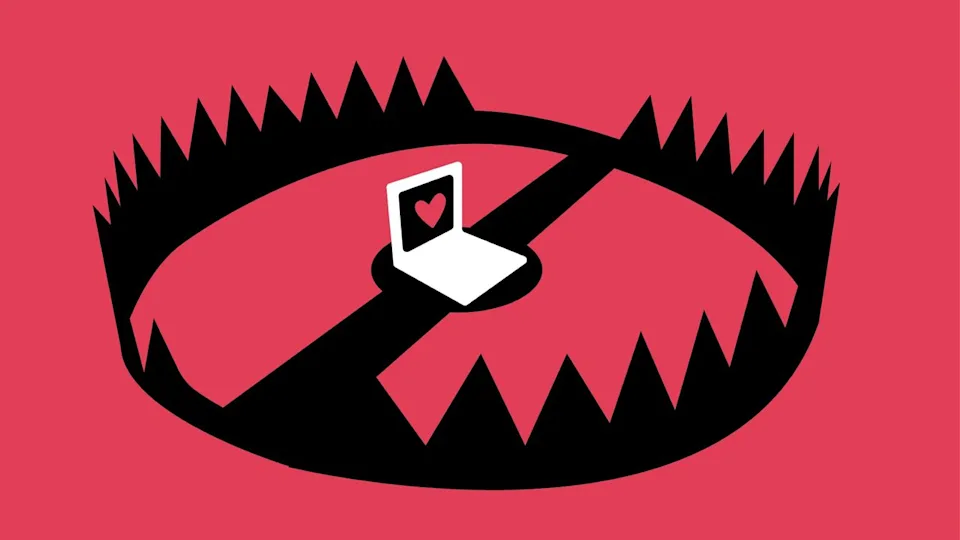
In the digital age, where forming relationships has become easier than ever, online connections are increasingly turning into dangerous tools of fraud. A recent case reported from the national capital has once again highlighted the growing threat of romance scams. In such cases, fraudsters use fake identities to lure people—especially women—into emotional relationships and later exploit them financially through manipulation and pressure.
Investigations reveal that the accused operate with a highly planned strategy. They create attractive and trustworthy-looking profiles on dating apps and matrimonial websites. These profiles often feature professional photographs, high-paying job claims, and impressive personalities designed to quickly gain the victim’s attention. Initial conversations begin casually, mimicking genuine friendship, but gradually evolve into emotionally intense relationships.
Trust becomes the turning point of the crime
Once the victim develops complete trust, the fraudsters initiate the real scheme. They persuade individuals to share personal photos, videos, or sensitive information during private conversations. As soon as they obtain such content, blackmail begins. In many instances, victims, fearing social embarrassment, choose to pay money rather than report the crime, which further emboldens the criminals.
FCRF Academy Launches Premier Anti-Money Laundering Certification Program
These incidents are not limited to financial losses alone. Victims often suffer deep emotional and psychological distress. Experts believe that the core weapon in romance scams is “emotional trust,” which fraudsters skillfully manipulate to their advantage.
A well-structured pattern behind the crime
This is not a random act but a structured method followed by organized groups. The process typically includes building friendship, gaining trust, initiating private interactions, and eventually resorting to blackmail. In several cases, scammers pose as professionals working abroad, businessmen, or even individuals associated with the armed forces to enhance their credibility.
The growing dependence on digital platforms has made such crimes easier to execute. People often fail to verify the identity of the person they are interacting with and end up sharing personal information, which later becomes a tool for exploitation.
Research confirms rising threat
Recent findings by Future Crime Research Foundation indicate a steady increase in romance scam cases across India. According to the organization, cybercriminals are now moving beyond traditional fraud methods and are increasingly using social engineering and psychological manipulation techniques. This evolution makes such scams harder to detect. The report also highlights that not only metropolitan cities but smaller towns are rapidly becoming targets of these crimes.
Expert warning on emotional manipulation
Renowned cybercrime expert and former IPS officer Prof. Triveni Singh explains that romance scams are fundamentally driven by social engineering rather than technology. He notes, “Fraudsters first build trust and then weaponize that trust to manipulate and blackmail victims. The deeper the emotional involvement, the greater the potential loss.” He emphasizes that verification and caution are essential in any online relationship.
How to identify signs of a romance scam?
Experts suggest that certain warning signals can help identify such fraud. If someone tries to form an emotional bond very quickly, repeatedly asks for personal information, or requests money under any pretext, it should be treated as a red flag. Inconsistencies in profile details and behavior are also strong indicators of potential fraud.
Vigilance is the strongest defense
It is crucial to remain cautious while interacting on online platforms. Do not trust unknown individuals too quickly, no matter how convincing or attractive they appear. Avoid sharing personal photos, videos, or sensitive information. If someone creates emotional pressure or asks for money, it is best to immediately cut off contact.
If anyone suspects or becomes a victim of such a scam, immediate action is critical. One can contact the cyber helpline at 1930 or report the incident on the national cybercrime reporting portal.
In a rapidly evolving digital world where the nature of relationships is changing, staying alert has become more important than ever. Remember—every online connection is not genuine, and a moment of negligence can lead to significant loss.
About the author – Ayesha Aayat is a law student and contributor covering cybercrime, online frauds, and digital safety concerns. Her writing aims to raise awareness about evolving cyber threats and legal responses.
