


Karnataka plans to raise its installed power capacity from just over 39 GW to 66 GW by 2030, with the expansion expected to attract up to ₹3 lakh crore in private investment.
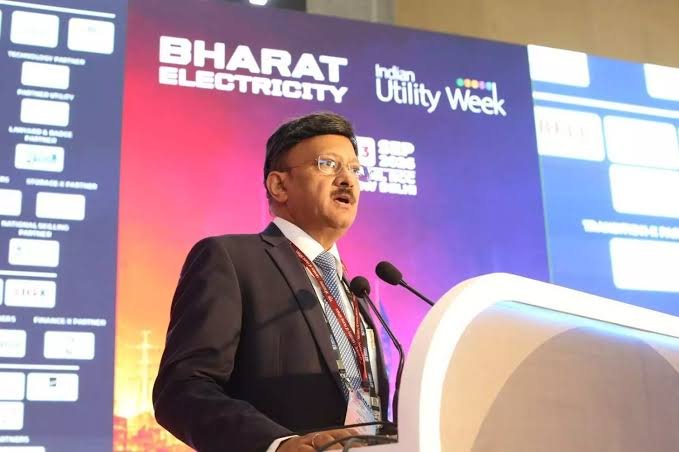
The roadmap was outlined by Gaurav Gupta, Additional Chief Secretary in Karnataka’s Energy Department, during the Bharat Electricity and Indian Utility Week 2026 summit in New Delhi.
The state says the next phase of capacity addition will remain heavily focused on clean energy, while also strengthening transmission, storage and grid flexibility.
The scale of the plan reflects a bigger challenge.
Karnataka expects its electricity demand to roughly double over the next decade as industries expand, electric vehicle adoption grows and large data centres come up in Bengaluru, Mysuru and Mangaluru.
Proposal for Conducting Cyber Crisis Drill, Tabletop Exercise (TTEx) & CCMP Readiness Exercise
39 GW Today, 66 GW by 2030
Karnataka currently has more than 39 GW of installed power capacity.
According to the state Energy Department, around two-thirds of its power mix comes from hydro and other renewable sources. The government wants future capacity growth to remain “overwhelmingly green”.
The 66 GW target means Karnataka would need to add roughly 27 GW of capacity over the next few years.
That will require new solar and wind projects, stronger transmission lines and significantly more energy storage.
The Central Government had reported that Karnataka already had about 23.07 GW of renewable energy capacity as of February 2025, placing it among India’s major renewable-energy states.
The new roadmap therefore builds on an existing clean-energy base rather than starting from scratch.
Why Storage Is Becoming as Important as Solar and Wind
Adding renewable generation alone does not solve the power problem.
Solar production falls after sunset. Wind generation can change sharply depending on weather.
That means electricity systems increasingly need ways to store excess power and release it later.
One of Karnataka’s biggest planned projects is the 2,000 MW Sharavathi Pumped Storage Project, being developed by Karnataka Power Corporation Limited.
The Central Electricity Authority lists the project at 2,000 MW and has previously indicated a likely commissioning timeline around 2029.
Pumped storage works like a giant rechargeable battery.
When electricity is plentiful, water is pumped to a higher reservoir. When demand rises, that water is released downhill through turbines to generate power.
Karnataka is also deploying Battery Energy Storage Systems at key KPTCL substations to improve grid flexibility.
This matters because renewable-heavy grids need to respond quickly when generation suddenly rises or falls.
Data Centres and EVs Are Changing the Demand Curve
Karnataka’s electricity planning is also being shaped by sectors that barely figured in state power forecasts a decade ago.
Data centres consume large amounts of electricity continuously for servers, cooling and backup systems.
Electric vehicles add another source of demand as charging networks expand.
The Energy Department has specifically identified industrial growth, EV adoption and data-centre development as major drivers behind the expected rise in electricity consumption.
For Karnataka, this is particularly important because Bengaluru remains one of India’s largest technology hubs and continues to attract cloud, AI and digital-infrastructure investment.
Mysuru and Mangaluru are also being positioned for future data-centre development.
That means power planning is no longer only about households and factories.
It is increasingly tied to whether the state can support digital infrastructure without creating shortages or overloading the grid.
₹3 Lakh Crore Is an Investment Opportunity, Not a Commitment
The headline investment figure needs careful reading.
Karnataka expects the power-sector expansion to create ₹2–3 lakh crore of private investment opportunities over the next four to five years.
That does not mean ₹3 lakh crore has already been sanctioned or committed by investors.
The state is trying to attract capital into renewable generation, transmission, storage and related infrastructure while simplifying project approvals and addressing investor concerns over land and procedures.
Karnataka Renewable Energy Development Limited is also seeking partnerships in areas including battery storage, green hydrogen and smart-grid automation.
The state has also highlighted schemes such as PM-KUSUM and the Chief Minister Saura Krishi Yojana to expand solar power in agriculture.
The Grid May Be the Hardest Part
Building generation capacity is only one part of the challenge.
Electricity still has to reach consumers when and where it is needed.
Karnataka says KPTCL operates with transmission losses below 3% and is adding new transmission lines and high-capacity substations.
Nationally, inadequate transmission and storage have already resulted in renewable electricity being curtailed even when power demand is rising.
Recent analysis has shown that India’s power system increasingly needs more flexible grids and substantially more storage to prevent renewable energy from going unused.
That makes Karnataka’s 66 GW target as much a grid-management challenge as a generation target.
What this means for you: For consumers and businesses, the plan could eventually mean a larger supply of cleaner electricity and better grid reliability. But the benefits will depend on whether storage and transmission expand at the same pace as solar and wind capacity.
The420 Insight: Karnataka’s biggest energy gamble is not simply adding another 27 GW. It is trying to build a power system capable of supporting a new economy driven by EVs, manufacturing and power-hungry data centres while remaining heavily renewable. The ₹3 lakh crore figure shows the scale of capital required, but investment announcements alone will not determine success. Storage, transmission capacity and timely project execution will decide whether 66 GW becomes usable power or just installed capacity on paper.
https://www.linkedin.com/company/policetechnology/
Follow for daily updates on cybercrime, corporate fraud, DFIR, hacking, investigations, and digital forensics
