
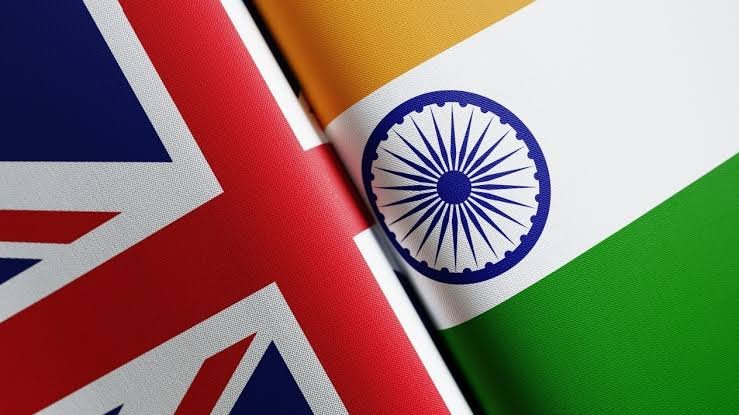

The India-UK Comprehensive Economic and Trade Agreement, set to come into force on July 15, provides duty-free access for 99 per cent of India’s exports to the UK. According to the latest notification from the Finance Ministry, a product will qualify as originating in India or the UK if it is wholly obtained in either country, produced entirely from originating materials, or manufactured using non-originating inputs while meeting the product-specific origin requirements prescribed under the agreement.
The rules, issued by the Central Board of Indirect Taxes and Customs, establish the framework for determining whether goods qualify for preferential tariff treatment and lay down compliance requirements for exporters and importers. The notification states plainly that these rules, formally titled the Customs Tariff (Determination of Origin of Goods under Comprehensive Economic and Trade Agreement between India and the United Kingdom) Rules, 2026, shall come into force on July 15, 2026. The framework allows cumulative treatment of originating materials, enabling inputs originating in one partner country to be treated as originating in the other when used in further production, while specifying that activities such as simple repackaging, relabelling, washing, sorting, polishing, and simple assembly will not be sufficient to confer originating status on a product, a safeguard explicitly designed to prevent third-country goods from being routed through either country to claim preferential tariffs they would not otherwise qualify for. Customs authorities will have powers to verify origin claims and deny preferential treatment where products fail to meet the prescribed conditions, with the rules also providing flexibility for importers who fail to claim tariff benefits at the time of import.
Three Years, Fourteen Rounds, One Landmark Deal
This rules of origin notification represents the final regulatory step in a negotiation that began in January 2022 and stretched across fourteen formal rounds before culminating in a signature in London in July 2025. The agreement is India’s most comprehensive trade pact with a G7 nation and the UK’s most significant bilateral trade agreement since its departure from the European Union. Alongside CETA, the accompanying Double Contribution Convention on social security will also enter into force on July 15, eliminating the requirement for Indian professionals on temporary UK assignments to make dual social security contributions in both countries, a change expected to meaningfully reduce costs for Indian IT, finance, and engineering professionals working abroad.
The scale of tariff liberalisation embedded in the deal is considerable on both sides. The UK will immediately eliminate duties on 99 per cent of Indian tariff lines upon entry into force, removing tariffs of up to 70 per cent on processed foods, 21.5 per cent on marine products, 18 per cent on engineering goods and auto components, 16 per cent on leather and footwear, and 12 per cent on textiles and clothing. In return, India has agreed to reduce tariffs on UK automobiles from over 100 per cent to 10 per cent under a fixed quota, and to cut duties on Scotch whisky and gin from 150 per cent to 75 per cent immediately, with a staged reduction to 40 per cent by year ten under a 2 million litre annual quota.
Winners on Both Sides of the Table
For Indian exporters, the removal of UK tariffs is expected to particularly benefit labour-intensive sectors including textiles, leather goods, marine products, footwear, toys, and gems and jewellery, alongside faster-growing segments such as engineering goods, auto components, and organic chemicals. India has separately secured market access commitments from the UK across all twelve major service sectors and 137 sub-sectors, covering over 99 per cent of India’s service export interests, with particular emphasis on information technology, financial services, and professional services such as management consultancy and engineering.
For British exporters, the commercial logic centres on India’s rapidly expanding consumer base. India recently became the world’s fifth-largest economy and is projected to rise to third place within three years, with its middle class expected to reach around 60 million people by 2030 and potentially a quarter of a billion by 2050. Industry bodies representing UK automotive and spirits manufacturers have described the deal in unusually enthusiastic terms: the Society of Motor Manufacturers and Traders called it a major milestone for partially liberalising India’s automotive market for finished vehicles for the first time, having previously exported fewer than 1,000 units annually to India despite exporting over 600,000 cars globally. Spirits maker Pernod Ricard separately noted that the removal of a minimum import price requirement represented a significant win, drawing an explicit lesson from India’s earlier trade agreement with Australia.
A Mobility Chapter With Direct Benefits for Indian Professionals
Beyond goods tariffs, the agreement’s mobility provisions carry direct significance for Indian workers seeking opportunities in Britain. The deal establishes an overall allocation of 20,000 annual UK service-supplier visas for Indian nationals, alongside 3,000 post-study work visas per year for Indian graduates and 1,800 annual mobility slots specifically reserved for Indian chefs, yoga instructors, and classical musicians, categories that reflect India’s distinct services and cultural export strengths. Visa processing has been committed to within three weeks by the UK and four weeks by India, while the economic-needs test previously required for UK firms establishing branch offices in India has been removed entirely.
Economic modelling from both governments points to measurable, if incremental, gains: UK Treasury analysis projects the deal will grow the UK economy by £4.8 billion annually by 2040, while Indian officials estimate a corresponding GDP increase of roughly £5.1 billion annually in the long term. British officials have separately forecast that bilateral trade could increase by 39 per cent over the long term, with beverages and tobacco exports to India potentially rising by as much as 180 per cent compared to current tariff levels remaining unchanged.
What Comes Next as the Clock Runs Down
With the rules of origin now formally notified, the last significant regulatory prerequisite for CETA’s implementation has been cleared, leaving exporters, importers, and customs authorities on both sides roughly ten days to prepare compliance systems ahead of the July 15 rollout. Commerce and Industry Minister Piyush Goyal, addressing the India-UK Partners in Progress Business Plenary in London, said the agreement will further deepen collaboration across trade, investment, and innovation, urging Indian companies to deepen engagement with UK counterparts and translate the opportunities under CETA into sustained business growth.
Both governments have set an explicit long-term ambition attached to this rollout: doubling bilateral trade to $112 billion by 2030. Whether that target proves achievable will depend considerably on how quickly exporters on both sides adapt to the newly notified rules of origin, since the entire architecture of preferential access, and the safeguards against its abuse through third-country routing, now rests on customs authorities correctly and consistently applying a framework that has, until this week, existed only on paper.
Follow for daily updates on cybercrime, corporate fraud, DFIR, hacking, investigations, and digital forensics
