

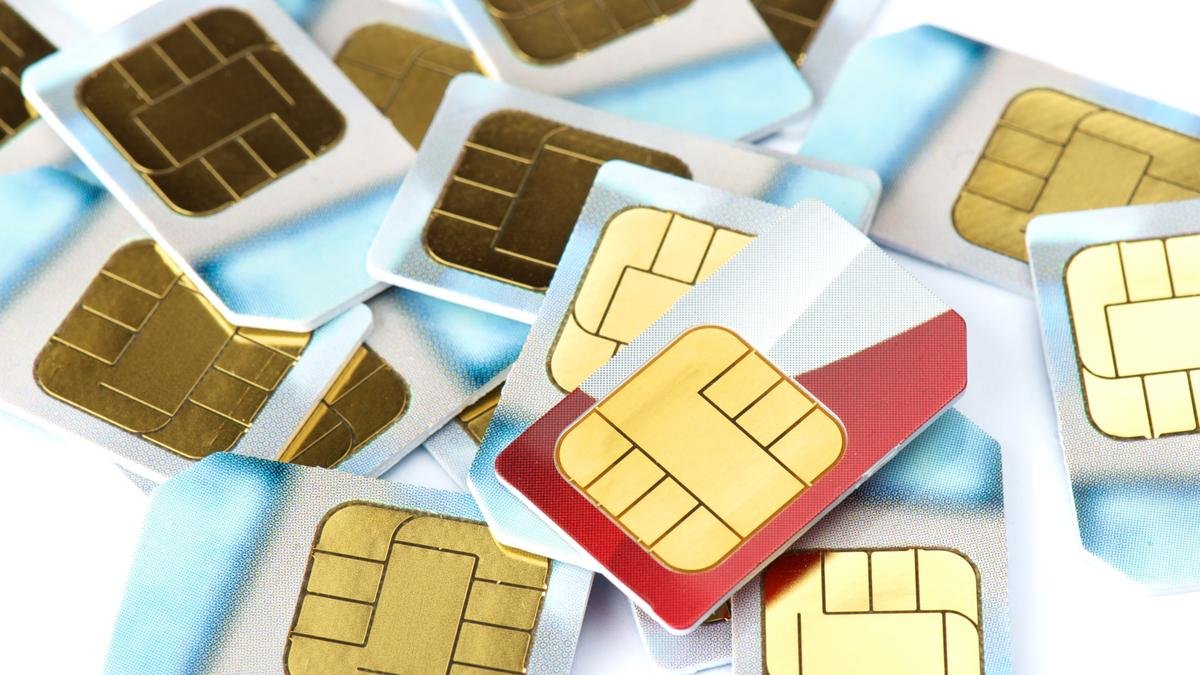

A licensed telecom Point of Sale agent was arrested for illegally activating SIM cards in violation of the prescribed Know Your Customer norms and supplying them to persons involved in cyber fraud, according to Delhi Police. The accused, Shivam, was arrested by the Cyber Police Station of Delhi Police’s Central District on July 2 near Hindu Rao Hospital in north Delhi, Deputy Commissioner of Police Rohit Rajbir Singh said.
Shivam was operating as a licensed PoS agent under the name Shivam Telecom from a temporary roadside setup. During interrogation, he admitted to deliberately activating additional SIM cards by misusing the identity documents and biometric credentials of genuine customers, then selling the pre-activated cards for Rs 500 to 600 per SIM without complying with mandatory KYC requirements. Police recovered incriminating digital logs and activation documentation matching blacklisted SIM profiles from Shivam, a resident of Baljeet Nagar with roots in Uttar Pradesh’s Siddharthnagar district. His previous involvement was found in an FIR registered under sections of the Bharatiya Nyaya Sanhita and the Arms Act at Paschim Vihar Police Station.
How Intelligence Analysis Led Police to the Storefront
The case came to light through a methodical intelligence process rather than a single tip-off. Police said the investigation began during analysis of intelligence inputs relating to PoS agents operating across the National Capital Territory, whose activated SIM cards were repeatedly found linked to cyber fraud cases registered nationwide. During scrutiny of these inputs, three retail outlets operating within Central District’s jurisdiction, Shiva SIMs, Nitish Telecom, and Shivam Telecom, came under suspicion. Preliminary verification revealed that SIM cards activated in the names of innocent, unaware individuals were being supplied to both local and interstate cyber fraud syndicates.
According to police, the illegally activated SIM cards were subsequently used by cybercriminals to contact victims, facilitate financial frauds, create digital payment accounts, and conceal their identities during the commission of cyber offences, precisely the anonymity layer that makes SIM-based fraud so difficult to trace back to a real perpetrator.
A Vulnerability at the Heart of India’s Telecom Verification System
The Shivam Telecom case illustrates a structural weakness that Indian authorities have been grappling with for years: however sophisticated the backend verification technology becomes, the point of sale remains only as trustworthy as the individual agent behind the counter. This is not an isolated failure. A nationwide scrutiny conducted under the Department of Telecommunications’ Sanchar Saathi initiative, analysing 114 crore mobile connections, found that 21.08 lakh connections were supported by invalid, non-existent, or counterfeit documents, with additional cases discovered where individuals held more SIM cards than the permitted limit across different service providers.
The scale of the criminal reliance on such fraudulently issued SIMs is stark. Tamil Nadu’s Director-General of Police has stated that nearly 90 per cent of online fraud crimes in India are committed using SIMs activated through fake or misused documents, a figure that frames cases like Shivam’s arrest not as isolated bad actors but as a critical supply chain feeding the broader cyber fraud economy. In August 2025, the government blacklisted nearly 4 million SIM cards nationwide as part of an AI-powered crackdown using the Financial Risk Indicator system, which flags roughly 2,000 suspicious numbers daily based on unusual calling or transaction patterns.
Regulatory Tightening Around PoS Agents Themselves
In direct response to this vulnerability, the DoT has moved to formalise accountability at the agent level. Under regulations introduced last year, all franchisees, PoS agents, and distributors must be registered with telecom operators within a fixed compliance window, with major private telecom companies having already completed their agent registration drives. This registration requirement is designed to create a traceable, auditable record of exactly who is authorised to activate SIM connections on a telecom operator’s behalf, closing the gap that allowed operators like Shivam Telecom to function from an unregulated, temporary roadside setup while still carrying formal PoS licensing.
The DoT has simultaneously built citizen-facing tools to help individuals detect if their identity has been exploited in precisely this manner. Through the Sanchar Saathi portal, launched in 2023 and expanded significantly through 2025, citizens can check how many mobile connections are registered under their identity documents and report unauthorised numbers for disconnection, a direct countermeasure against the kind of identity misuse Shivam allegedly engaged in against unaware customers.
What Comes Next
With Shivam now in custody and digital evidence linking his activation records to blacklisted SIM profiles already recovered, investigators are expected to trace the downstream buyers of these fraudulently activated connections to establish the full extent of the interstate cyber fraud network they allegedly fed. The fact that two other retail outlets, Shiva SIMs and Nitish Telecom, remain under suspicion in the same investigation suggests this may not be an isolated case but a cluster of PoS agents operating a shared or parallel scheme within the same district.
For India’s telecom sector, the case underscores a persistent enforcement challenge: technological safeguards like AI-driven fraud detection and biometric verification requirements can only be as effective as the human agents responsible for executing them correctly at the point of sale, and until PoS-level accountability is airtight, the identity documents of ordinary, unsuspecting customers will remain a resource cybercriminal networks can exploit at a price as low as five to six hundred rupees per SIM.
Follow for daily updates on cybercrime, corporate fraud, DFIR, hacking, investigations, and digital forensics
