

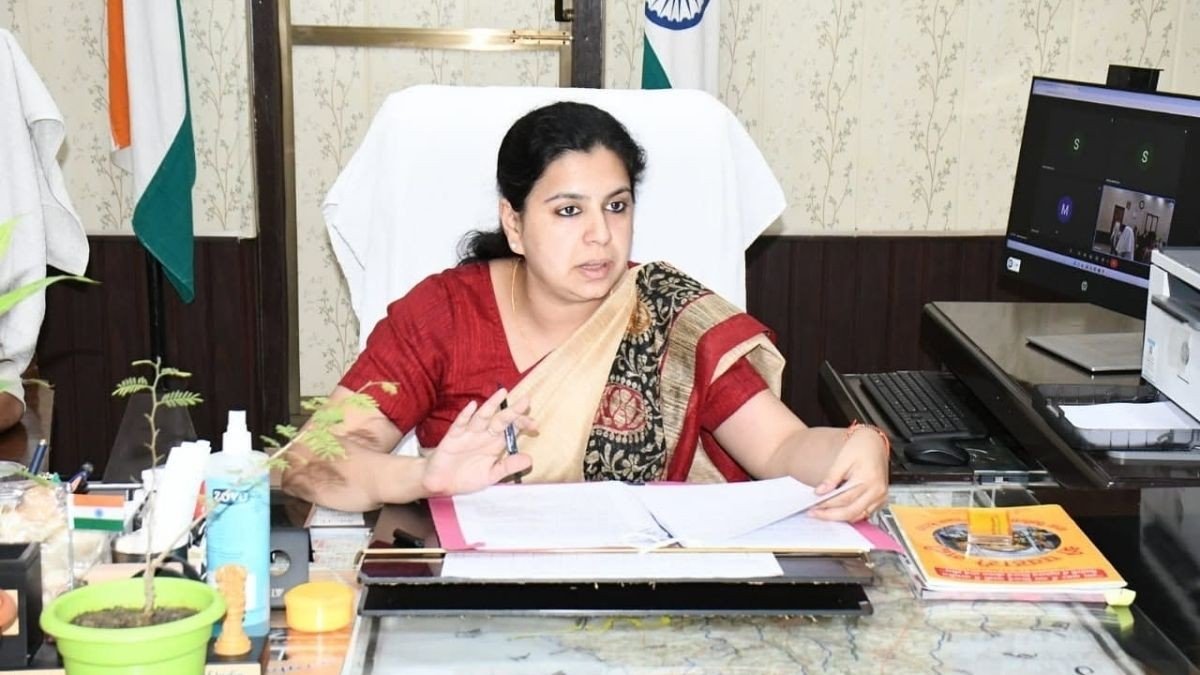
IAS officer Divya Mittal, a 2013-batch civil servant serving as Special Secretary in Uttar Pradesh’s Revenue Department, has resigned from the Indian Administrative Service after a 13-year journey. Announcing her decision through social media, Mittal described her years in public service as an unforgettable chapter and said that while she was leaving the post, the larger dream that drew her to service would continue.
Mittal, who is from Delhi, studied at IIT Delhi and IIM Bangalore before taking up a job in London. In her resignation note, she recalled that despite achieving what she had once considered success, she felt something remained incomplete. Living away from India troubled her, and she eventually returned to the country and joined the IAS.
Algoritha Security Launches ‘Make in India’ Cyber Lab for Educational Institutions
Why did Divya Mittal leave the IAS after 13 years?
Mittal’s resignation note focused largely on her changing understanding of public service and the purpose she found during her career. She wrote that the personal dreams she once had for herself had already been fulfilled and that she now wanted to live for the dreams she had seen for other people.
She said the greatest satisfaction of public service came from seeing families receive land rights for the first time, persons with disabilities getting opportunities to live with dignity and farmers receiving water for their fields.
Mittal summed up this approach by writing, “Behind every govt file is a person,” and said preserving that person’s dignity was the essence of justice.
She also reflected that she had once believed she had entered public service to give something to people. Over the years, however, she felt she had received far more from them through their happiness, affection and trust.
What did Mirzapur and Deoria teach her?
Mittal served as District Magistrate of Mirzapur and Deoria during her IAS career. In her farewell reflections, she credited both postings with shaping her understanding of administration and responsibility.
She said Deoria taught her that standing with what is right was not an option but a duty. Mirzapur, she wrote, taught her that the “impossible is not a fact, but merely an opinion.” She also referred to the blessings of Maa Vindhyavasini and the trust of the people, saying that true strength did not come from a position.
One experience from Mirzapur featured prominently in her reflections. Mittal recalled an elderly woman from Lahuriya Deh village touching her head with trembling hands after seeing water reach the village for the first time. The project brought piped tap water to 125 households after a 75-year wait.
Mittal also created a free mobile application to help first-generation learners in rural Uttar Pradesh, drawing on her own experience of learning French through conversation-based classes at Alliance Française.
What did Mittal say about her next chapter?
Mittal described her departure from the IAS with gratitude rather than as an abandonment of the ideals that had guided her career. She wrote that the post might have been left behind, but the dream given to her by the country would not be abandoned.
Her note also credited colleagues, officers and employees who worked alongside her during her service. She said the love, respect and affection she received had left her deeply fulfilled and helped her continue even during difficult periods.
Mittal was transferred from Deoria to Lucknow in May as Special Secretary in the Revenue Department. Her husband, Gagandeep Singh, is also an IAS officer and an alumnus of IIT Delhi and IIM Bangalore.
Closing a 13-year career in the IAS, Mittal’s reflections centred on the people she encountered in government service and the lessons she drew from them. For her, she indicated, leaving the official position did not mean leaving behind the larger purpose that had brought her back to India.
About the author — Ayesha Aayat writes on cybercrime, digital safety, and emerging online threats. Her work focuses on public awareness, legal clarity, and technology-driven risks.
Follow for daily updates on cybercrime, corporate fraud, DFIR, hacking, investigations, and digital forensics
