

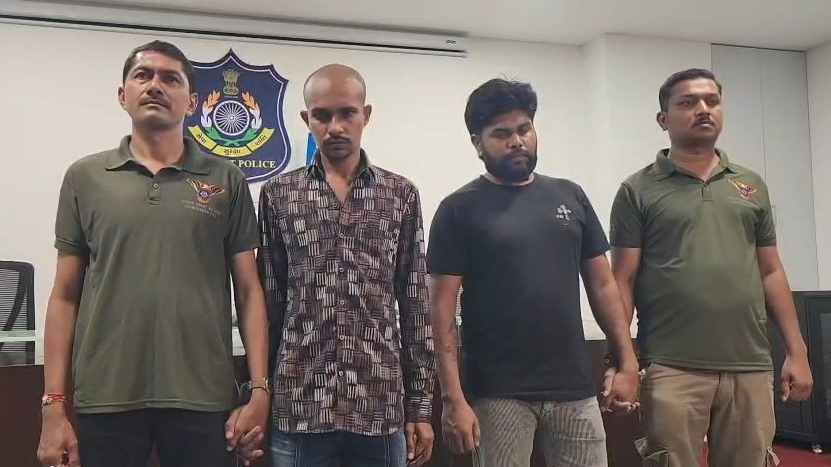

Ahmedabad: Gujarat Police have arrested two men in Chennai over hoax bomb threat emails sent to the Gujarat High Court and Surat Sessions Court, allegedly to disrupt a pending narcotics trial.
The arrests were announced on September 7, two days after the threats triggered security checks at court premises. Investigators allege that one of the accused, who had jumped parole, was due to appear before the Surat Sessions Court on September 5 and used the threats to avoid legal proceedings.
The case has raised a serious question about the use of digital threats to interfere with the justice system. Police say the messages were not simply anonymous mischief but part of a planned attempt to evade a court appearance.
Proposal for Conducting Cyber Crisis Drill, Tabletop Exercise (TTEx) & CCMP Readiness Exercise
Two Men Arrested After Technical Investigation
The accused have been identified as Mahammad Asfaq Mahammad Aslam Ansari, 28, a resident of Surat, and Rajesh alias Raj Michael Munia, 33, also residing in Surat and originally from Jhabua in Madhya Pradesh.
According to Ahmedabad City Police, the Cybercrime Branch used technical analysis and human intelligence to identify the suspects. Both were arrested from Chennai, Tamil Nadu, and brought to Ahmedabad on a transit warrant.
A transit warrant permits police to move an arrested person from one jurisdiction to another for the relevant legal proceedings. It does not establish guilt or amount to a final judicial finding.
Police have registered an FIR in connection with the alleged conspiracy and the threatening emails. The precise statutory sections have not been independently confirmed.
Threat Emails Arrived Minutes Apart
The investigation concerns emails received on September 5 by the Gujarat High Court in Ahmedabad and the Sessions Court in Surat.
According to the police account, messages were sent at approximately 11:57 am and 11:59 am. They claimed that RDX bombs would explode at courts in Ahmedabad and Surat.
The threats prompted a security response involving police and bomb detection teams. Court complexes were checked, and no explosives were reported found.
The fact that the threats were ultimately treated as hoaxes does not make them harmless. Such messages can divert emergency resources, disrupt public institutions and create fear among court staff, lawyers and visitors.
Accused Allegedly Jumped Parole in NDPS Case
Police said Ansari had previously been lodged in Surat’s Lajpore jail in connection with a case under the Narcotic Drugs and Psychotropic Substances Act.
He was released on parole in October 2025 and allegedly failed to return as required. The police statement describes him as an absconder.
The investigation alleges that Ansari was due to face a hearing at the Surat Sessions Court on September 5 but did not appear. Police say the threat email was sent with the intention of disrupting proceedings because he had not obtained bail.
Parole is a temporary release from prison subject to conditions, including returning when the authorised period ends. It is different from an acquittal or the termination of a criminal case.
The exact status of Ansari’s underlying NDPS proceedings and the relevant court orders will need to be established from the judicial record.
Friendship in Jail, Then a Plan to Conceal Their Location
Police say Ansari and Rajesh had known each other from their time in Lajpore jail and remained in contact.
According to the investigation, the two travelled to Chennai while searching for a ganja supplier. During their stay, they allegedly planned to send threatening emails to mislead police and prevent their actual location from being traced.
The police statement claims that Ansari created a fresh email account under a false name while travelling from Mumbai to Chennai. After reaching Chennai, the two allegedly stayed in different hotels and changed hotels to make their movements harder to follow.
Ansari is alleged to have sent the threatening messages from his mobile phone using the newly created account.
These are police allegations. The available reporting does not establish what technical methods, if any, were used beyond a false email identity and attempts to conceal their whereabouts.
How an Anonymous Email Can Still Be Traced
A fake email address does not necessarily make the sender anonymous.
Investigators may examine account creation records, login information, device data, network connections and other digital evidence. They can also compare those findings with travel records, hotel information and witness statements.
This combination is often described as technical analysis and human intelligence. It helps investigators connect online activity with a real person’s movements and communications.
In this case, police have not disclosed the exact digital evidence used to identify the accused. It would therefore be inaccurate to claim that a particular IP address, VPN service or advanced hacking technique led to the arrests.
The central allegation is that the suspects believed a false email identity and changing locations would make it difficult for police to find them.
A Threat to Court Proceedings, Not Just a Security Hoax
The alleged motive distinguishes this case from many routine bomb-threat investigations.
Police say the emails were intended to interfere with a specific court proceeding involving Ansari. If established, that would mean the threats were used as an instrument to obstruct the administration of justice.
The investigation will need to determine whether the accused acted together, who created and controlled the email account, and whether the messages were directly connected to the pending NDPS hearing.
It will also have to establish whether the threats actually delayed any particular proceeding. The available reporting confirms the alleged intention to disrupt the courts, but does not provide a verified account of a trial being adjourned because of the emails.
The two accused remain entitled to the presumption of innocence. Their alleged roles and the criminal charges will be determined through the judicial process.
What this means for you: Bomb threats sent by email should always be treated seriously and reported to the authorities, even when similar messages have previously turned out to be hoaxes. Do not forward threatening messages unnecessarily or attempt to investigate the sender yourself. Preserve the original message and contact police or the relevant institution’s security team.
The420 Insight: This case illustrates how a low-cost digital communication can be used to create a high-cost institutional disruption. The alleged motive was not financial extortion but interference with a court process. Investigators will need to prove the connection between the sender, the pending trial and the intended disruption. Strong coordination between cybercrime units, local police and court authorities is essential, while security responses must remain proportionate and avoid allowing repeated hoaxes to paralyse judicial work.
https://www.linkedin.com/company/policetechnology/
Follow for daily updates on cybercrime, corporate fraud, DFIR, hacking, investigations, and digital forensics
