

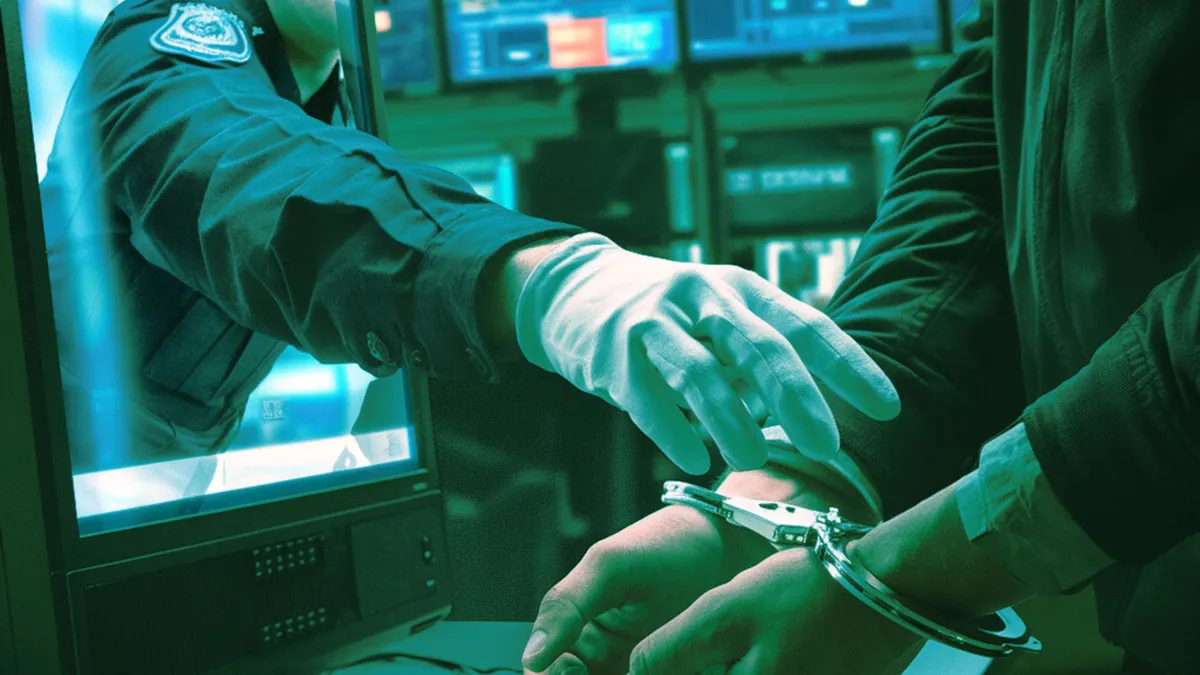

A Greater Noida resident has lost ₹1,29,61,962 in an elaborate digital arrest scam in which fraudsters posed as officials of the Telecom Regulatory Authority of India before falsely accusing him of selling his bank account for criminal use and threatening him with a CBI investigation. A sessions court has since rejected bail applications for the case’s main accused, identified as Akash, along with two co-accused, Indresh and Narendra Singh, as the wider financial trail behind the fraud continues to be examined.
The case adds to a rapidly worsening national pattern that has made digital arrest India’s most financially damaging cyber fraud category. According to the National Human Rights Commission, such scams alone drained over ₹22,495 crore from Indian citizens in 2025, part of a cumulative ₹52,976 crore lost to cyber fraud nationally over six years, a trajectory that shows no sign of slowing even as awareness campaigns have multiplied.
A Call That Escalated Into Days of Surveillance
The fraud began on February 6, when the victim received a call from an unknown number. The caller, identifying himself as Ajay Kumar and claiming to represent TRAI, told the victim his SIM card was being misused for illegal activities and warned of a possible CBI investigation. He was then instructed to remain on a continuous video call, the defining mechanism of what has come to be known as digital arrest, a tactic with no basis whatsoever in Indian law but one that relies entirely on psychological pressure to be effective.
The fraudsters allegedly escalated their claims further, accusing the victim of having sold his bank account to a person named Naresh Goyal, whom they said was using it for serious criminal transactions. Under sustained pressure to prove his innocence, the victim transferred the full ₹1.29 crore across multiple bank accounts, believing his cooperation was necessary to avoid arrest. Even after the transfers were complete, the fraudsters maintained the illusion of an ongoing investigation, later sending fake letters promising the money would eventually be refunded once the process concluded. It never was.
A Scam Pattern That Has Repeated Itself Across India
The Greater Noida case follows an almost identical structure to digital arrest frauds documented across the country over the past two years, from a Bengaluru software engineer who lost ₹11.8 crore to a nearly identical TRAI impersonation scheme, to a retired merchant navy officer and his hundred-year-old father in Lucknow who were kept under digital arrest for six days and defrauded of ₹1.29 crore, the same figure lost in this case. Courts have increasingly had to grapple with the legal aftermath of these schemes, including a case earlier this year in which an eighty-two-year-old retired banker was held under a thirty-day digital arrest and extorted of ₹22.92 crore, prompting judicial scrutiny of whether financial intermediaries bear liability for failing to flag the resulting transactions.
The Ministry of Home Affairs has repeatedly flagged digital arrest as one of the fastest-growing and most damaging cybercrime patterns in India, warning that fraudsters now routinely impersonate officials from the CBI, ED, RBI, TRAI and state police forces, often combining spoofed caller identities, forged legal documents and, increasingly, AI-generated visuals to make the impersonation more convincing during video calls.
Courts Signal a Tougher Stance on Bail
The sessions court’s rejection of bail for all three accused in the Greater Noida case reflects a broader judicial trend of treating digital arrest fraud with the seriousness typically reserved for organised extortion, given the scale of financial harm and the calculated psychological coercion involved. Investigators allege the accused impersonated government officials specifically to manufacture trust before threatening legal consequences, a combination that has drawn charges spanning extortion, cheating, impersonation and criminal conspiracy.
Police are now working to trace the complete financial trail of the ₹1.29 crore, examining how the funds were distributed across the receiving accounts and whether they were subsequently layered through additional transfers to obscure their final destination, a process that has become the most time-consuming and often least successful stage of digital arrest investigations nationally.
“A demand to transfer money as part of an alleged government investigation is a major warning sign, because no legitimate agency conducts verification by forcing citizens to move their own money,” said Prof. Triveni Singh, cybercrime expert and former IPS officer. “Victims are deliberately kept under prolonged surveillance precisely to prevent them from pausing to verify the claims independently or consulting family, and breaking that isolation, even for a few minutes, is often the only thing that stops the fraud before it is too late.”
Follow for daily updates on cybercrime, corporate fraud, DFIR, hacking, investigations, and digital forensics
