

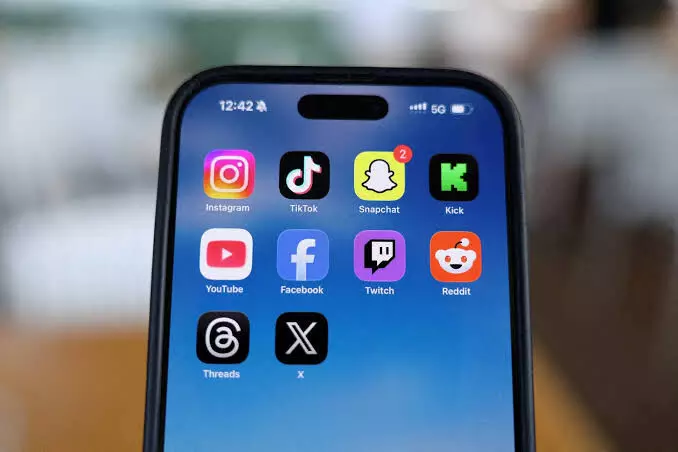

New Delhi: The Union government has denied reports claiming that India is preparing to restrict social media access for children under 18, describing the reports as false and without basis.
The clarification came on September 30, two days after the Supreme Court asked the Centre to examine stronger legal safeguards governing minors’ use of social media and other digital platforms.
The court’s observations had prompted reports suggesting that the government was preparing to amend existing information technology rules to prevent minors from independently creating social media accounts.
However, government sources rejected those claims on Wednesday. The clarification indicates that no such policy announcement has been made, although the broader question of regulating children’s access to digital platforms remains under judicial consideration.
FCRF Launches CP-FRM to Build India’s Next Generation of Fraud Risk Professionals
Supreme Court Hearing Triggered Reports of Social Media Restrictions
The controversy followed a Supreme Court hearing on September 28 involving a petition filed by the Just Rights for Children Alliance.
The petition raised concerns about children independently creating accounts on social media platforms despite Indian laws restricting minors from entering into legally binding contracts.
A bench comprising Chief Justice Surya Kant and Justices Joymalya Bagchi and V Mohana examined whether existing legal protections for minors should also apply to their relationships with digital platforms.
During the hearing, Justice Bagchi suggested that the government consider giving the relevant requirements a statutory basis through India’s intermediary rules.
Solicitor General Tushar Mehta informed the court that the Centre would examine the issue.
The proceedings raised questions about whether social media companies should be permitted to allow children to register independently and what additional safeguards might be necessary.
However, the court’s discussion did not itself introduce restrictions on social media access.
Government Rejects Reports of Proposed Under-18 Restrictions
Following the hearing, several news organisations reported that the government was preparing to amend the Information Technology Rules to prevent children under 18 from independently opening social media accounts.
Some reports suggested that the proposed changes would place responsibility on social media companies to prevent such registrations.
The government subsequently rejected those reports.
On September 30, government sources told ANI that claims about plans to impose social media restrictions on under-18 users were false.
The clarification is significant because examining possible legal safeguards and formally deciding to introduce restrictions are two different steps.
The government has acknowledged the issue before the Supreme Court, but its latest clarification disputes reports claiming that a specific restrictive policy has been decided.
The case also raises a separate question about parental consent.
Restricting children from independently entering agreements with digital platforms does not necessarily require a complete prohibition on their use of those platforms.
Different regulatory approaches could involve parental authorisation, stronger age verification or additional obligations for social media companies.
The government has not announced which, if any, of these measures it intends to introduce following the latest hearing.
India’s Existing Digital Privacy Law Already Addresses Children’s Data
Although the government has denied the latest reports, India already has legislation designed to strengthen the protection of children’s personal information.
The Digital Personal Data Protection Act, 2023, and the Digital Personal Data Protection Rules, 2025, establish a framework governing how organisations collect and process personal data.
The framework treats individuals below 18 as children and introduces requirements concerning parental consent.
Under the relevant provisions, organisations processing children’s personal information must obtain verifiable parental consent, subject to specified exceptions.
The framework also addresses activities such as tracking, behavioural monitoring and targeted advertising directed at children.
However, these requirements are being implemented in phases.
The relevant child-data protection provisions and associated rules are scheduled to become enforceable in May 2027.
Importantly, parental consent requirements for processing personal data are not the same as a general ban preventing everyone below 18 from accessing social media.
The distinction matters because misleading interpretations of regulatory proposals can create confusion among parents, students and digital platform operators.
Children’s Online Safety Remains Under Government and Judicial Scrutiny
The latest controversy comes amid continuing discussions about children’s exposure to potentially harmful online content.
Earlier in 2026, India’s Economic Survey recommended examining age-based restrictions on social media access to address concerns about excessive digital use.
Government officials have also discussed possible age-appropriate safeguards and greater responsibility for social media companies.
However, recommendations and policy discussions do not automatically become enforceable regulations.
The Supreme Court proceedings represent another stage in the examination of how existing Indian laws should apply to children’s relationships with digital platforms.
The next hearing is expected to provide further clarity on the government’s response.
Until the Centre issues an official notification or the court makes further directions, reports suggesting that India has approved a nationwide social media ban for children under 18 should not be treated as established fact.
What this means for you
Parents and students should not assume that social media access for children under 18 has been banned in India. Any new restrictions should be verified through official government notifications, while existing platform safety settings and parental supervision remain useful precautions.
Follow for daily updates on cybercrime, corporate fraud, DFIR, hacking, investigations, and digital forensics
