

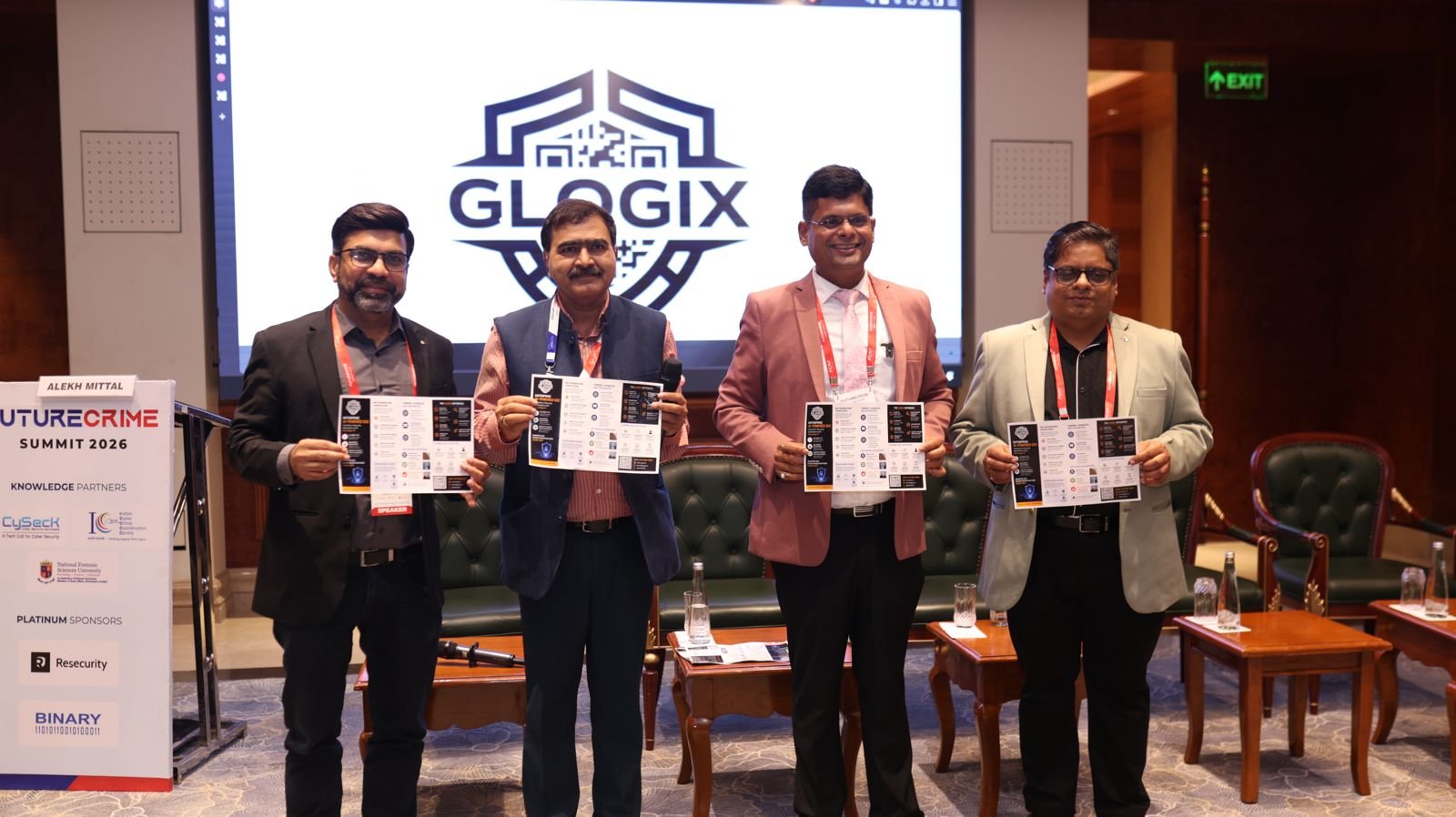
At the FutureCrime Summit 2026, a workshop titled “AI Powered SOC Operations Demo” examined how artificial intelligence can strengthen Security Operations Centre functions by helping cybersecurity teams monitor threats, analyse alerts and respond to suspicious activity more efficiently.
The workshop was conducted by Xiarch Bharat and led by Alekh Mittal and Utsav Mittal. The session focused on the growing role of AI within modern SOC environments, where security teams are required to process enormous volumes of information while identifying the relatively small number of alerts that may represent genuine threats.
AI Is Reshaping Security Operations
Security Operations Centres function as the central monitoring and response hub for many organisations. Their teams continuously examine information generated by networks, endpoints, applications and other digital systems in an effort to detect suspicious behaviour.
The challenge is the sheer volume of data involved. Large organisations may generate thousands of alerts, making it difficult for analysts to manually investigate every event with the same level of attention. This can create delays and increase the risk that significant activity may remain hidden among lower-priority notifications.
The AI Powered SOC Operations Demo highlighted how artificial intelligence can support this process by assisting with data analysis, identifying unusual patterns and helping security teams prioritise activity that may require further investigation. Rather than treating every alert equally, AI-enabled operations can help analysts focus more quickly on events that appear potentially significant.
Faster Analysis Can Improve Threat Response
Detection alone does not determine the effectiveness of a SOC. Once suspicious activity is identified, security professionals must understand what has happened, determine whether systems have been compromised and decide how quickly a response is required.
The workshop conducted by Xiarch Bharat, with Alekh Mittal and Utsav Mittal leading the session, placed this connection between detection and response at the centre of the demonstration. AI can assist security teams by correlating information from multiple sources and identifying relationships that may be difficult to recognise through isolated alerts. When suspicious events across different systems form part of the same incident, faster correlation can provide analysts with a clearer understanding of the potential threat. This can help reduce the time between initial detection and investigative action, an increasingly important consideration when cyberattacks can develop rapidly.
Xiarch Bharat also marked a significant milestone at the FutureCrime Summit 2026 with the launch of GLOGIX, its sovereign AI-powered Security Operations Centre (SOC) platform. The platform was unveiled on the second day of the summit by Prof. Triveni Singh and Prof. Amit Dubey at Bharat Mandapam, Delhi. The launch positioned GLOGIX as part of Xiarch Bharat’s efforts to strengthen indigenous and intelligent cybersecurity capabilities, complementing the company’s focus on AI-powered SOC operations and technology-driven cyber defence.
Click here to use GLOGIX: https://glogix.ai
Human Analysts Remain Essential
The growing use of artificial intelligence in cybersecurity does not eliminate the need for skilled security professionals. Automated systems can process large volumes of information, but cyber incidents frequently involve context and uncertainty. Analysts must still determine whether detected behaviour is genuinely malicious, evaluate the potential impact on the organisation and decide which response is appropriate. The most effective SOC model therefore combines automation with human judgement. AI can reduce repetitive analytical work and help prioritise information, while experienced professionals remain responsible for interpreting findings, investigating incidents and making critical decisions.
The workshop underscored how this combination can strengthen overall security operations by allowing analysts to spend more time on complex threats rather than routine alert processing.
From Alert Overload To Actionable Security
The broader significance of the “AI Powered SOC Operations Demo” was its focus on transforming raw security information into actionable intelligence. Modern SOCs are not defined simply by how much data they collect or how many alerts they generate. Their effectiveness depends on how quickly teams can identify meaningful threats and convert those findings into defensive action. The workshop by Xiarch Bharat, led by Alekh Mittal, Utsav Mittal, Prof. Amit Dubey and Prof. Triveni Singh, IPS demonstrated why AI is increasingly becoming part of that operational model.
As cyber threats grow in speed and complexity, organisations will require security operations capable of continuously analysing activity, distinguishing genuine risks from background noise and responding before incidents escalate. AI-powered SOC capabilities offer one path toward that goal, combining machine-driven analysis with the judgement and expertise of human defenders.
Follow for daily updates on cybercrime, corporate fraud, DFIR, hacking, investigations, and digital forensics
