

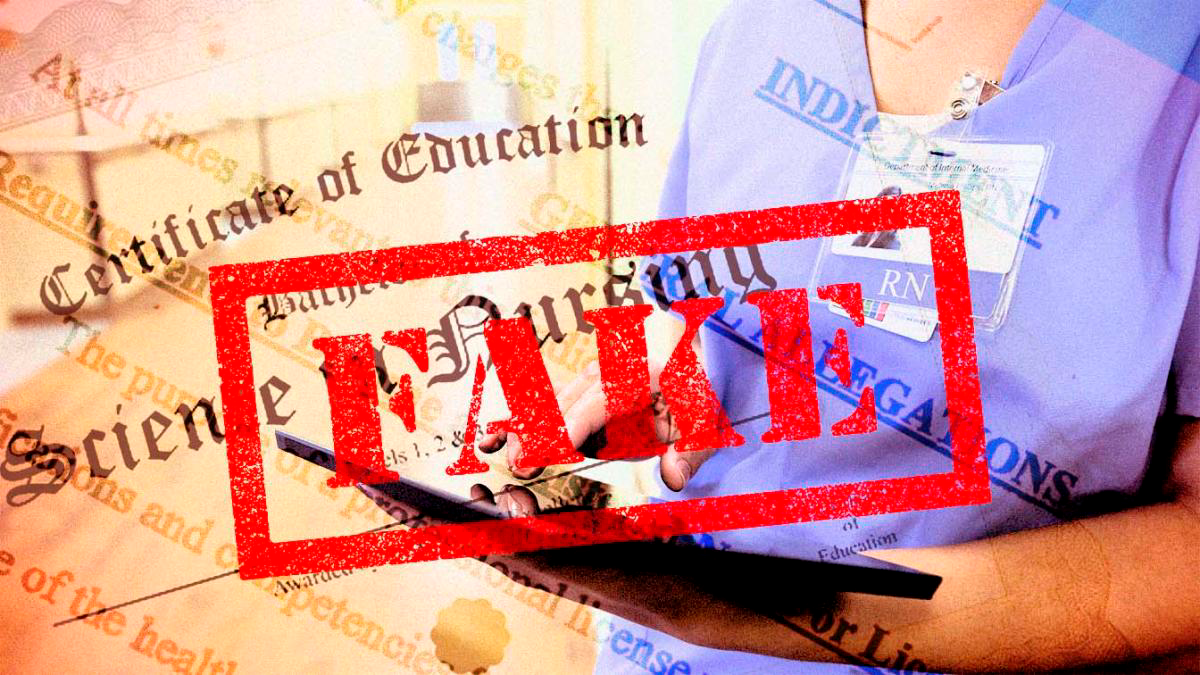
New Delhi: The Special Staff of Delhi Police’s Shahdara district has dismantled an organised racket allegedly involved in manufacturing and selling forged educational certificates and marksheets, arresting three accused in connection with the operation. According to police, the suspects used the old letterheads, seals, and document formats of a defunct educational institution to prepare fake Class 10 and Class 12 marksheets and certificates. Preliminary investigations indicate that these forged documents were allegedly intended for use in job applications, admissions, and other official purposes. Police have seized forged marksheets, laptops, printers, and other equipment allegedly used to create the counterfeit documents.
The arrested accused have been identified as 53-year-old Navneet Tyagi of Shahdara, 41-year-old Sabab Alam of Ghaziabad, and 49-year-old Faheed Ahmed Saifi of Maujpur, Delhi. Investigators believe the three had distinct roles within the operation, with one allegedly handling customer outreach, another preparing digital document templates, and the third managing printing and delivery. Police are now investigating whether additional individuals were associated with the network.
According to investigators, the case originated from a confidential tip received on June 30 alleging that Navneet Tyagi was involved in preparing and supplying forged educational documents. Acting on the information, police deployed a decoy customer to establish contact with the suspect. After the transaction was allegedly finalised, officers arrested Tyagi near Mirage Cinema on GT Road on July 17 while he was reportedly delivering forged documents. Subsequent interrogation and follow-up investigations led to the arrest of the two remaining suspects.
Police said the accused allegedly exploited the identity of an educational institution known as Gramin Mukt Vidyalaya Shiksha Sansthan, whose registration had already expired. Despite the institution no longer being operational, investigators allege the group continued using its old letterheads, official seals, and document formats to produce certificates bearing backdated issuance dates. Authorities believe this method was intended to make the forged documents appear authentic and reduce the likelihood of detection during routine verification.
Investigators further alleged that the group promoted its services through social media platforms and WhatsApp. Prospective customers were reportedly asked to send their photographs, Aadhaar details, and previous academic records digitally. Based on this information, the accused allegedly prepared counterfeit Class 10 or Class 12 marksheets within a few hours. Police claim the group charged between ₹5,000 and ₹10,000 (approximately ₹0.05 lakh to ₹0.10 lakh) for each forged certificate. Digital forensic experts are now examining mobile phones, chat histories, electronic files, and financial transaction records to determine the full scale of the operation and identify all beneficiaries.
Authorities are also conducting forensic analysis of the seized laptops, printers, digital templates, soft copies of certificates, and other electronic evidence. Investigators are examining whether the forged documents were used to obtain government or private sector employment, secure admissions to educational institutions, or facilitate other official procedures. Police are also working to identify individuals who allegedly procured or used the counterfeit certificates.
According to experts at the Future Crime Research Foundation, the widespread availability of advanced design software, high-resolution printing technology, and encrypted messaging platforms has significantly increased the sophistication of document forgery networks. The experts recommend that government agencies, educational institutions, and private employers strengthen verification mechanisms by adopting secure digital credential validation, authenticated document verification systems, and direct cross-checking with original institutional records. They also cautioned job seekers and students against obtaining or using forged educational credentials, warning that doing so could result in serious criminal prosecution and long-term legal consequences.
