

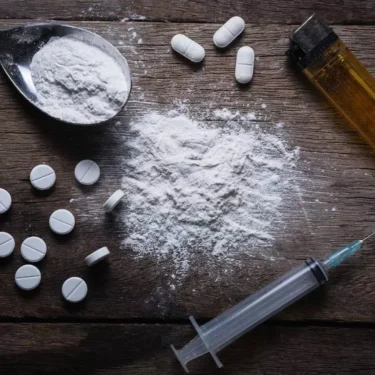
Chinese police have dismantled a cross-border drug network allegedly led by a retired chemistry professor, arresting 71 people.
How Was the Drug Racket Uncovered?
The investigation began in 2024 when police inspecting a pharmaceutical technology company in China’s Shandong province discovered unusually large purchases of six chemicals associated with the production of etomidate.
Etomidate is a controlled substance that has been illegally used in electronic cigarettes commonly called “zombie vapes”. Investigators traced the purchases to Huang, a chemistry postgraduate who had previously sold electronic cigarettes in Shenzhen. He had worked at the pharmaceutical company for three months before resigning.
Police suspected Huang of obtaining the chemicals for illegal drug production. His frequent journeys between Zibo in Shandong and Shenzhen subsequently led investigators to another suspect.
Who Was Behind the Operation?
Investigators identified Wu, a retired chemistry professor at a local college, as the alleged mastermind. Wu is accused of developing and refining the manufacturing process while using his professional connections to arrange laboratory facilities in factories across five Chinese cities. These facilities were presented as locations for pharmaceutical research and the development of new medicines.
Another suspect, Wang, an electronic cigarette seller who owned an international logistics company, allegedly helped transport chemicals in small quantities and move laboratory equipment between locations.
The involvement of a former professor and a chemistry postgraduate prompted comparisons with the television series Breaking Bad, which features a chemistry teacher involved in illegal drug manufacturing.
How Did the Network Operate Across Countries?
Police said the network manufactured precursor chemicals in China before transporting them to Vietnam, Thailand and Cambodia, where they were converted into the finished substance. Investigators believe the arrangement was intended to reduce the group’s exposure to legal risks within China.
The suspects allegedly used their technical knowledge to improve production methods and exploit regulatory loopholes.
Authorities said identifying precursor chemicals alone would not have provided sufficient evidence to establish the wider criminal operation.
What Did Police Recover?
Investigators spent nearly two years gathering evidence and coordinating with law enforcement agencies in Vietnam and Thailand.
During March and April, police dismantled seven operational bases across Cambodia, Vietnam and Thailand. The coordinated operation resulted in 71 arrests and the seizure of 73 kilograms of etomidate, five tonnes of active ingredients and laboratory equipment.
Authorities said dismantling the network simultaneously was necessary to secure sufficient evidence against those involved.
The investigation highlights how specialised chemical knowledge, pharmaceutical facilities and international logistics can allegedly be combined in organised drug trafficking. The nearly two-year investigation also demonstrates the importance of cooperation between countries when production and distribution activities cross national borders.
Follow for daily updates on cybercrime, corporate fraud, DFIR, hacking, investigations, and digital forensics
