

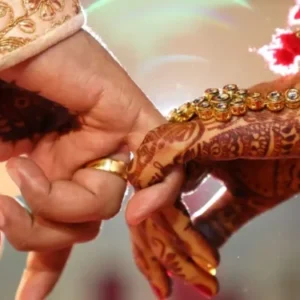
Gaya, Bihar: Police in Bihar’s Gaya district have arrested two individuals in connection with an alleged marriage fraud after a bride reportedly disappeared shortly after a temple wedding, leaving the groom claiming he had been cheated out of ₹1.26 lakh. Investigators are examining whether the incident is part of an organised “runaway bride” racket or an isolated case of deception. Authorities said the investigation is ongoing and that all aspects of the case are being verified before drawing any conclusions.
According to the police, the complainant, Himendra, a resident of Ramnagar in Uttar Pradesh’s Budaun district, travelled to Gaya with three acquaintances to get married after allegedly being contacted through intermediaries. Investigators said members of the suspected network received the groom at the railway station and later took him to the Harli area near Bodh Gaya, where he was introduced to a woman for marriage. After both sides reportedly agreed to the proposal, preparations for the wedding were made.
The groom has alleged that he paid a total of ₹1.26 lakh to arrange the marriage. According to his complaint, the amount covered wedding-related expenses, including clothing, ceremonial arrangements, and payments made to those who facilitated the match. The marriage was subsequently solemnised at the Vishnupad Temple in Gaya following traditional Hindu rituals.
However, the complaint alleges that shortly after the wedding ceremony, the bride asked to leave the temple premises on the pretext of having refreshments and then disappeared with an associate. The groom further claimed that other individuals accompanying the bride gradually left the area soon afterwards, raising suspicions that the marriage had been planned solely to obtain money.
After searching unsuccessfully for the bride, the groom and his companions reportedly reached the Civil Lines area of Gaya later in the day, where they allegedly spotted Bharat Sao, described as the bride’s maternal uncle, along with another individual identified as Birbal Yadav. The complainant alleged that Bharat Sao had received the ₹1.26 lakh payment for arranging the marriage. When he questioned the two men about the bride’s whereabouts, an argument reportedly broke out, leading to a commotion that attracted local residents.
Following information about the dispute, police reached the spot, intervened, and detained the two suspects for questioning. The groom and his companions were also taken to the police station to record their statements. Investigators are now examining the roles of all individuals involved in arranging the marriage and verifying the sequence of events through witness statements and other available evidence.
Police said they are investigating how the groom first came into contact with the alleged intermediaries and whether similar incidents involving fraudulent marriages have been reported in the past. Investigators are also examining financial transactions, mobile phone records, digital communications, identity documents, and other evidence to determine whether a wider criminal network was operating behind the alleged fraud.
Legal experts note that if investigators establish that the marriage was arranged from the outset with the intention of dishonestly obtaining money, the accused could face charges related to cheating, criminal conspiracy, and other relevant offences under Indian law. If evidence points to an organised racket targeting marriage seekers from different states, additional arrests and further legal action may follow.
For now, police have emphasised that the investigation remains at a preliminary stage and that the allegations made by the complainant are being independently verified. Authorities have advised families seeking matrimonial alliances to thoroughly verify the identity, background, and credentials of prospective spouses and intermediaries before making financial payments or finalising marriage arrangements. Investigators believe such precautions can significantly reduce the risk of becoming victims of organised matrimonial fraud schemes while the probe into the present case continues.
