
Follow us on Google News

The Election Commission of India (ECI) has informed the Supreme Court that citizens whose names were deleted from the draft electoral rolls during the Special Intensive Revision (SIR) will not face criminal prosecution for applying afresh to get their names included. In an affidavit filed before the apex court on Saturday, the poll panel clarified that previously registered voters missing from the draft list can submit Form-6 for fresh enrollment without inviting penal action under Section 31 of the Representation of the People Act, 1950.
The Commission stated that submitting a new Form-6 application after finding one’s name omitted from the draft roll does not constitute a false declaration or duplicate entry. Consequently, no criminal proceedings will be initiated against affected individuals merely because they were previously enrolled as voters and are now reapplying.
Clarifying Legal Provisions to Allay Voter Fears
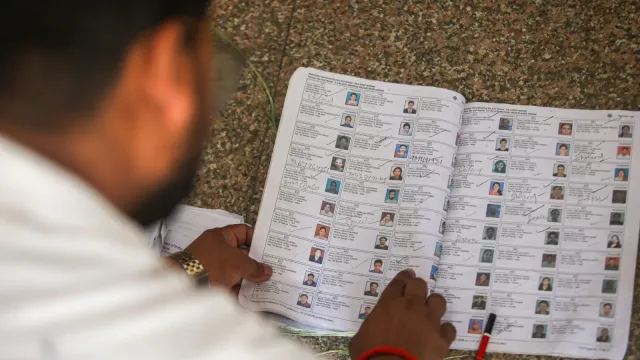
The clarification follows widespread confusion and anxiety among voters whose names disappeared from the draft rolls after the SIR exercise. According to the ECI, it received complaints that several eligible citizens were hesitating to file Form-6 out of fear that reapplying while having been a voter earlier might be treated as a false declaration or dual registration, potentially triggering legal action under Section 31.
Section 31 deals with false declarations and prescribes punishment for knowingly providing false information during the electoral registration process. However, the Commission emphasized that filling out Form-6 to restore a name excluded from the SIR draft roll is a valid legal remedy available under the law. Calling the apprehensions unfounded, the poll panel maintained that using this prescribed process does not bring an applicant within the ambit of punitive action.
Protecting Voting Rights of Eligible Citizens
In its affidavit, the Election Commission acknowledged that a number of names were removed from the draft voter list during the intensive revision process. For such affected citizens, reapplying remains the proper mechanism to secure inclusion in the final rolls. The panel noted that if previously registered eligible voters are deterred from using this facility due to fear of prosecution, the core objective of making the electoral roll accurate and inclusive would be undermined.
The Commission asserted that no eligible citizen should be deprived of their right to vote because of technical lapses or the apprehension of legal trouble. It stressed that the voter registration framework must remain accessible without causing unnecessary legal fear among ordinary people, reiterating that the purpose of the SIR is to cleanse and update the electoral rolls rather than disenfranchise legitimate voters.
Nationwide Awareness Drive Ahead of Court Hearing
To ensure this assurance reaches voters across the country, the ECI has directed the Chief Electoral Officers of all states and union territories to launch widespread publicity campaigns in local languages. Officials have been instructed to clearly inform citizens that reapplying via Form-6 after deletion from the draft list will not lead to prosecution, with special emphasis on awareness drives in villages and small towns.
The information will also be disseminated through official channels and public notices to Booth Level Officers, District Election Officers, and the general public so voters can apply without hesitation. Meanwhile, the Supreme Court is scheduled to hear a batch of petitions on November 17 challenging the SIR process and the functioning of the Election Commission and the Chief Election Commissioner, including a plea filed by Rakesh Kumar Singh and connected matters. Ahead of the crucial hearing, the Commission’s affidavit seeks to put legal concerns surrounding fresh applications to rest.