Follow us on Google News

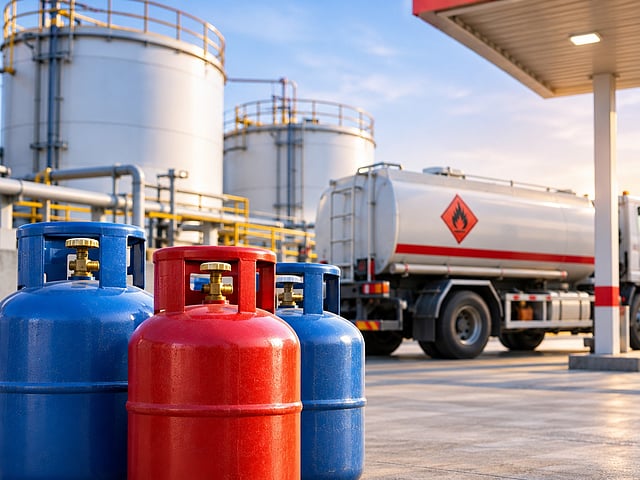
Authorities in Dubai have seized more than 19,252 counterfeit gas cylinders and impounded over 751 vehicles as part of an ongoing crackdown on illegal storage and distribution of petroleum products. Since the inspection campaign began in June 2022, enforcement teams have identified more than 275 sites involved in unauthorized gas cylinder operations, filing 751 violation reports and initiating legal action against offenders.
The enforcement drive aims to regulate the petroleum products trade in Dubai and ensure strict compliance with safety standards. During its recent meeting, the Dubai Regulatory Committee for Petroleum Products, operating under the Dubai Supreme Council of Energy, reviewed the progress of the inspection campaigns alongside irregularities uncovered in the storage, transportation, and trading of diesel.
Crackdown Targets Illegal Diesel Operations
Inspection teams placed particular focus on facilities linked to the diesel trade. Officials examined 73 storage tanks and inspected 42 establishments in the Ras Al Khor Industrial Area. The checks resulted in the seizure of 14 diesel tankers found violating local regulations and United Arab Emirates safety standards. According to authorities, the campaign is designed not only to curb illicit trade but also to minimize serious safety hazards associated with fuel storage and transport.
Chaired by Ahmed Butti Al Muhairbi, Secretary-General of the Dubai Supreme Council of Energy and Chairman of the Regulatory Committee for Petroleum Products, the meeting examined ways to strengthen field oversight. Discussions centered on improving coordination among government departments, enforcing technical and safety compliance among traders, and streamlining punitive measures against violators.
Electronic Permit Platform Planned for 2027
The committee also outlined several new regulatory initiatives scheduled for rollout in 2027. Key among them is the development of a dedicated electronic platform to simplify the issuance of permits for petroleum product trading. Targeted for completion in 2027, the digital system will allow businesses to apply for permits and access regulatory services seamlessly, linking directly with existing member department systems and the Dubai 360 platform.
Under the upcoming framework, authorities plan to introduce a violation management system and begin issuing formal notices to rulebreakers starting in the second quarter of 2027. This mechanism will help log inspection findings, identify non-compliant traders, and process enforcement actions systematically. Meanwhile, permit issuance will continue in phases through coordination between licensing authorities and committee member departments.
Regulatory Oversight and Trader Awareness
During the session, members reviewed the implementation of Dubai Executive Council Resolution No. 85 of 2025, which governs petroleum product trading across the emirate. The resolution established standardized inspection procedures, permanent regional field teams, and a coordinated multi-agency framework to address regulatory breaches.
Ahmed Butti Al Muhairbi noted that sustained cooperation among committee members and government entities has strengthened field monitoring, unified inspection standards, and helped reduce violations. He stated that the updated regulatory framework has driven measurable progress in enhancing accountability and safety across the sector. Alongside enforcement, the committee discussed hosting awareness workshops, media campaigns, and social media outreach to educate traders on licensing, storage, and transport requirements.