
Follow us on Google News

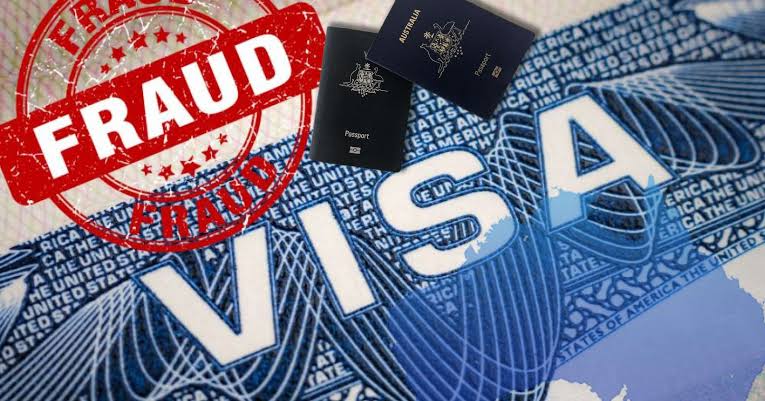
Jammu: The Economic Offences Wing (EOW) of the Jammu Crime Branch has filed a chargesheet against five accused in connection with an alleged inter-state racket that defrauded unemployed youths on the pretext of securing jobs and work visas in New Zealand. Operating across Jammu and Kashmir and Punjab, the network allegedly collected lakhs of rupees from job seekers before handing over fake visas and air tickets.
The chargesheet was submitted before the court of the Excise Magistrate in Jammu. The case was registered at the EOW police station under Sections 318(4), 336(3), 340(2), and 61(2) of the Bharatiya Nyaya Sanhita (BNS), dealing with cheating, forgery, use of forged documents as genuine, and criminal conspiracy.
Relatives Accused of Cheating Samba Youth
The investigation began following a written complaint by Samba resident Vishal Kumar against Vijay Gill and Harris Gill, who are reportedly his relatives. Kumar alleged that the accused took Rs 11.62 lakh from him after promising a New Zealand work visa and employment there.
According to the complaint, the accused provided him with a New Zealand visa and flight tickets to convince him that the travel process had been completed. Both documents later turned out to be forged. Kumar alleged that the accused called him to Delhi and repeatedly assured him of his departure, but misled him in a manner that prevented him from reaching New Zealand, forcing him to return empty-handed.
Syndicate Trail From Jammu to Punjab
During the investigation, the Crime Branch identified five members of the alleged syndicate. Apart from Vijay Gill and Harris Gill, both residents of Samba district in Jammu and Kashmir, the chargesheet names Tirlochan Singh of Lahinpur in Dasuya area of Hoshiarpur district, Mandeep Singh of Guru Teg Bahadur Nagar in Jalandhar, and Ravinder Singh of Rishi Nagar in Haibowal Khurd, Ludhiana.
Investigators found evidence pointing to an organized network active across both regions that targeted unemployed youths seeking overseas employment. After collecting money with assurances of lucrative jobs and work permits, the accused allegedly created a false impression of genuine processing using fabricated travel documents.
Ministry Verification and Forensic Evidence
The probe relied on technical surveillance, bank transaction analysis, and an official verification report from the Ministry of External Affairs. The ministry confirmed that the New Zealand visa document handed to the complainant was completely invalid, providing crucial backing to the forgery allegations.
Financial analysis traced the bank accounts where the complainant’s money was deposited and tracked subsequent transfers among the network members. Furthermore, documents linked to the initial agreement between the complainant and the accused were sent to the Forensic Science Laboratory (FSL), which scientifically confirmed the signature of accused Vijay Gill. Based on oral, documentary, financial, and scientific evidence, the Crime Branch submitted the chargesheet for judicial scrutiny, while continuing to examine the possible involvement of others and identify additional victims.