
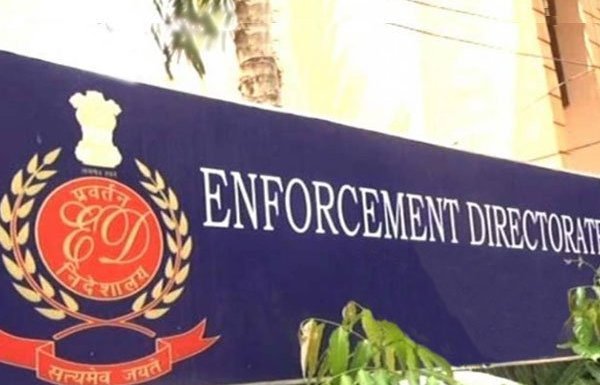
The Enforcement Directorate (ED) has carried out a major crackdown in Goa in connection with an alleged bank loan fraud case, conducting coordinated raids at six different locations linked to suspected financial irregularities involving Central Trading Corporation (CMTC) and associated entities.
According to officials, the searches were conducted by the ED’s Panaji zonal office under the provisions of the Prevention of Money Laundering Act (PMLA). The operation forms part of an ongoing investigation into suspected misuse and diversion of loan funds amounting to ₹6.19 crore.
Cash, Documents, and Digital Devices Seized
During the raids, ED teams reportedly recovered cash worth approximately ₹67.50 lakh. Officials also seized a large number of documents, including property transaction records and financial papers believed to be crucial to the investigation. In addition, several digital devices were confiscated, which are expected to contain key electronic evidence related to the alleged financial misconduct.
Sources within the agency stated that the case came under scrutiny after irregularities were flagged in financial transactions and suspicious movement of funds linked to bank loans. Preliminary findings suggest that the loan amount may have been diverted away from its intended purpose and allegedly used for unrelated business activities and personal gains.
FCRF Academy Launches Premier Anti-Money Laundering Certification Program
Fund‑Flow Tracing, Shell‑Entity Suspicions, and Banking‑Oversight Gaps
Investigators are now tracing the flow of funds to determine how the loan money moved through various accounts and entities. The ED is examining whether the diverted funds passed through multiple layers of transactions designed to obscure the ultimate beneficiaries.
Officials further said that the investigation is still in its early stages and a detailed review of banking records, property transactions, and digital evidence is underway. The seized electronic devices are expected to be subjected to forensic analysis to reconstruct communication trails and financial linkages.
Financial experts note that in mid-sized loan fraud cases, perpetrators often rely on shell companies and complex transaction chains to disguise fund movement. Once the loan is disbursed, the money is frequently routed through multiple accounts, making it difficult for investigators to identify the real beneficiaries.
Experts also emphasize that the effectiveness of banking oversight mechanisms and KYC (Know Your Customer) compliance plays a crucial role in preventing such frauds. Weak monitoring at the initial stage can allow large-scale diversion of funds before any red flags are raised.
Further Raids, Goa‑to‑Nationwide Probe, and Legal Exposure
Meanwhile, ED officials have indicated that further searches may be conducted as the investigation progresses. Additional documents and digital evidence are likely to be scrutinized in the coming days to establish the full extent of the alleged scam. The agency is also probing whether the suspected network has links extending beyond Goa to other states or financial institutions.
The Enforcement Directorate has stated that the analysis of seized devices and financial records may lead to further revelations regarding the scale and structure of the suspected fraud network. The probe continues, with investigators closely examining all financial transactions linked to the case.
If the allegations are proven, those involved could face stringent action under money laundering laws, including asset seizure, financial penalties, and possible prosecution under applicable legal provisions.
