

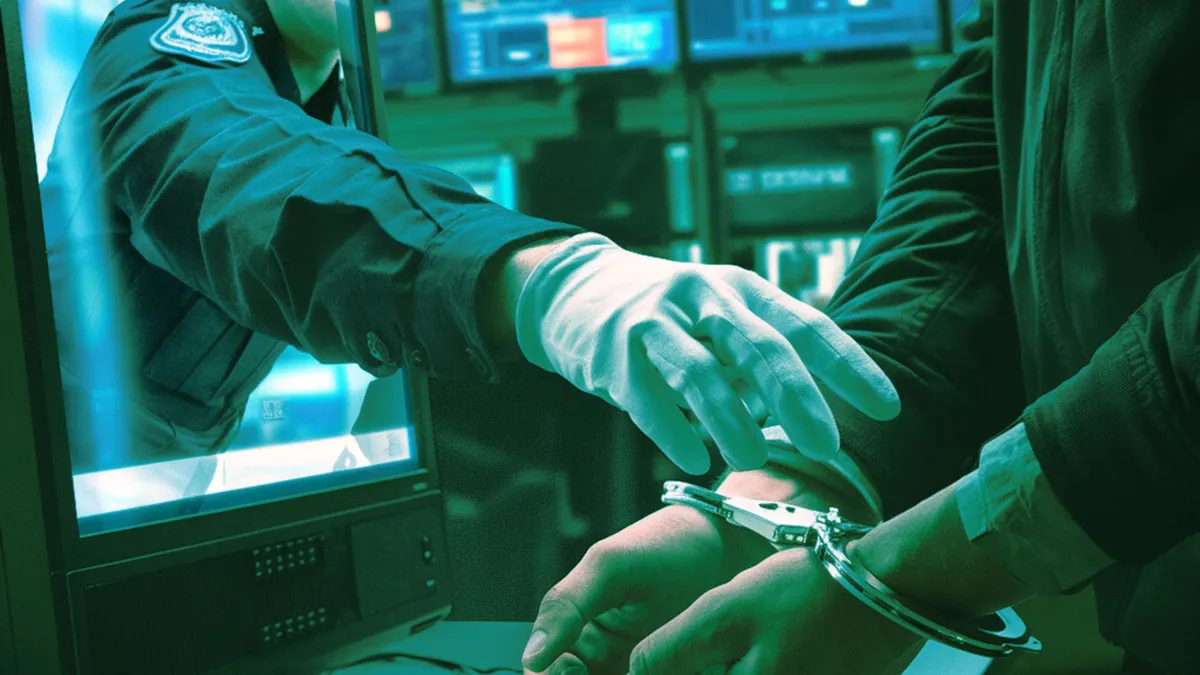

Delhi Police have arrested 11 people in an alleged digital arrest syndicate that investigators say was connected to cybercrime handlers in Cambodia and other Southeast Asian countries.
The Intelligence Fusion and Strategic Operations unit, or IFSO, began investigating the network after a retired government scientist was allegedly cheated of ₹1.25 crore. Police later found links to dozens of cybercrime complaints across India involving about ₹73 crore.
The same investigation also helped police secure ₹7.25 crore in a separate digital arrest case involving a 79-year-old victim in Andhra Pradesh.
FCRF Launches CP-FRM to Build India’s Next Generation of Fraud Risk Professionals
Retired scientist allegedly kept under video surveillance
The Delhi investigation began with a complaint from Pradeep Kumar Das, a retired scientist and former director in the Ministry of Electronics and Information Technology.
According to police, Das received a call on August 14 from people posing as officers of Delhi Police, the Anti-Terrorism Squad and the National Investigation Agency.
The callers allegedly claimed that his Aadhaar details had been linked to a money-laundering case and threatened him with arrest.
They then kept him under continuous video surveillance and persuaded him to transfer ₹1,25,09,000 through RTGS to three bank accounts in the name of financial verification, police said.
An FIR was registered at the Special Cell police station. Investigators then began tracing the beneficiary accounts and people allegedly arranging them.
Police said intelligence eventually led them to a premises near Ramphal Chowk in Dwarka, where five men were found operating an account held in the name of M/s MR Traders.
Six more accused were arrested during the wider investigation.
Telegram chats, mule accounts and USDT lead overseas
Police said examination of the seized phones exposed Telegram conversations allegedly used to arrange bank accounts for cyber fraud.
Investigators also found an application called “SMS Tools”. They suspect it was configured to automatically forward text messages, including banking one-time passwords, to people operating elsewhere.
This is important because possession of a bank account alone may not be enough for a fraud network. Criminals may also need OTPs and banking alerts to move money quickly without the account holder controlling every transaction.
Police identified Anish Khan as an alleged key handler. He is accused of coordinating with overseas associates through Telegram and managing accounts used to receive fraudulent transfers.
Investigators allege that he received a commission of 5.5% in USDT, a cryptocurrency designed to broadly track the value of the US dollar.
The cryptocurrency was then allegedly converted into rupees using crypto exchanges and other platforms.
Police said seven online channels used for buying and selling mule bank accounts were identified during the investigation.
A mule account is simply a bank account used to receive or move somebody else’s criminal proceeds. The account may belong to a person who knowingly rents it out for commission, or in some cases to someone who does not fully understand how it will be used.
₹7.25 crore frozen in separate Andhra Pradesh case
The investigation expanded well beyond the original ₹1.25 crore complaint.
Police said the network was connected to a digital arrest case registered in Vijayawada, where a 79-year-old man identified as Boppana Baparao was allegedly cheated of ₹10.25 crore.
Coordination between Delhi Police and Andhra Pradesh Police helped secure or freeze ₹7.25 crore of that amount before it could be moved further.
Investigators also linked the accounts to an investment fraud in West Bengal in which a complainant allegedly lost ₹21 lakh. Police said the entire amount initially entered the MR Traders account.
Another Delhi digital arrest case involving an alleged ₹77 lakh loss has also been linked to the accused.
Analysis of the seized devices and accounts ultimately connected the network to 78 complaints on the National Cyber Crime Reporting Portal, involving approximately ₹73 crore, according to police.
India targets bank accounts behind cyber fraud
The case reflects a larger enforcement problem: cybercrime networks can operate abroad while relying on Indian bank accounts to receive victims’ money.
The Union Government has increasingly focused on disrupting these mule-account networks. In June, the Home Ministry specifically called for stronger action against bank accounts used in cybercrime.
A similar money trail emerged in a Delhi Police investigation earlier this year involving businessman Naresh Gujral. Police traced money from four primary accounts into around 35 second-layer accounts and arrested an alleged mule account holder who had reportedly been promised a commission.
The scale of the problem is reflected in official figures. The Home Ministry said its financial cyber-fraud reporting system had helped save more than ₹11,158 crore across over 32.80 lakh complaints by June 30, 2026.
What this means for you:
No police, NIA or other legitimate agency will ask you to transfer money for “verification” during a video call. If money has already been sent, immediately contact your bank and call 1930 so beneficiary accounts can be flagged before the funds move further.
Follow for daily updates on cybercrime, corporate fraud, DFIR, hacking, investigations, and digital forensics
